How does structured data affect search results and AI outputs?
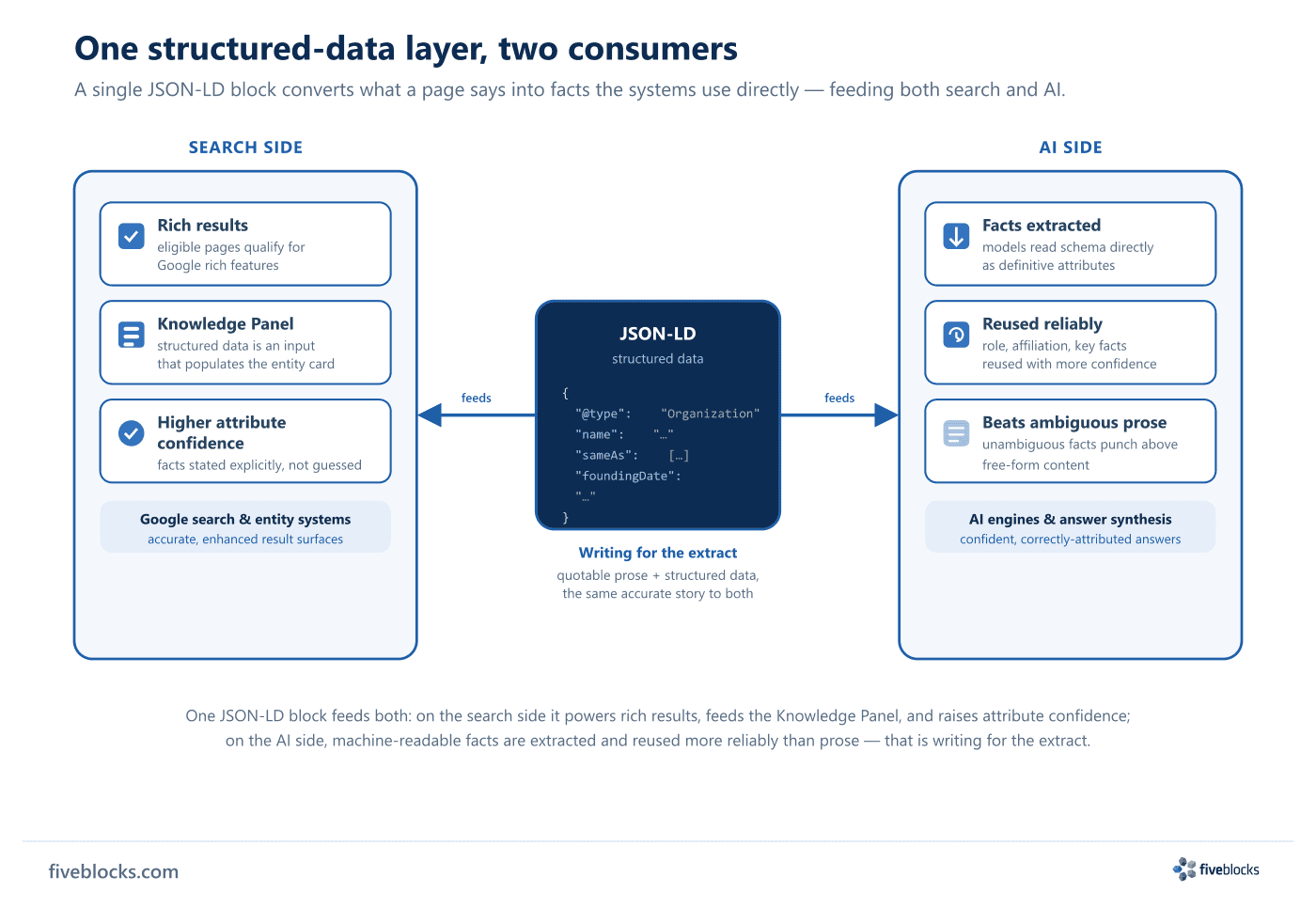
Structured data converts what a page says into facts the systems can use directly instead of inferring them from language. On the search side it powers rich results, feeds the Knowledge Panel, and raises Google's confidence in an entity's attributes; on the AI side, machine-readable facts are unusually reliable inputs that models extract and reuse more confidently than ambiguous prose.
Structured data affects both search results and AI outputs because it converts what a page says into facts the systems can use directly, rather than inferring them from language. The same machine-readable layer feeds two consumers: Google’s search and entity systems on one side, the AI engines on the other.
On the search side
- Powers rich results and result enhancements. Well-formed schema makes eligible pages qualify for the rich features Google supports.
- Feeds the Knowledge Panel. Structured data is one of the inputs that populates the entity card.
- Raises attribute confidence. It raises the confidence Google has in an entity’s attributes, because the facts are stated explicitly rather than guessed from prose.
On the AI side
Machine-readable facts are reliable inputs. When a model assembles an answer about an entity, clean structured data gives it definitive attributes – role, affiliation, key facts – that it can extract and reuse with more confidence than ambiguous prose. Because it is unambiguous, structured data often does more work than the same content in free-form text.
Writing for the extract
This is the discipline we call writing for the extract: pairing clear, quotable prose with structured data so the human-readable and machine-readable layers tell the systems the same accurate story. We deploy and validate structured data on owned properties and verify the effect with AIQ.
Last reviewed: 20/05/2026
