What is the role of structured data in AI search results?
Schema.org markup (structured data) is a direct input to Knowledge Panels, AI Overviews, and the entity systems behind LLM responses. The schemas that matter most for reputation are Organization (with sameAs links to Wikidata, Wikipedia, and LinkedIn), Person (for executive bios), Article (for news and blog content), FAQPage (for extractable Q&A), and HowTo (for procedural content). Missing or inconsistent schema is a recurring cause of engines stating basic facts about a brand incorrectly.
Schema markup is under-used in AI reputation work because it sits between engineering and communications, and most teams staff one side but not the other. Done well, it tells the engines directly what a page is about, who or what the entity is, what its relationships are, and how to read the content.
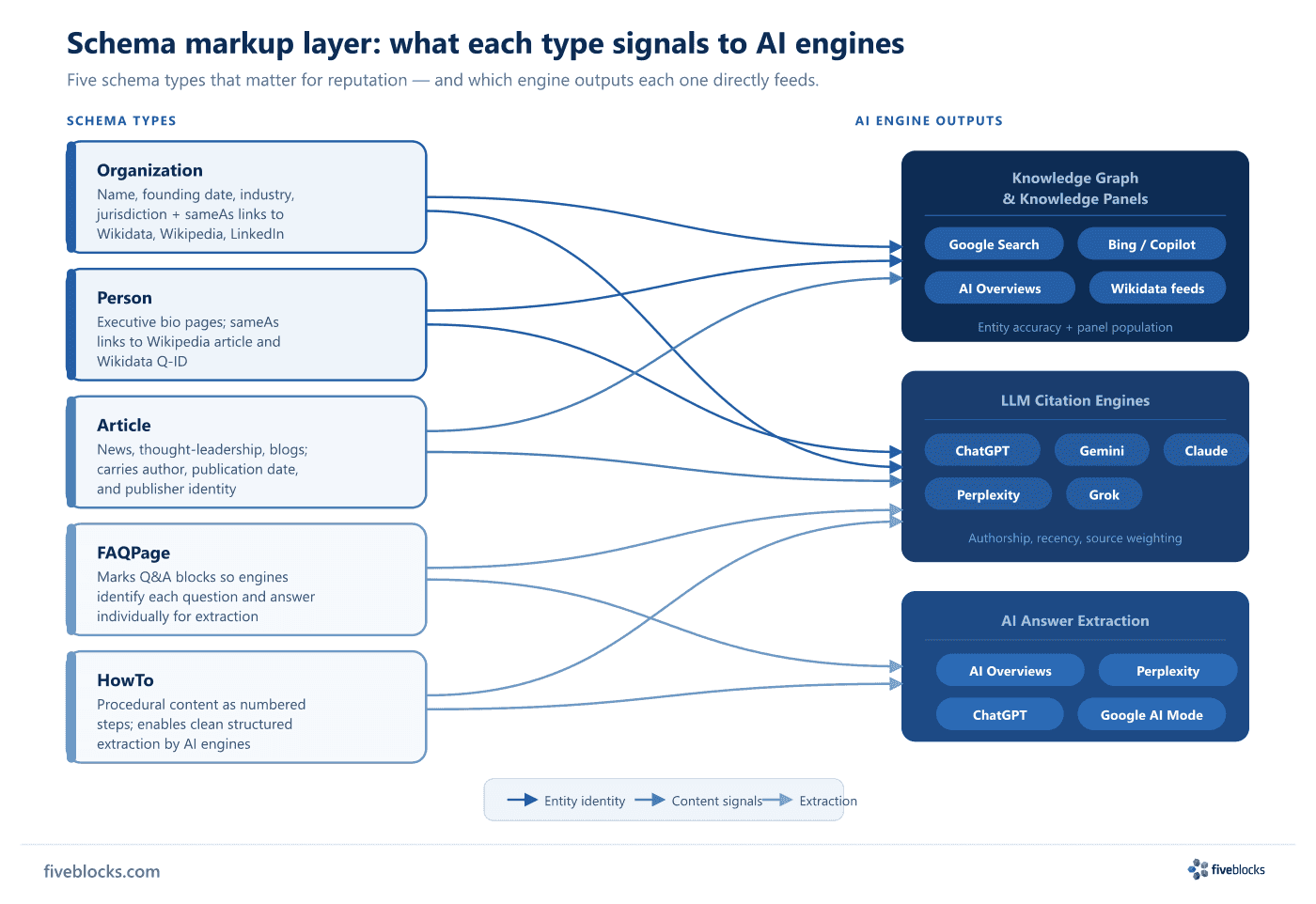
The five schema types that matter most for reputation
- Organization
- Describes the company: its name, founding date, jurisdiction, and industry. The
sameAsproperty links the page to the entity’s Wikidata entry, Wikipedia article, LinkedIn page, and any regulatory or professional registry entries, telling the engines exactly which entity the page is about. This is the schema block that most directly drives accurate Knowledge Panel population. - Person
- Used on executive biography pages.
sameAslinks connect the bio to the executive’s Wikipedia article and Wikidata Q-ID, anchoring the person to their canonical identifier. Without it, engines may conflate individuals who share a name or attach facts from the wrong person to the right one. - Article
- Wraps news posts, thought-leadership pieces, and blog content. The schema carries the author’s name (linking to their Person entity), the publication date, and the publisher’s identity. Google and AI citation engines read Article schema to confirm recency and authorship before they weight a page as a source.
- FAQPage
- Marks up question-and-answer blocks so the engines can identify and extract each pair on its own. It is one of the clearest signals for AI Overview extraction: when a page is marked up correctly, the engine knows which text is the question and which is the answer instead of inferring it from prose structure.
- HowTo
- Marks up procedural content as a numbered sequence of steps. AI engines read HowTo schema to extract instructions cleanly and present them in a structured format within their responses.
Where this layer connects to the engine outputs
The Knowledge Graph, AI Overviews, and Wikidata-fed responses across the major engines all read this schema layer directly. Google has documented that structured data provides “explicit clues about the meaning of a page” and is one mechanism it uses to “understand the content of the page.” Missing or sloppy schema forces the engines to infer from plain text and HTML structure. That lowers their confidence and is a recurring cause of engines stating basic facts about a brand incorrectly.
Last reviewed: 19/05/2026
