What is proactive reputation management?
Proactive reputation management builds the digital infrastructure - an accurate Wikipedia article, the Wikidata entry and Knowledge Panel, schema markup, a baseline of AI engine narrative, and consistent executive bios - before a crisis or transaction. Built in calm conditions, it costs far less than the same work attempted under pressure, and it works better because it has had time to mature and build up authority.
Proactive reputation work is the part of an engagement that almost no one regrets and many wish they had started earlier. In calm conditions the work is straightforward and unglamorous: it builds the entity and content infrastructure engines rely on most, before any incident makes it urgent.
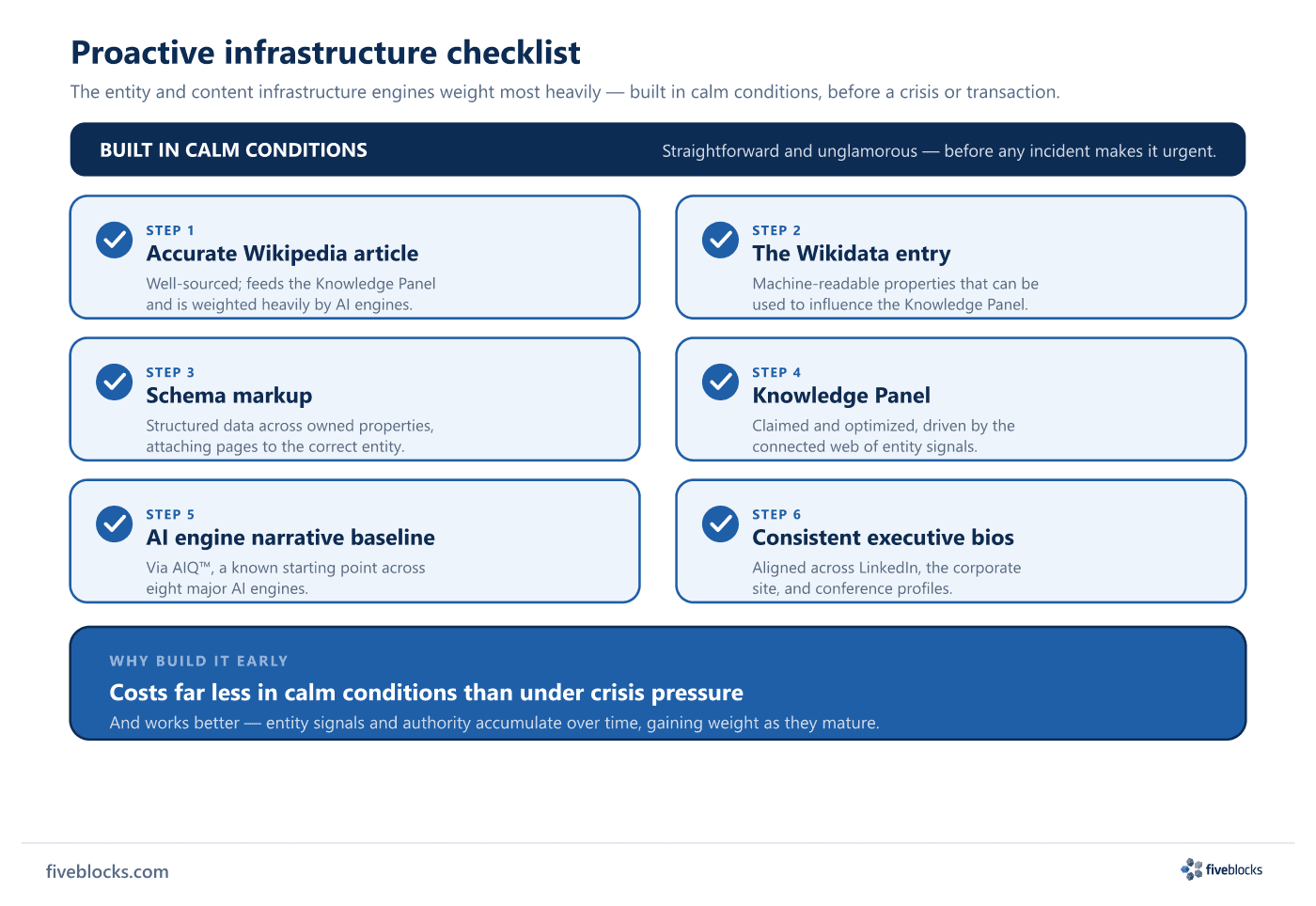
What proactive infrastructure consists of
- An accurate, well-sourced Wikipedia article. Wikipedia feeds the Google Knowledge Panel and is weighted heavily by AI engines, so getting it accurate and well-sourced comes first.
- The Wikidata entry. The machine-readable entry whose properties can be used to influence the Knowledge Panel and the canonical facts engines retrieve.
- Schema markup across owned properties. Structured data that helps search and AI engines understand what a page asserts and attach it to the correct entity.
- A claimed and optimized Knowledge Panel. The entity card on the branded results page, driven by the connected web of entity signals – Wikipedia, Wikidata, and verified sources.
- A baseline of AI engine narrative. Recording, through AIQ, how the AI engines currently describe the brand or executive, so later change can be measured against a known starting point. AIQ monitors eight major AI engines.
- Consistent executive biographies. Aligning the bios across LinkedIn, the corporate site, and conference profiles so the entity layer holds together.
Why building it early pays off
None of this is urgent until it suddenly is. Building it over a span of months has two advantages. First, the cost is lower: the same infrastructure is far more expensive to assemble during a crisis or live transaction than in calm conditions. Second, it works better. Entity signals and authority build up over time, so infrastructure that has had months to mature carries more weight than the same work rushed into place under pressure.
The strongest reputation programs often start as proactive engagements, years before any incident.
Last reviewed: 19/05/2026
