When should you hire a reputation management firm?
Hire a reputation management firm before you urgently need one. Four triggers mark the right moment: an upcoming transaction (IPO, M&A, fundraise) where counterparties will scrutinize the digital footprint; imminent public-figure exposure for a rising executive; an anticipated crisis or contentious event; or stakeholder feedback showing the digital reputation is already affecting outcomes. Early engagement lets the structural work mature before it is tested; reactive engagement forces displacement under pressure.
The best time to hire a reputation firm is before you urgently need one. This work is structural: authoritative content, entity signals, and disclosed Wikipedia editing all take time to compound. Acting ahead of scrutiny beats reacting to it, because durable work has to mature before it is tested. Four triggers mark the right moment.
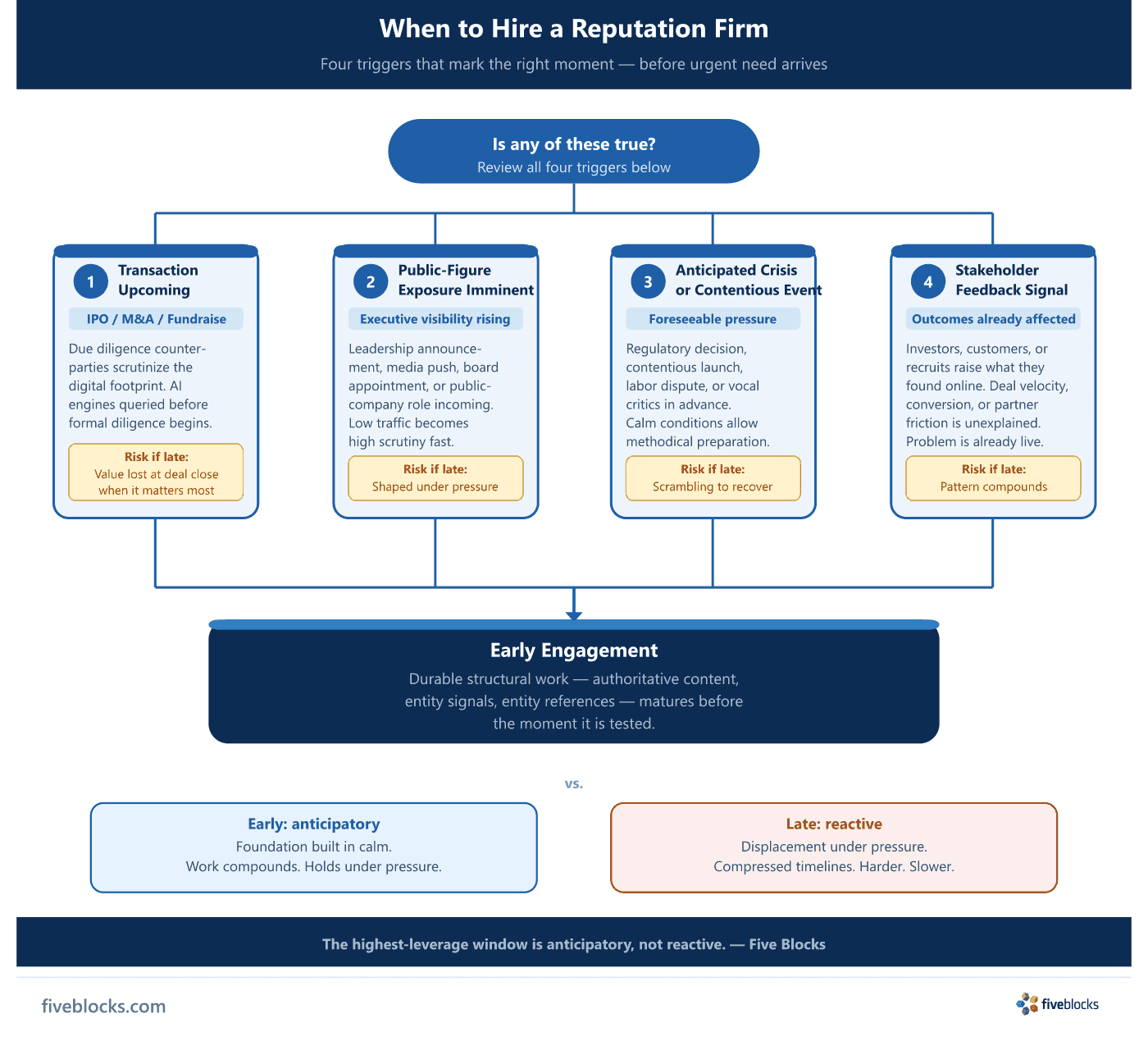
- Transaction upcoming: IPO, M&A, or fundraise
- Counterparties examine the digital footprint as a standard part of due diligence. Investors, acquirers, and underwriters research executives and companies online, and increasingly prompt AI engines with questions about a target before formal diligence begins. A hostile, thin, or inaccurate result set can cost real value in a negotiation. Build the foundation before the transaction is announced, not after the questions start arriving.
- Public-figure exposure imminent
- When an executive is about to become far more searched, through a leadership announcement, a media push, a board appointment, or a public-company role, the branded result set and the AI narrative for their name go from low-traffic to high-scrutiny. Shape those results before the exposure, while there is no pressure and the work can proceed methodically.
- Anticipated crisis or contentious event
- A contentious regulatory decision, a product launch with vocal critics, a labor dispute, or any foreseeable event likely to attract hostile coverage is much easier to prepare for in calm conditions. Establish the canonical narrative, strengthen the authoritative entity references, and build the owned-content foundation before pressure arrives, and the reputation can absorb a hit instead of scrambling to recover from one.
- Stakeholder feedback showing digital reputation is already affecting outcomes
- When investors, customers, recruits, or partners raise what they found online, or when deal velocity, candidate conversion, or partnership discussions show unexplained friction, the problem is live. This trigger is reactive by definition, but engaging at the first signal still beats waiting for the pattern to compound. The work shifts from building ahead of scrutiny to displacing what is already harming outcomes, which takes longer and cannot wait.
All four triggers point the same way. Engage early and the work is durable by the time it is tested. Engage late and the program runs under the worst possible conditions: compressed timelines, hostile narratives already in place, and counterparties already forming impressions. We help clients work out which moment they are in and scope accordingly.
Last reviewed: 20/05/2026
