What is the role of video content in reputation management?
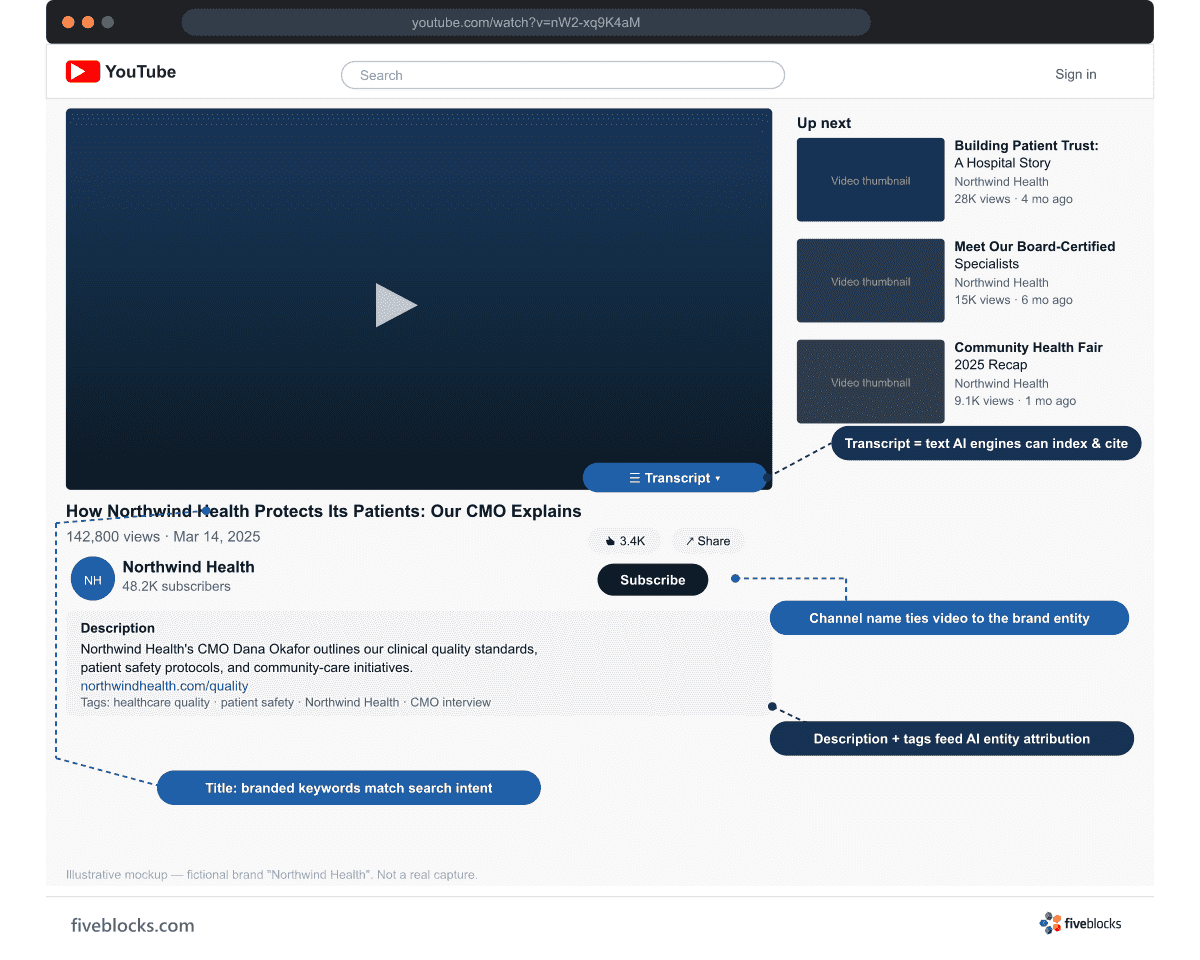
Video is a real reputation asset, not only a marketing format, because YouTube transcripts are crawled and cited by AI engines the same way written articles are. A well-structured corporate or executive video with a full, accurate transcript can hold positions in branded search and give the AI engines spoken material about the brand. Without a transcript, the video is largely invisible to those systems regardless of its content.
Video is a real reputation asset, not only a marketing format, because the AI engines retrieve from video transcripts and cite them like written articles. A well-structured corporate, executive, or product video can hold positions in branded search and give the engines accurate spoken material about the brand.
The transcript is what decides this. Without a full, accurate transcript, a video is largely invisible to AI engines no matter how strong its content. The systems cannot watch or listen, but they do index and extract from text. Give them a transcript and the video becomes spoken material the engines can surface and cite. It is the variable teams most often overlook in video reputation work.
What makes video work for reputation
- Full, accurate transcripts. A transcript turns an opaque video into text the AI engines can read, index, and cite. YouTube’s automatic captions are a starting point, but they contain errors; names, product terms, and technical language are often misrendered, and those errors carry into AI outputs if left uncorrected. A manually reviewed transcript is more reliable as an engine-facing asset.
- Precise titles and descriptions. Titles and descriptions should include the relevant branded queries. They match search intent and help the engines attach the video to the right entity.
- VideoObject schema markup. Schema on the hosting page tells the systems what the video is and who it concerns, which helps both rich results and entity attribution.
- Consistent channel branding tied to the canonical entity. The channel name, about section, and linked properties should match the entity’s canonical identity across the rest of the owned stack, so the systems resolve the channel to the right company or person.
Why YouTube specifically
YouTube is the second-largest search engine in the world, and its content is cited heavily by AI Overviews, Perplexity, and ChatGPT Search. Across large citation studies, YouTube ranks as the second most-cited domain in Perplexity (16.1%) and third in Google AI Overviews (9.5%). AI systems do not treat video as opaque media; they pull usable language from descriptions and transcripts. A well-structured YouTube video is both a search-visible asset and an AI-retrievable text source. We treat well-structured video, hosted mainly on YouTube, as an owned property and account for how it appears in search and how the engines draw on its transcripts when assessing the entity.
Last reviewed: 20/05/2026
