How will multimodal AI search affect reputation management?
Multimodal AI search treats images, video, and audio as first-class inputs and outputs, not just text. Reputation work expands accordingly, image SEO (alt text, structured data, captioning), video transcripts, and audio content, all anchored by strong entity signals the engines can use to disambiguate.
Multimodal AI, engines that process and generate images, video, and audio alongside text, is rolling out across the major providers, and it changes what a reputation program has to manage. The underlying principles do not change; the footprint widens.
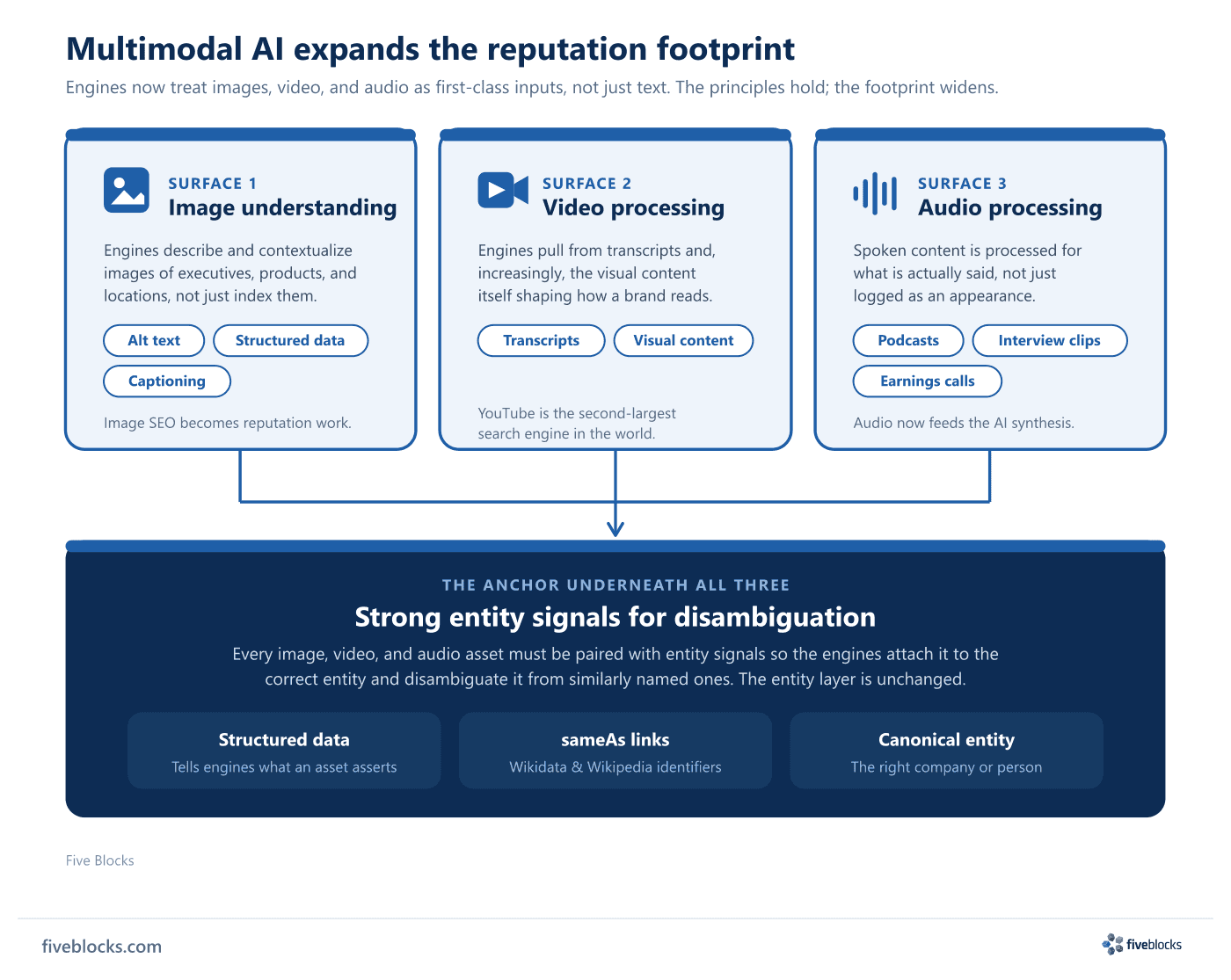
Where the footprint widens
- Image understanding, the engines describe and contextualize images of executives, products, and locations rather than just indexing them. That turns image SEO, alt text, structured data, and captioning, into AI reputation work, because those signals tell the engines what an image is and which entity it belongs to.
- Video processing, engines pull from transcripts and, increasingly, from the visual content itself. A brand’s video presence shapes how it gets described in ways that traditional YouTube SEO alone does not capture, and YouTube is the second-largest search engine in the world, so that presence is substantial.
- Audio processing, podcasts, interview clips, and earnings calls are processed for what is actually said, not just logged as appearances. What gets said in those venues now feeds what the engines report about an entity.
Entity signals are the anchor
Each of these new surfaces, image, video, audio, has to be paired with strong entity signals so the multimodal engines can attach the content to the correct entity and disambiguate it from similarly named ones. The same infrastructure that anchors text, structured data and sameAs links tying an asset to canonical identifiers like Wikidata and Wikipedia, is what lets the engines place a multimodal asset against the right company or person. The reputation discipline expands to image-level, video-level, and audio-level work, but the entity layer underneath it is unchanged.
Last reviewed: 19/05/2026
