How do you track competitors’ search reputation?
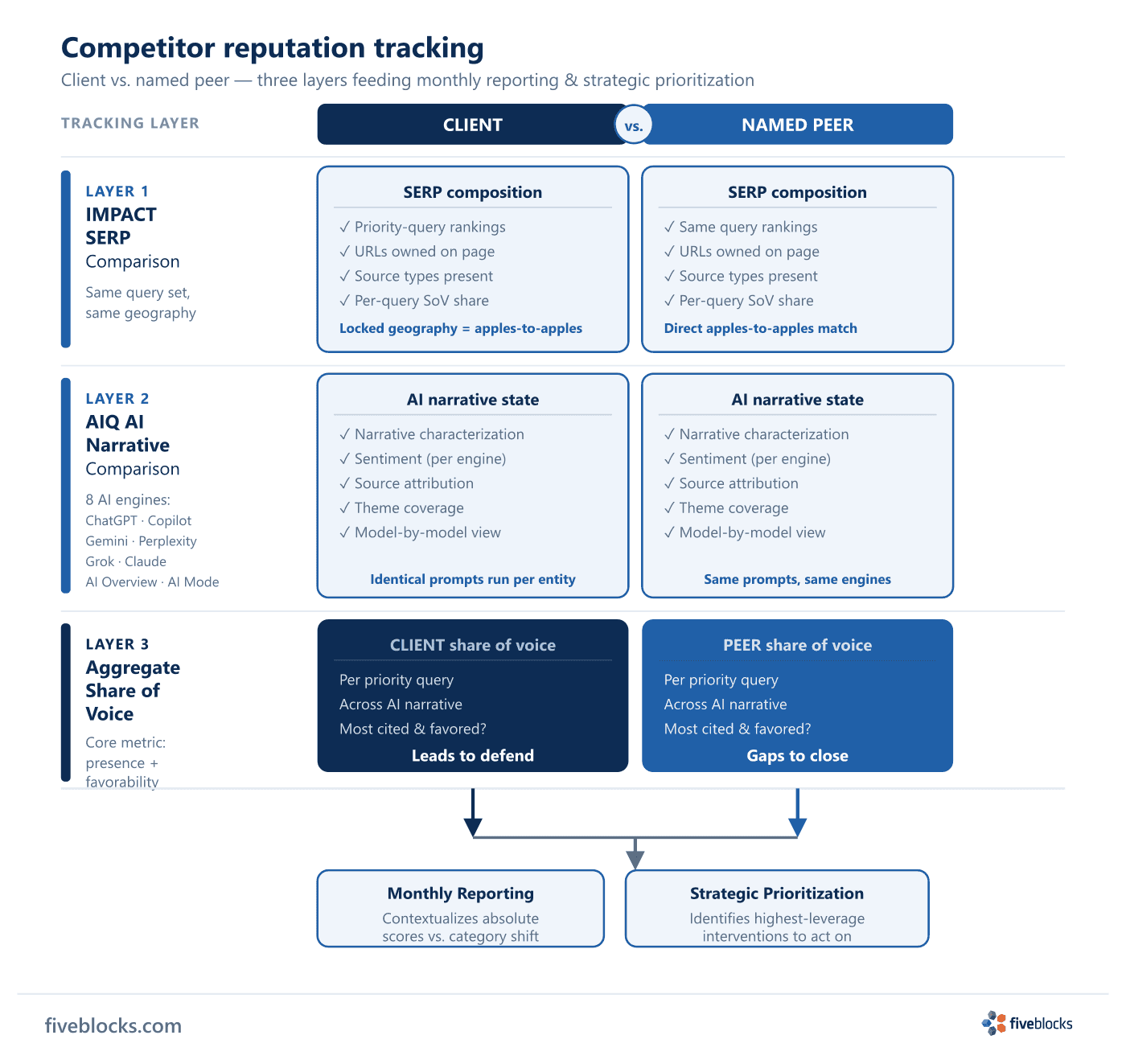
Competitor reputation is tracked by running the same priority query set through IMPACT for SERP composition comparisons and through AIQ across the eight AI engines AIQ currently tracks for narrative, sentiment, source attribution, and theme coverage. The aggregate view gives share of voice on each query; that data feeds monthly reporting and decisions about where to act next.
Competitive reputation tracking turns raw data into decisions. It shows where peers hold an advantage the client should close, where the client holds a lead worth defending, and where the category itself is moving.
Step 1: Run the same query set against named peers in IMPACT
IMPACT runs the client’s priority query set against named peers in the same geographies and languages, producing per-query SERP composition comparisons. Google results vary by location, so locking geography keeps the comparison fair. For each query, the output shows which sources each competitor owns on the page and which the client owns.
Step 2: Run the same prompts against each peer in AIQ
AIQ runs identical prompts against each named peer across the eight AI engines AIQ currently tracks (ChatGPT, Copilot, Gemini, AI Overview, Perplexity, Grok, Claude, and Google AI Mode), producing a model-by-model comparison of:
- Narrative state, how each engine characterizes each entity
- Source attribution, which sources each engine cites for the peer vs. the client
- Sentiment, the tone each engine applies to each entity
- Theme coverage, which topics each engine associates with each entity
Step 3: Aggregate into share-of-voice metrics
The aggregate view shows share of voice on each priority query and across the AI narrative as a whole. Share of voice is the core comparative metric: which entity is most present, most favorably described, and most sourced on the queries that matter.
Step 4: Feed reporting and prioritize interventions
The competitive output has two downstream uses:
- Monthly reporting, peer comparison is usually more useful than absolute scores alone, because it shows whether a change in the client’s metrics is a real shift or just category movement.
- Strategic prioritization, the data identifies where an intervention gains the most ground on the competition, so effort goes where the gap is both large and closeable.
Last reviewed: 19/05/2026
