How do you implement Organization schema for a corporate website?
On the corporate homepage, add Organization schema specifying name, legalName, url, logo, sameAs links to authoritative profiles (Wikipedia, Wikidata, Crunchbase, LinkedIn), contactPoint, and parentOrganization where the corporate structure warrants it. Validate the markup with Google's structured-data tools, and keep every value consistent with the rest of the entity stack so the schema adds confidence instead of contradictions.
Organization schema tells search and AI systems that the company is a defined entity, and the homepage is where it belongs because that is the entity’s home page. Add it as a set of fields, validate it, then keep the values consistent with everything else the systems already know about the company.
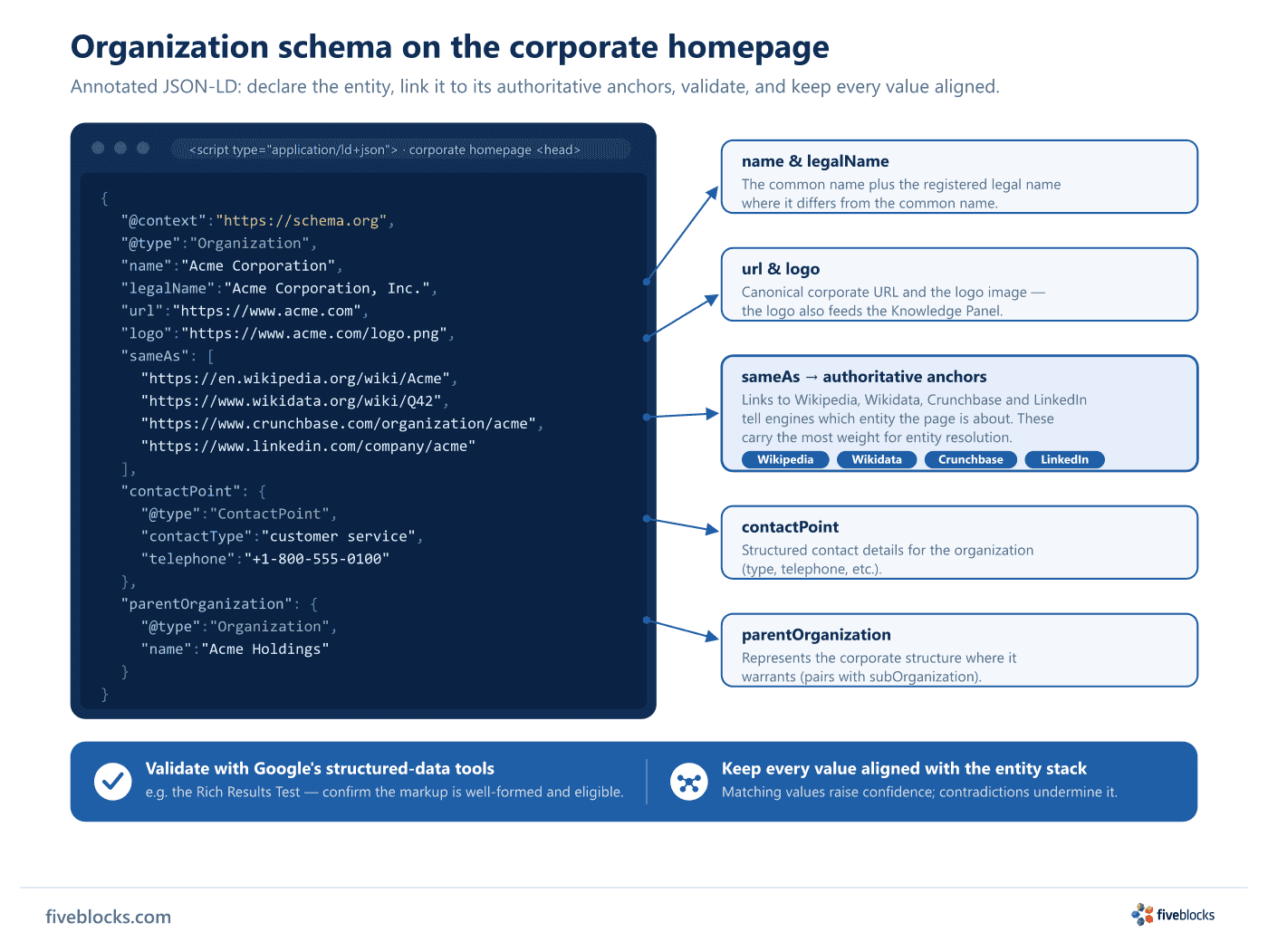
Fields to include on the homepage
nameandlegalName, the common name plus the registered legal name where the two differ.url, the canonical corporate URL.logo, which also feeds the Knowledge Panel.sameAs, links to the company’s authoritative profiles: Wikipedia, Wikidata, Crunchbase, LinkedIn, and relevant directories.contactPoint, structured contact details for the organization.parentOrganization/subOrganization, where the corporate structure warrants representing it.
Validate the markup
After deployment, run the markup through Google’s structured-data tools (the Rich Results Test, for example) to confirm it is well-formed and eligible.
Keep it aligned with the entity stack
As with Person schema, consistency is what makes it work: every value has to match the rest of the entity stack, because the schema is meant to add confidence and contradictory data does the opposite. The sameAs links do the most work for resolution, since they connect the corporate identity to its authoritative anchors. We deploy and validate Organization schema and check the downstream effect with AIQ.
Last reviewed: 20/05/2026
