How does Google determine what shows up when you search someone’s name?
Google builds a name search results page by first recognizing the specific person (disambiguating them from others with the same name), then assembling the page from authoritative sources tied to that entity - Wikipedia, LinkedIn, news, the person's own bio, and Knowledge Panel data from Wikidata - with freshness, location, and search history layering on top.
A name search results page is one of the harder pages Google produces. The engine does not simply match a string. It works through a sequence of steps: it recognizes the entity first, assembles a page of sources around that entity, then adds personalization on top.
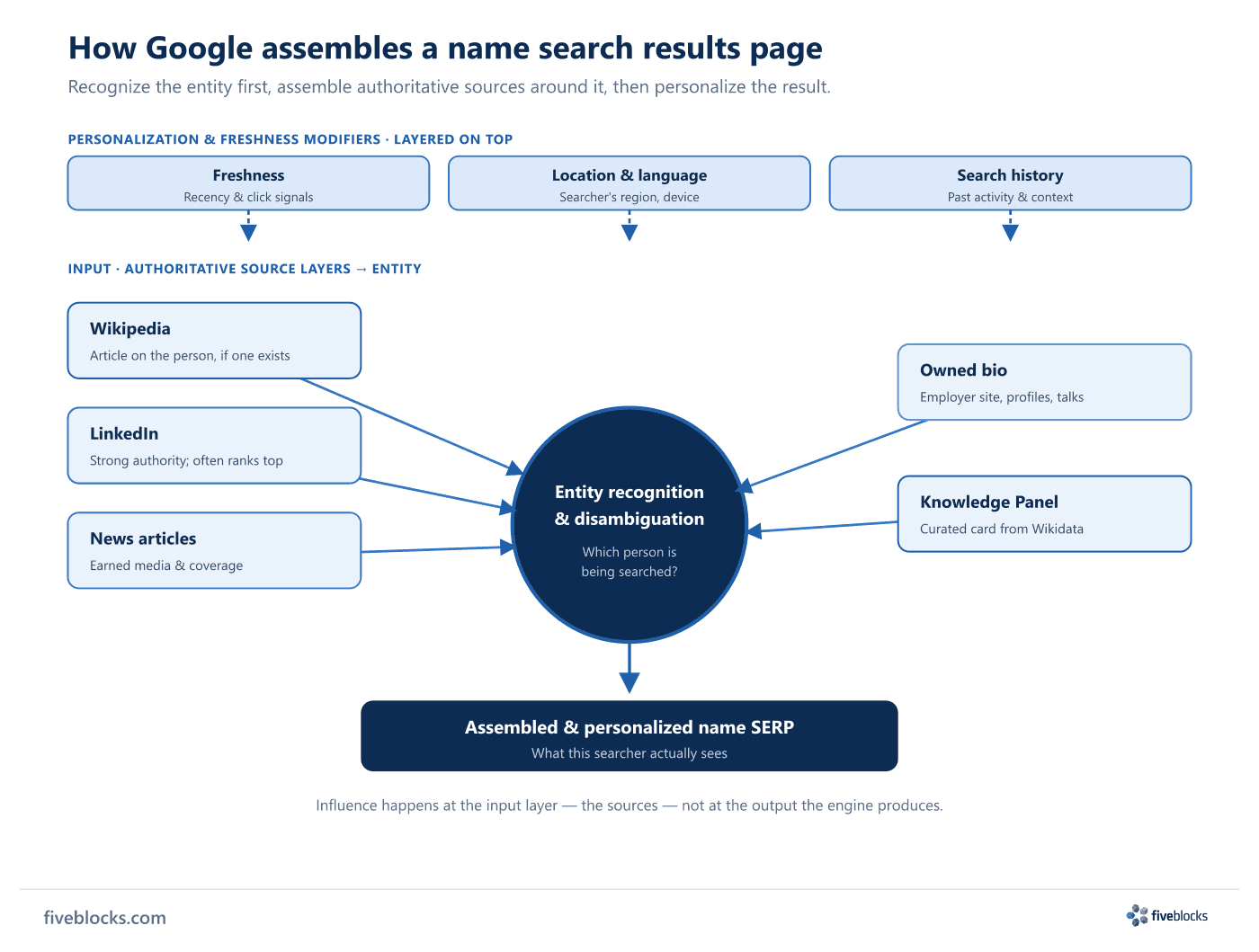
1. Entity recognition and disambiguation
Before it assembles anything, Google identifies the specific person being searched and separates them from others who share the same name. This entity-recognition step is what lets the engine decide which sources belong to the person in question.
2. Source assembly around the entity
Google then builds the page from authoritative sources matched to that entity. The input layers that tend to surface on a name SERP include:
- A Wikipedia article, if the person has one
- LinkedIn, which carries strong domain authority and frequently lands in the top results for an individual’s name
- News articles and other earned coverage
- The person’s own bio on their employer’s site, plus podcast appearances and conference profiles
- Knowledge Panel data, the curated card drawn from Wikidata, Wikipedia, and the Knowledge Graph
3. Personalization and freshness modifiers
On top of the assembled page, Google adds a personalization and freshness layer: the searcher’s location, language, device, and past search history, along with freshness and click signals, all change what any given person sees.
What this means for reputation work
The engine recognizes and frames the person through entity signals – Wikidata, schema markup, and the Knowledge Graph – so influencing a name SERP means working at each input layer, not at the output. Keep Wikipedia accurate, get the Wikidata entry right, align the LinkedIn and corporate bio, and support authoritative coverage in the outlets the engine trusts.
Last reviewed: 19/05/2026
Sources (4)
- About knowledge panels - Knowledge Panel Help support.google.com
- How Results Are Automatically Generated - How Search Works (Ranking Results) google.com
- Personalization & Google Search results - Google Search Help support.google.com
- Disambiguate Entities in Queries and Pages (analysis of Google patent) seobythesea.com
