How do you use structured data to enhance search result appearance?
Structured data is machine-readable markup (usually JSON-LD) that tells Google and AI engines what a page is about and which entity it concerns. It still drives supported rich results such as review stars and structured product information, and it feeds the Knowledge Graph and AI extraction. Note: Google retired FAQ rich results in 2026, so FAQPage markup now serves comprehension and AI extraction rather than producing an FAQ accordion in the SERP.
Structured data is the markup, usually JSON-LD following Schema.org vocabularies, that tells Google and the AI engines what a page is about and which entity it concerns, in a form machines can read. It does two jobs now: it drives the visible rich results Google still supports, and it feeds the entity and extraction layer that decides how engines understand and reuse the content.
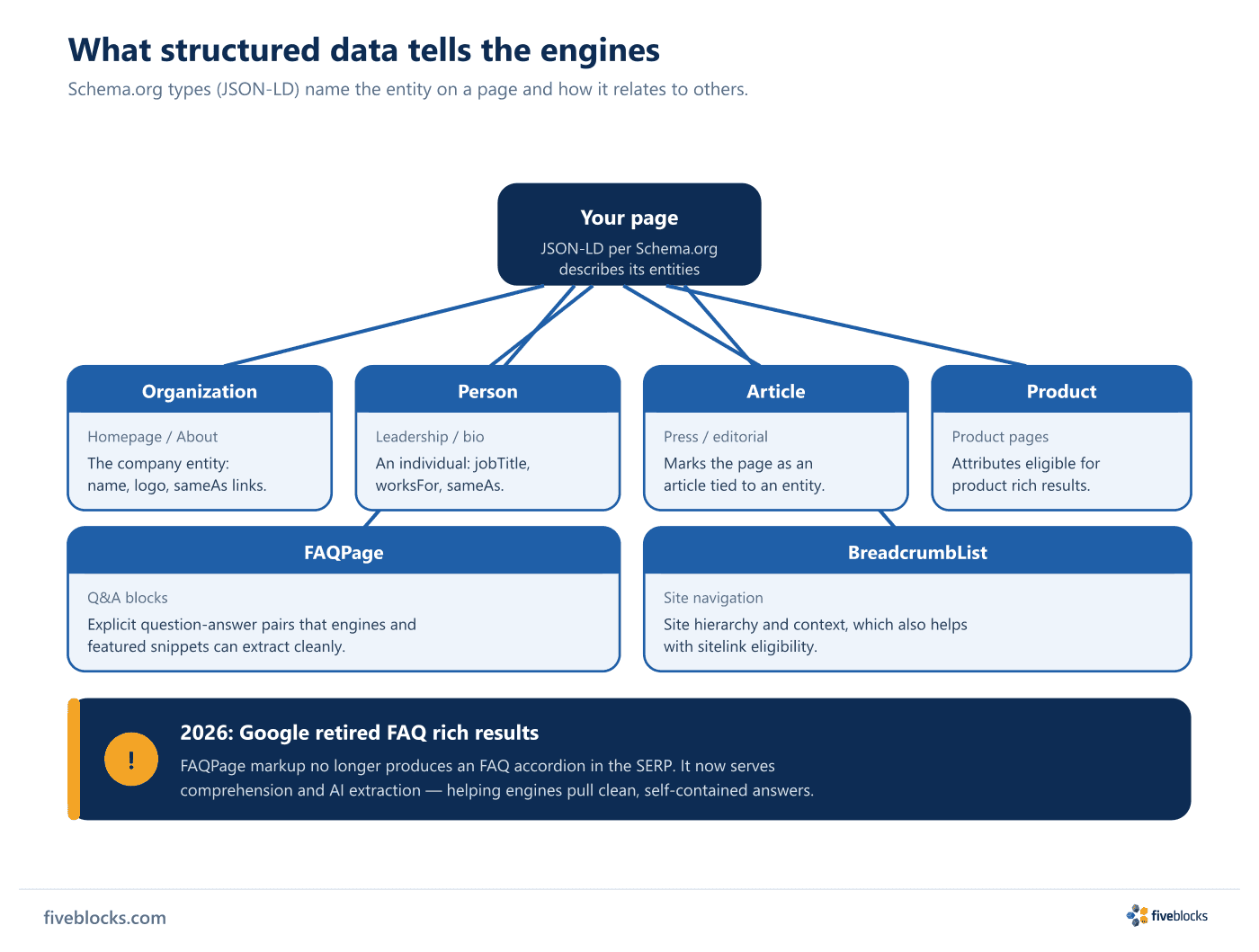
What structured data does
- Powers supported rich results. Well-formed markup can qualify an eligible page for Google rich results, such as review stars and structured product information in shopping results.
- Signals entity and content type. Schema markup tells search and AI engines which entity a page is about and how it relates to other entities, and lets them parse the content type directly instead of inferring it from prose.
- Feeds the entity layer. Structured data is one of the signals behind Google’s Knowledge Graph and the Knowledge Panel, and AI engines read schema directly as a signal about what a page is.
- Improves AI extraction. AI models extract and reuse attributes from clean structured data more reliably than from ambiguous prose, so schema-marked content is easier for engines to lift accurately.
The 2026 FAQ rich-result change
Google retired FAQ rich results in 2026, so FAQPage markup no longer produces an FAQ accordion in the SERP. The markup still earns its place: it makes question-and-answer content explicitly extractable, which helps engines and featured snippets pull clean, self-contained answers. FAQ schema went from a display feature to a comprehension and AI-extraction signal.
Apply the right schema type consistently
| Schema type | Typical placement | What it tells engines |
|---|---|---|
| Organization | Homepage / About page | The company entity, with fields like name, logo, and sameAs links to authoritative profiles. |
| Person | Leadership / bio pages | An individual, with attributes such as jobTitle and worksFor and sameAs links for disambiguation. |
| Article | Press and editorial content | That the page is an article, helping engines attach it to the correct entity. |
| Product | Product pages | Product attributes eligible for structured product rich results in shopping. |
| FAQPage | Q&A blocks | Explicit question-answer pairs for comprehension and AI extraction (no longer an SERP accordion). |
| BreadcrumbList | Site navigation | Site hierarchy and context, which also helps with sitelink eligibility. |
Used consistently across the site, the right schema types add up: they strengthen entity recognition in the Knowledge Graph and make content cleaner for AI engines to extract and cite.
Last reviewed: 19/05/2026
