How do you handle search results that reference old legal issues that have been resolved?
Resolved legal issues that persist in search are addressed through owned content covering the resolution, Wikipedia Talk-page edit requests that cite the closure, a Knowledge Panel refresh, and AIQ monitoring as AI engines absorb the change. The picture rebalances over months as resolution content accumulates across sources.
Resolved legal issues that keep appearing in search results are one of the most common problems clients bring to a reputation program. The response works through several layers, each one adding weight as the engines re-index the current picture.
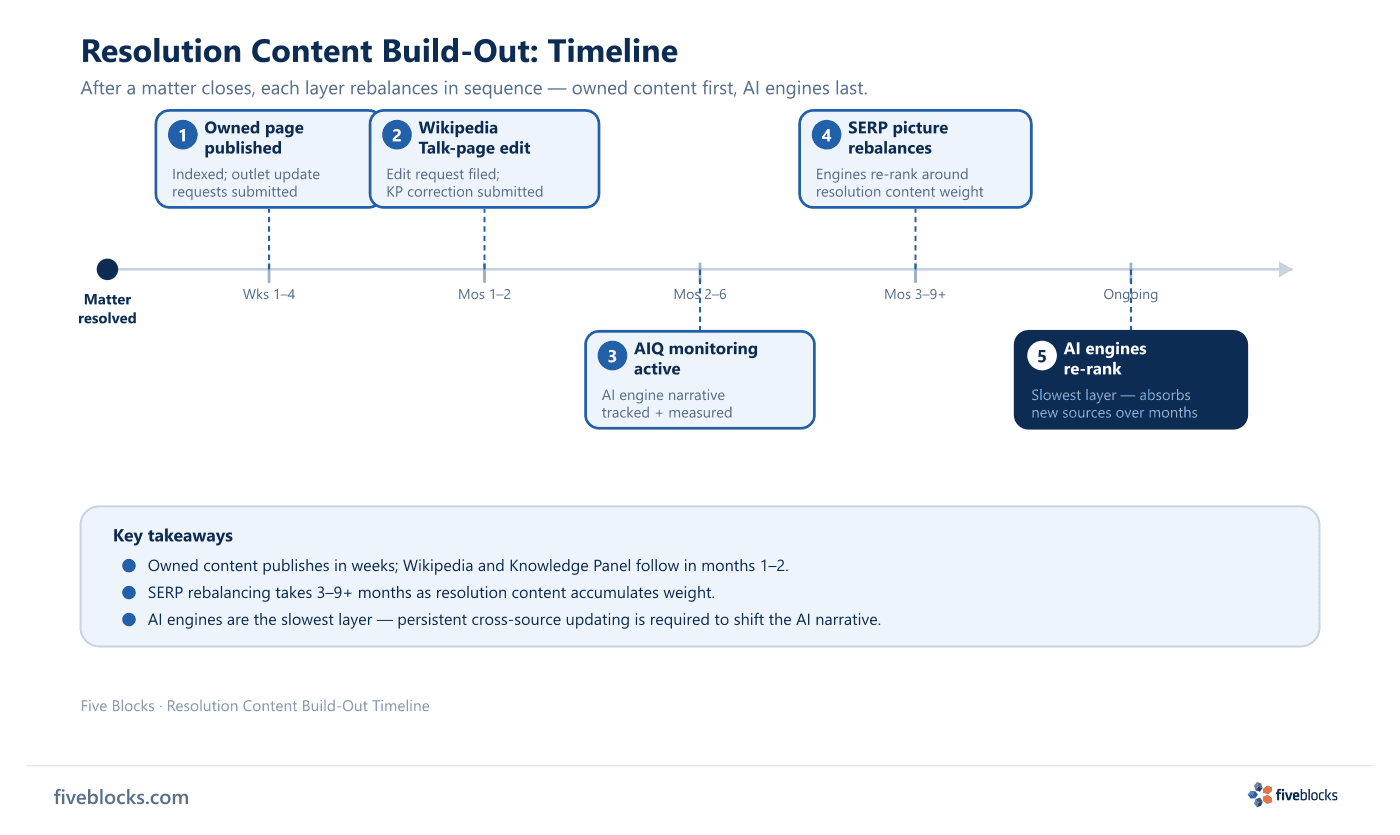
Step 1: Build owned content covering the resolution
Publish a dedicated page on the corporate site or news hub that states what was alleged, what was resolved, and what the current status is. Give the page structured data and schema markup so the engines can extract the content cleanly. This page becomes the canonical reference the other layers point to.
Step 2: Request updates from outlets that covered the original matter
Many credible outlets accept update requests for clearly resolved matters when the request comes with documentation: settlement agreements, court dismissals, official announcements. Submit update requests with that sourcing. Not every outlet will comply, but many do for factually closed matters.
Step 3: Update Wikipedia through the Talk-page edit-request process
Wikipedia articles often stay frozen at the dispute or accusation phase after a matter closes. Propose changes through a disclosed Talk-page edit request, backed by reliable secondary sourcing for the resolution. An independent community editor reviews the request and, if the sourcing supports it, makes the change. The aim is an article that reflects the closure proportionally rather than one stuck mid-dispute.
Step 4: Refresh the Knowledge Panel
Where the entity has a Google Knowledge Panel, use the verified entity correction process to suggest updated information reflecting the current state. The panel’s substantive content comes from underlying sources, mainly Wikipedia and Wikidata, so panel updates follow source corrections rather than precede them.
Step 5: Monitor AI engine treatment with AIQ
AI engines often keep describing closed legal matters as live after resolution, because their training data and retrieval sources include legacy coverage that predates the closure. Run AIQ monitoring across the major AI engines to track how they describe the matter and identify which sources drive their responses. Shifting the AI narrative takes sustained updating across sources.
Timeline expectations
- Weeks 1, 4: Owned resolution page published and indexed; outlet update requests submitted.
- Months 1, 2: Wikipedia Talk-page edit request filed and, where accepted, implemented; Knowledge Panel correction submitted.
- Months 2, 6: AIQ monitoring tracks the AI engine narrative; resolution content accumulates across sources.
- Months 3, 9+: The SERP picture rebalances as engines re-rank around the weight of resolution content versus legacy coverage. AI engines are usually the slowest layer to update.
Last reviewed: 19/05/2026
