How should executives optimize their LinkedIn profile for reputation?
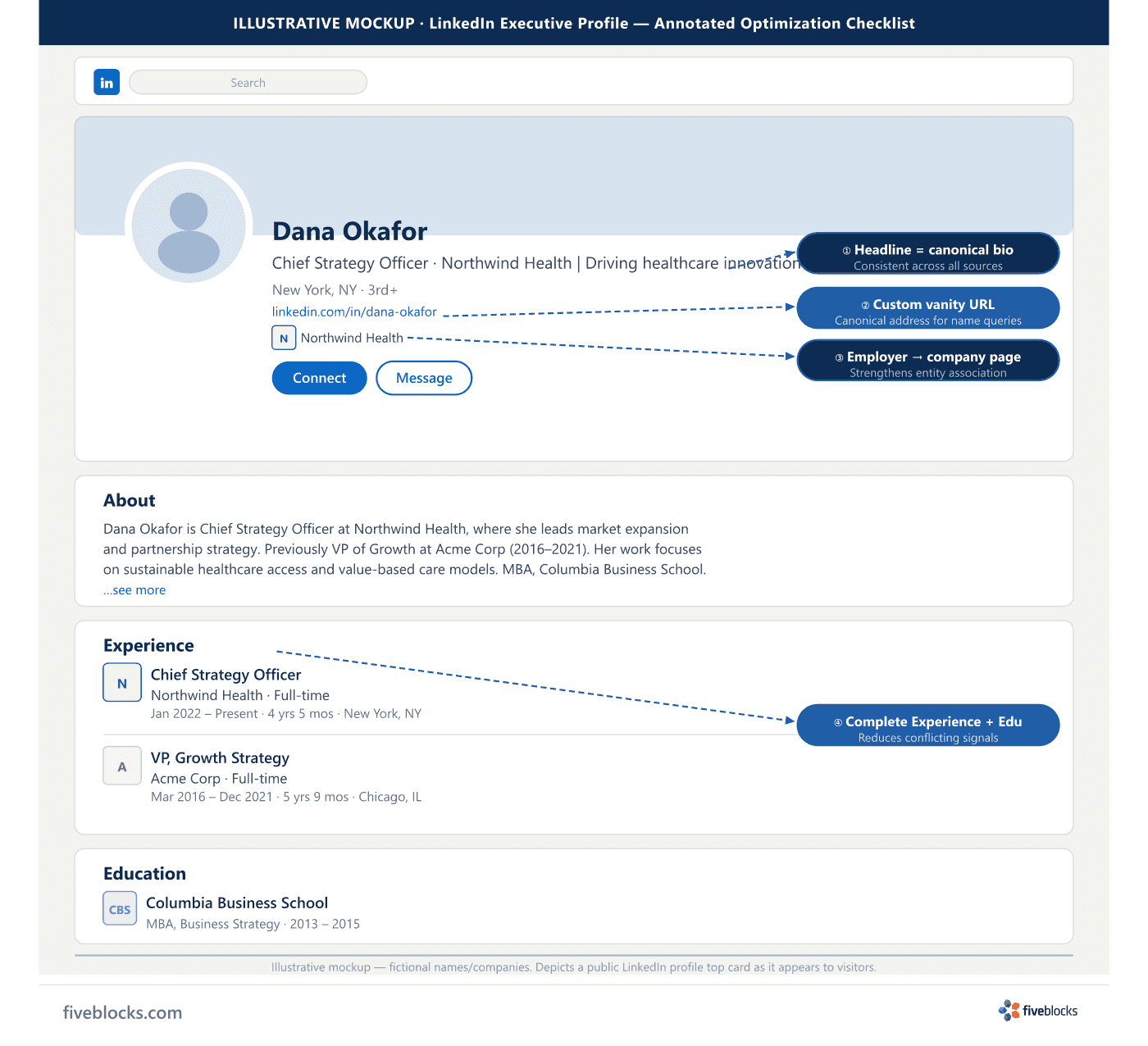
Complete every field, claim a custom URL, use a professional headshot, link the employer to its verified company page, match the headline to the canonical bio, and populate Experience and Education accurately. Then hold a steady posting cadence. The profile ranks near the top for executive name queries and feeds the entity layer, so treat it as a managed property.
LinkedIn comes first because the profile consistently ranks in the top three for executive name queries and feeds the entity layer that search and AI engines read. We treat it as a managed property in executive engagements rather than something the executive maintains casually.
Optimize the profile
Work through the fields so each one reinforces the same identity:
- Complete every field. Each populated field gives engines another consistent attribute to resolve against.
- Claim a custom URL. A named vanity URL is the canonical address for the profile.
- Use a professional headshot. A clear, current photo keeps the profile recognizable wherever it appears.
- Link the employer to the verified company page. Attaching the role to the official company page strengthens the employer association.
- Structure the headline to match the canonical bio. Keep the headline consistent with the bio used elsewhere so descriptions agree across sources.
- Populate Experience and Education accurately. An accurate, consistent history leaves engines fewer conflicting signals to reconcile.
Sustain a posting cadence
Completeness is only half of it. Two to three substantive posts a month, plus considered engagement on other people’s content, builds topical authority signals that add up over time.
Last reviewed: 19/05/2026
