How do you create an executive bio that ranks well in Google?
An executive bio ranks when structure and authority reinforce each other: clear section headings and a quotable opening paragraph an engine can lift; Person schema with sameAs links to every authoritative profile; inbound links from authoritative pages; dated updates that signal freshness; and wording that agrees with the LinkedIn and Wikipedia versions of the same identity.
Two things decide whether an executive bio ranks: how easily an engine can extract from the page, and how firmly the page is tied to the executive’s identity across the web. Five elements do that work.
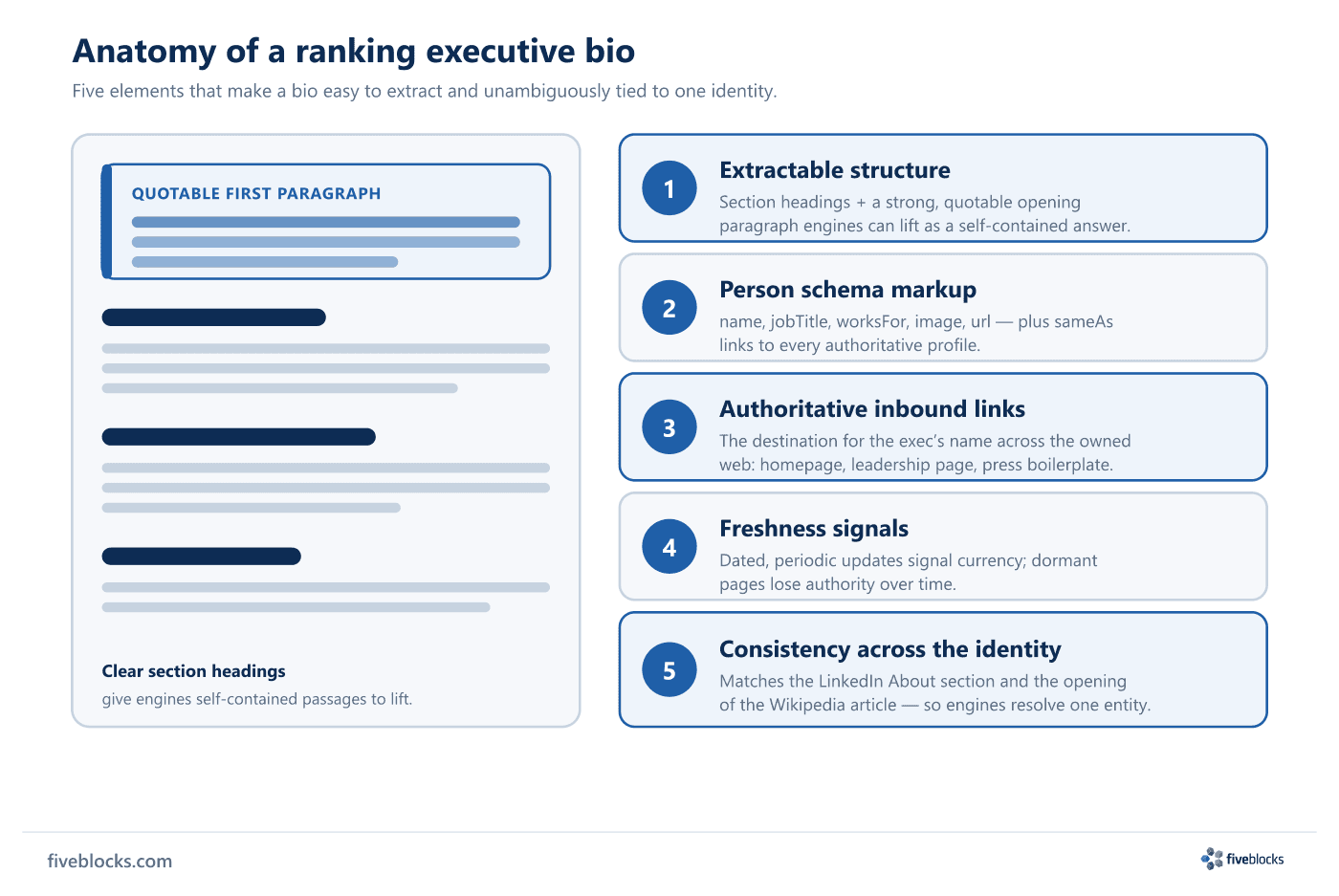
1. Extractable structure
Use clear section headings, and open with a paragraph an engine can lift as a self-contained answer. The content AI engines cite most is fact-dense and broken up with clear headings and short, self-contained passages. State who the person is and what they are known for in the opening lines instead of building up to it.
2. Person schema markup
Mark the bio up with Person schema and populate the properties the bio supports: name, jobTitle, worksFor, image, url, and sameAs links to every authoritative property. With verified sameAs links in place, engines can extract the entity, build an identity graph, and connect the bio to the executive’s Wikipedia article and Wikidata record.
3. Authoritative inbound links
Every mention of the executive’s name on the owned web should point at the bio: the corporate homepage navigation, the leadership listing page, press-release boilerplate, and any content the executive authors. sameAs links running from the bio out to authoritative profiles, and from those profiles back, tell search and AI systems that the referenced profiles are one identity, so they resolve scattered references with higher confidence.
4. Freshness signals
Dated updates on a regular schedule show the page is current. Google re-evaluates rankings continuously as new signals arrive, and freshness is among the classical ranking factors for branded queries. Dormant pages lose authority over time; recent activity adds to it.
5. Consistency across the identity
The bio should match the LinkedIn About section, the opening of the Wikipedia article where one exists, and any external speaker bios. LinkedIn profiles rank consistently in the top three for executive name searches, and AI engines treat a subject’s Wikipedia article as the canonical reference they paraphrase from, so the corporate bio sits alongside both and has to agree with both. Consistent attributes across those references are what let engines resolve them to a single entity. With all five in place, the page is one Google trusts and AI engines extract from confidently.
Last reviewed: 19/05/2026
