How should you optimize your LinkedIn profile for Google search?
Optimize a LinkedIn profile for Google search with a clean custom URL, complete profile fields, an extractable headline and summary, named-employer linking, a consistent professional photo, and a bio kept identical across your other authoritative profiles.
LinkedIn profiles rank well, often in the top three, for executive name queries on Google, and they feed the entity layer through sameAs relationships, so optimizing one is basic reputation work. There are two goals: rank cleanly on the name SERP, and send consistent signals that engines can resolve to the right person.
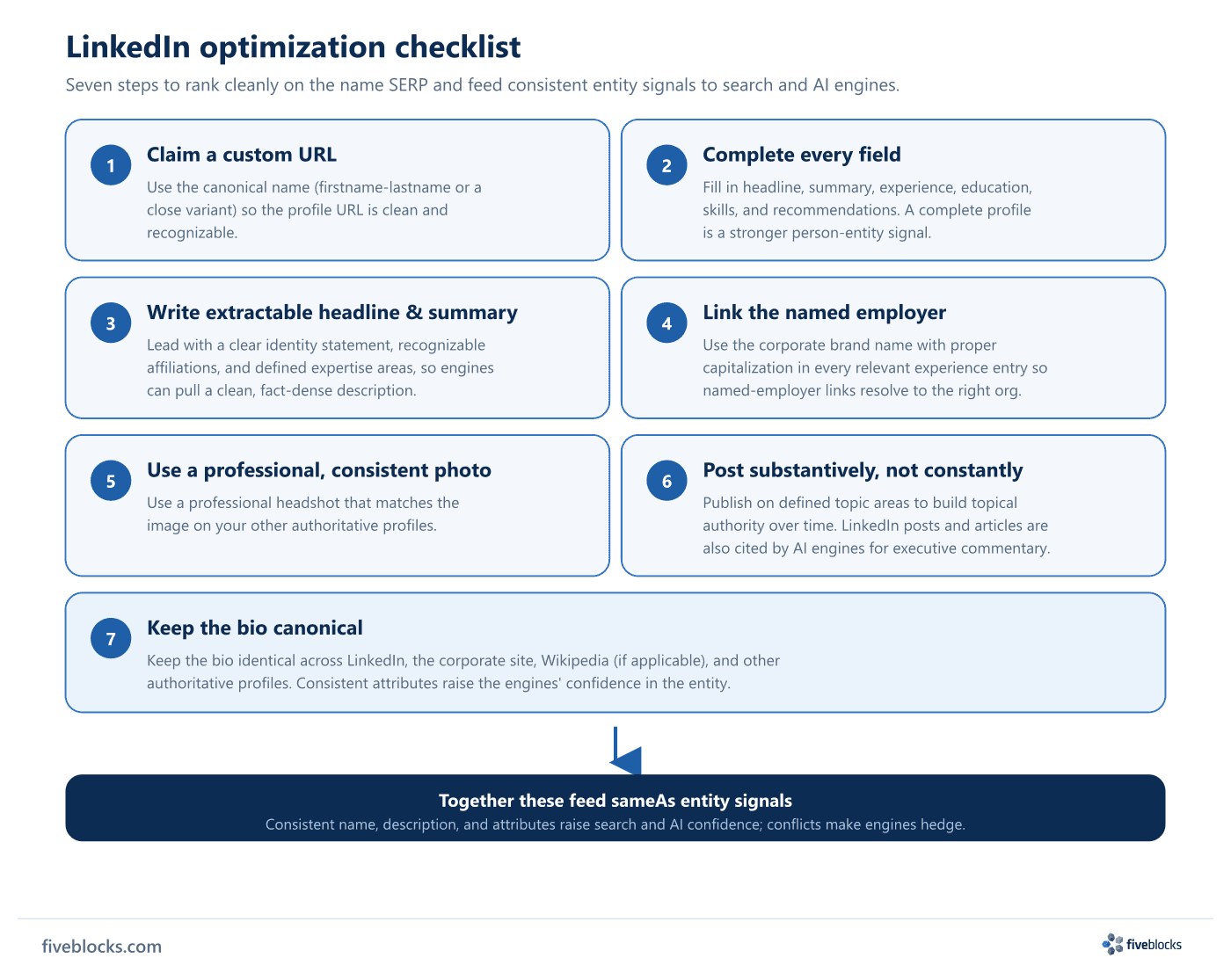
The LinkedIn optimization checklist
- Claim a custom URL
- Use the canonical name (firstname-lastname or a close variant) so the profile URL is clean and recognizable.
- Complete every field
- Fill in the headline, summary, experience, education, skills, and recommendations. A complete profile is a stronger person-entity signal than a half-filled one.
- Write the headline and summary to be extracted
- Lead with a clear identity statement, recognizable affiliations, and defined expertise areas, so engines can pull a clean, fact-dense description.
- Link the named employer
- Use the corporate brand name with proper capitalization in every relevant experience entry so the named-employer links resolve to the right organization.
- Use a professional, consistent photo
- Use a professional headshot that matches the image on your other authoritative profiles.
- Post substantively, not constantly
- Publish on defined topic areas to build topical authority over time. AI engines also cite LinkedIn posts and articles for executive perspectives and commentary.
- Keep the bio canonical
- Keep the bio identical across LinkedIn, the corporate site, Wikipedia (if applicable), and other authoritative profiles.
Why consistency matters
When name, description, and key attributes match across these signals, search and AI systems grow more confident in the entity. When they conflict, the systems hedge; inconsistent profiles introduce conflicting signals that degrade entity-recognition confidence.
Last reviewed: 19/05/2026
Sources (4)
- Organization (Organization) structured data developers.google.com
- Understand how structured data works (Intro to structured data) developers.google.com
- How LinkedIn's High Domain Authority Affects Anyone With a LinkedIn Profile natlawreview.com
- Does Your LinkedIn Profile Affect Your Google Search Results? aikenhouse.com
