How do you optimize LinkedIn articles for search reputation?
Optimize LinkedIn articles with descriptive titles that include the relevant branded or topical query, structured headings, original insight under named authorship, and links back to owned properties. LinkedIn's domain authority, scored at around 98/100, can push a well-built article into branded search results, giving executives a credible third-party position tied to their identity.
LinkedIn articles are a useful reputation asset because the platform’s domain authority, scored at around 98/100, can push a well-built article into branded search, where it holds a credible position tied to the executive. Optimizing them takes a few disciplines applied consistently.
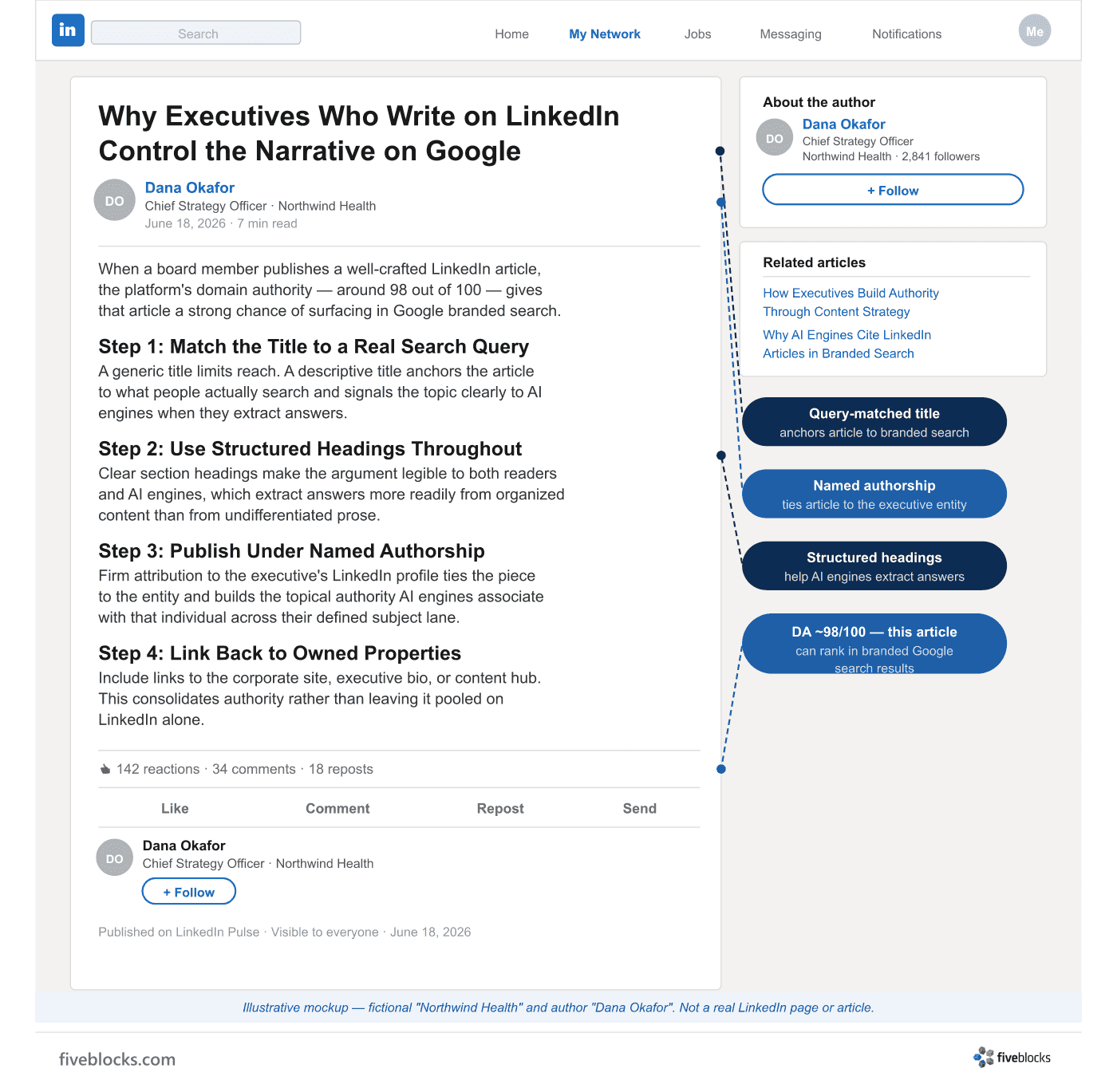
Step 1: Write a descriptive, query-matched title
Include the relevant branded or topical query in the article title so the piece matches what people search. A generic title limits the article’s reach; a specific one ties it to an actual query and gives the AI engines a clear topic signal.
Step 2: Use structured headings throughout
Break the article into sections with clear headings. Structured headings make the argument easier for readers and the AI engines to follow, and the engines extract answers from well-organized content more readily than from undifferentiated prose.
Step 3: Publish original insight, not recycled commentary
Substance is what earns ranking and citation. Original analysis, a genuine point of view, or concrete practitioner knowledge gives the engines material worth citing. Thin or promotional content neither ranks nor builds authority.
Step 4: Publish under named authorship
The article must be firmly attributed to the executive’s LinkedIn identity. Named authorship ties the piece to the entity, strengthens the topical authority the engines associate with that person, and ensures any citation credits the right individual.
Step 5: Link back to owned properties
Include links back to the corporate site, executive bio page, or content hub. This consolidates authority rather than leaving it pooled on LinkedIn, and reinforces the canonical entity relationship across the owned properties.
Publishing cadence and length
Consistency counts for more than volume. A steady cadence of substantive articles on a defined topic builds topical authority over time; sporadic or scattered publishing does not. On length, match depth to the topic. Articles that fully develop an idea tend to outperform thin posts regardless of word count. No specific length or frequency threshold is sourced here, so treat quality and consistency on a focused topic as the variables that matter.
How this feeds search and AI
A LinkedIn article optimized on these dimensions can rank for the executive’s branded query and give the AI engines topic-specific material on their expertise. We treat LinkedIn articles as part of an executive’s content, tied to their defined topic and linked back to the entity home, and track how they appear in branded search with IMPACT™.
Last reviewed: 20/05/2026
