How do you leverage LinkedIn newsletters for reputation management?
LinkedIn newsletters build reputation by combining opt-in subscriber distribution with durable archived content. Each published issue becomes a ranked page tied to the executive's defined topic, which builds the topical authority that search engines and AI models draw on over time.
LinkedIn newsletters do two reputation jobs at once: they distribute directly to an opt-in professional audience, and they create a publicly archived body of content that search engines and AI models can rank and retrieve long after the issue was sent.
Each newsletter issue is published as a permanent page on LinkedIn, accessible without a subscription, crawlable by Google, and indexed by the AI engines. The archive builds up over time. A sustained newsletter on a focused topic produces a body of work the systems read as genuine topical expertise, not a single post.
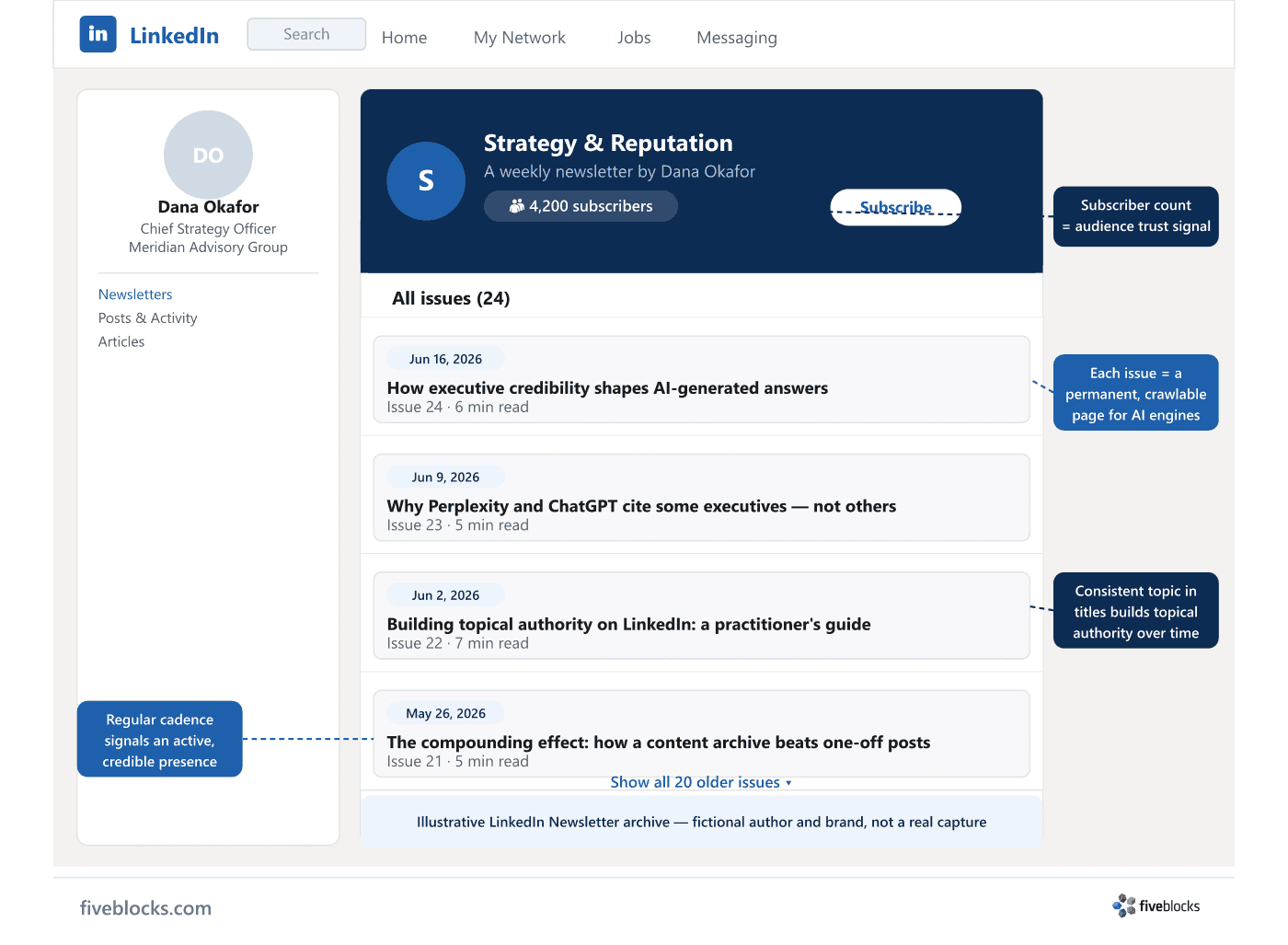
What makes a LinkedIn newsletter a reputation asset
- Defined topic. Issues that stay within the executive’s recognized expertise build topical authority. Drift across unrelated topics, or long gaps, erodes it.
- Substantive content over thin updates. AI models prefer fact-dense, developed content; brief promotional notes do little to shape how the engines describe the author.
- Named authorship. The newsletter must be clearly attributed to the executive, consistent with the canonical identity across the LinkedIn profile, bio pages, and owned properties.
- Publication cadence. A consistent rhythm signals an active, credible presence. Subscriber counts and engagement figures on the newsletter page also reinforce authority for human readers arriving via search.
How we track it
We treat a well-run LinkedIn newsletter as part of an executive’s content, tied to their defined topic. We monitor how the archived issues appear in branded search with IMPACT™ and how the AI engines draw on them when describing the executive’s expertise with AIQ™.
Last reviewed: 20/05/2026
