How do you manage reputation for a philanthropist or donor who wants visibility?
Visible philanthropy is structural reputation work: authoritative coverage of the giving and its impact, schema-marked giving entities (Organization, NGO, or NonprofitOrganization for foundations and programs), Wikipedia and Wikidata where notability supports it, and one consistent description of the philanthropist, the foundation, and recipients. Engines reward sustained substance over announcements.
For a philanthropist or donor who wants visibility, the reputation work is structural, with the charitable activity at its center. Four components carry it, and one principle governs all four: durable visibility follows substantive giving and substantive coverage of that giving, not press-release moments.
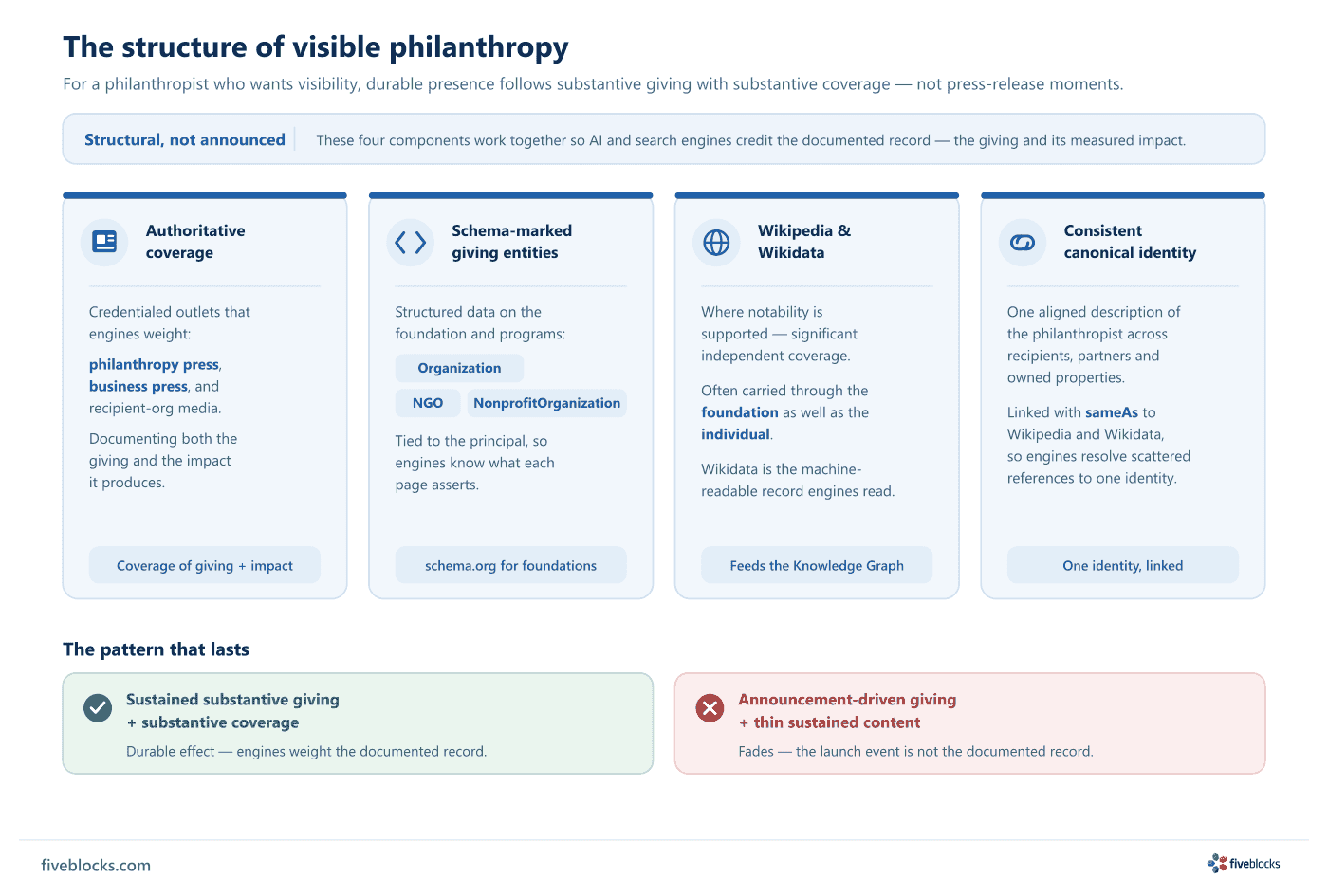
The components of visible philanthropy
- Authoritative coverage of the giving and its impact
- Coverage in the credentialed outlets engines weight: sector-specific philanthropy press, mainstream business press, and recipient-organization media. It should document what the giving produced, not only that it happened.
- Schema-marked giving entities
- Mark up foundations and giving programs with the schema.org types built for them:
Organizationfor foundations and programs, with a clear relationship to the principal, andNGOorNonprofitOrganizationwhere they apply. Schema markup tells search and AI engines what a page asserts and which entity it belongs to. - Wikipedia and Wikidata where notability is supported
- Nonprofits and foundations qualify for Wikipedia articles on the same terms as any other organization: significant coverage in reliable, independent secondary sources. Notability is often carried by the foundation rather than the individual, or by both. Wikidata is the machine-readable record that engines and the Google Knowledge Graph read from.
- Consistent canonical descriptions and entity links
- One description of the philanthropist and the giving, used across recipients, partners, and the principal’s own properties. Tie those references together with
sameAslinks from Organization and Person schema to the canonical Wikipedia and Wikidata identifiers, so engines resolve them all to one identity.
The pattern that lasts
Sustained giving with sustained coverage holds up. Announcement-driven giving with thin follow-through does not. Engines weight the documented record, not the launch event.
Last reviewed: 19/05/2026
