What is digital crisis preparedness and how do you build it?
Digital crisis preparedness combines pre-built infrastructure (counsel-approved statement templates, FAQ and fact pages, current leadership content, and pre-saved IMPACT and AIQ monitoring queries) with practiced response through twice-yearly drills against realistic scenarios. Building both before a crisis leads to faster, better outcomes when a real situation arrives.
Most crises are predictable in category if not in timing. Digital crisis preparedness means building the infrastructure and the response skills before either is needed, so a real situation is met with prepared material and a practiced team instead of improvisation. It has two parts: pre-built infrastructure and practiced response.
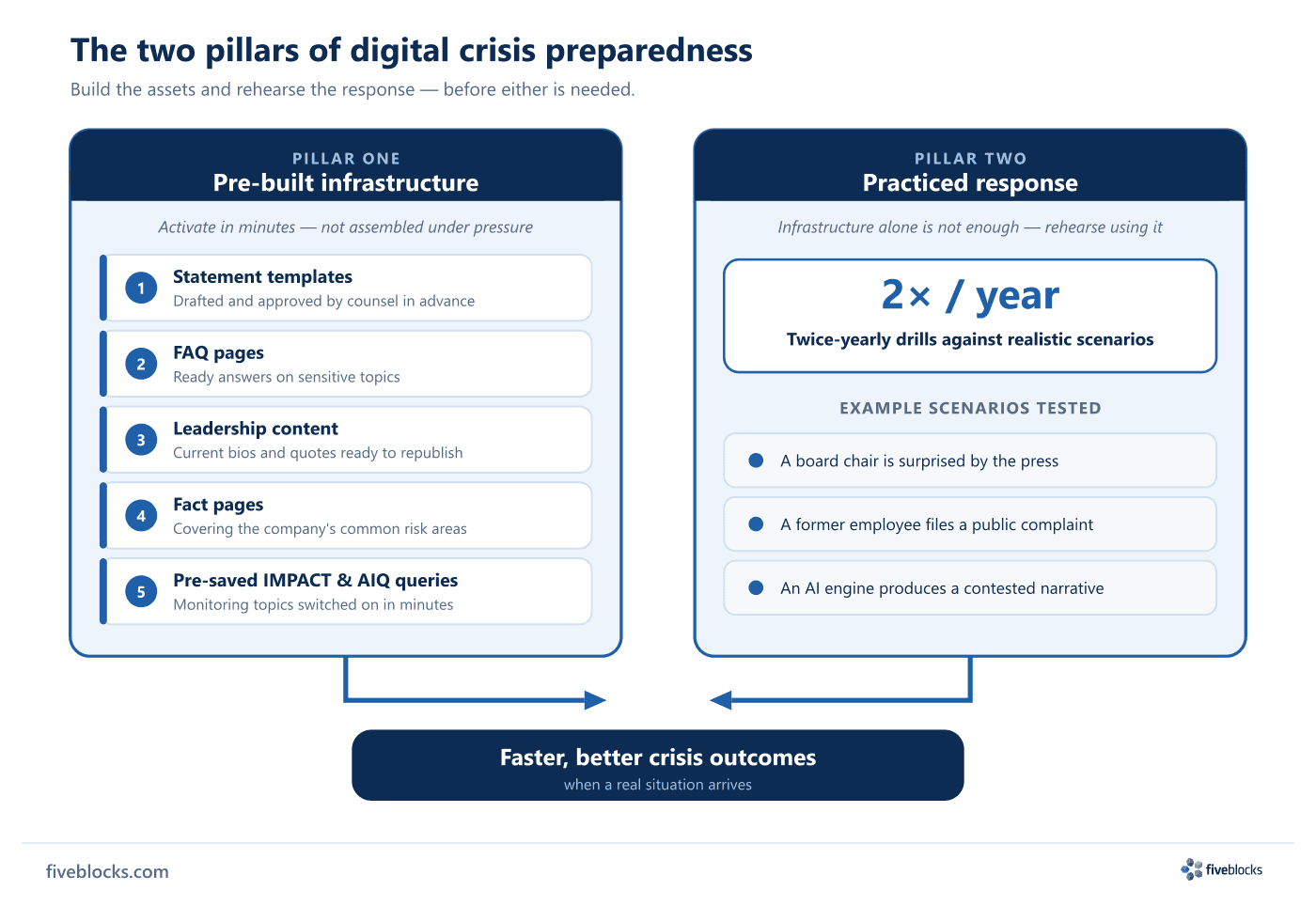
Pillar one: pre-built infrastructure
The infrastructure is the set of assets you can activate in minutes rather than assemble under pressure:
- Scenario-based statement templates, drafted and approved by counsel in advance.
- FAQ pages on sensitive topics, ready to answer the questions stakeholders actually ask.
- Current leadership content, up-to-date bios and quotes ready for republication.
- Pre-built fact pages, covering the company’s common risk areas.
- Pre-saved monitoring queries, IMPACT and AIQ topics pre-loaded so they can be switched on in minutes instead of hours.
Pillar two: practiced response
Infrastructure alone is not enough; the team has to know how to use it. Practice means twice-yearly drills against realistic scenarios: a board chair gets surprised, a former employee files a public complaint, an AI engine starts producing a contested narrative. The drills test the response framework end to end and expose the gaps before a real crisis does.
Why it pays off
We help clients build both parts. Proactive engagements that include preparedness work produce better outcomes when a real situation arrives than reactive engagements do, because the groundwork that shapes the lasting digital record is already in place when the clock starts.
Last reviewed: 19/05/2026
