What happens when someone vandalizes your Wikipedia page?
Vandalism on a watched Wikipedia page is reverted in layers that work on different time scales: anti-vandalism bots like ClueBot NG catch obvious patterns within seconds, and volunteer recent-changes patrollers revert what the bots miss within minutes. Monitoring tools such as Five Blocks' WikiAlerts add an alert layer that notifies a corporate communications team in real time when a watched page is edited.
Wikipedia defends against vandalism in layers that work on different time scales. The fastest layer is automated, the next is human, and a monitoring layer sits alongside them to alert the page’s stakeholders.
The layers, fastest to slowest
- Seconds – anti-vandalism bots. Bots such as ClueBot NG detect obvious vandalism patterns and revert them automatically, usually in under a second.
- Minutes – recent-changes patrollers. Volunteer editors scan the live feed of recent changes for inappropriate edits and revert them. On watched pages, most vandal edits have historically been reverted within about five minutes.
- Minutes – monitoring and alerts (WikiAlerts). For client articles, Five Blocks’ WikiAlerts tracks edits, vandalism, and traffic on watched pages and alerts the team in real time when a page changes, so a corporate communications team can respond rather than wait to notice a problem on its own.
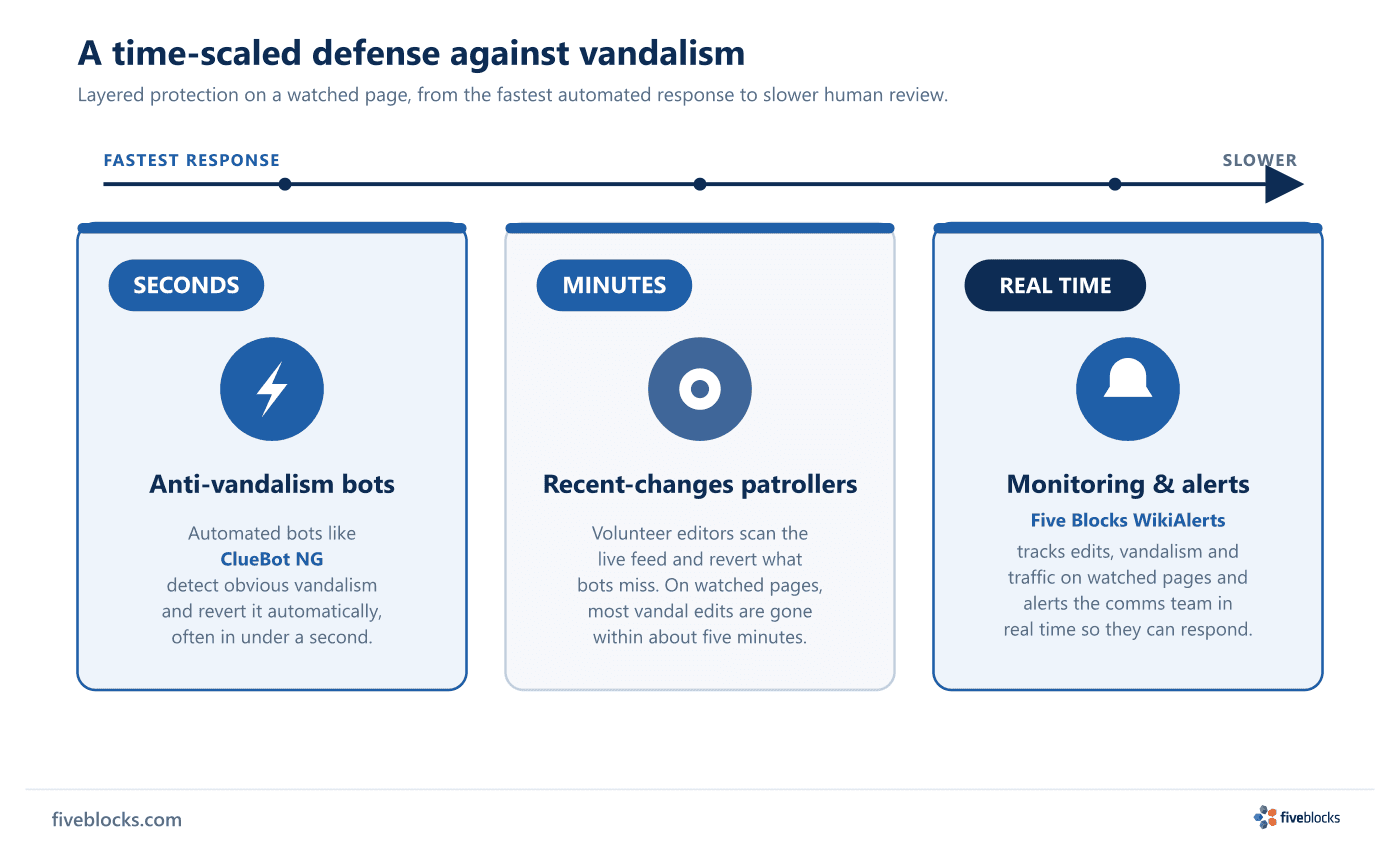
The result is that obvious vandalism on a watched corporate or executive page rarely survives long. The bot layer catches the blatant cases almost immediately, the patroller layer handles what the bots miss, and the monitoring layer keeps the people who care about the page informed. Less obvious vandalism, or vandalism to a little-viewed article, can persist longer, which is why active monitoring matters for pages that are not already heavily watched.
Last reviewed: 19/05/2026
