How often do Wikipedia pages get vandalized?
Wikipedia's vandalism defense has several layers. ClueBot NG and similar bots revert obvious vandalism within seconds, and watchlist subscribers, Huggle, and STiki queues catch the rest, with most vandal edits reverted within about five minutes on actively watched articles. Less obvious vandalism to low-traffic articles can last longer. WikiAlerts adds a corporate monitoring layer that sends the client team a diff the moment any edit lands.
Wikipedia’s defense against vandalism runs in several automated layers, which is why most readers never see vandalism on the pages they visit. The layers work as concentric rings, each acting at a different speed and catching what the previous one missed.
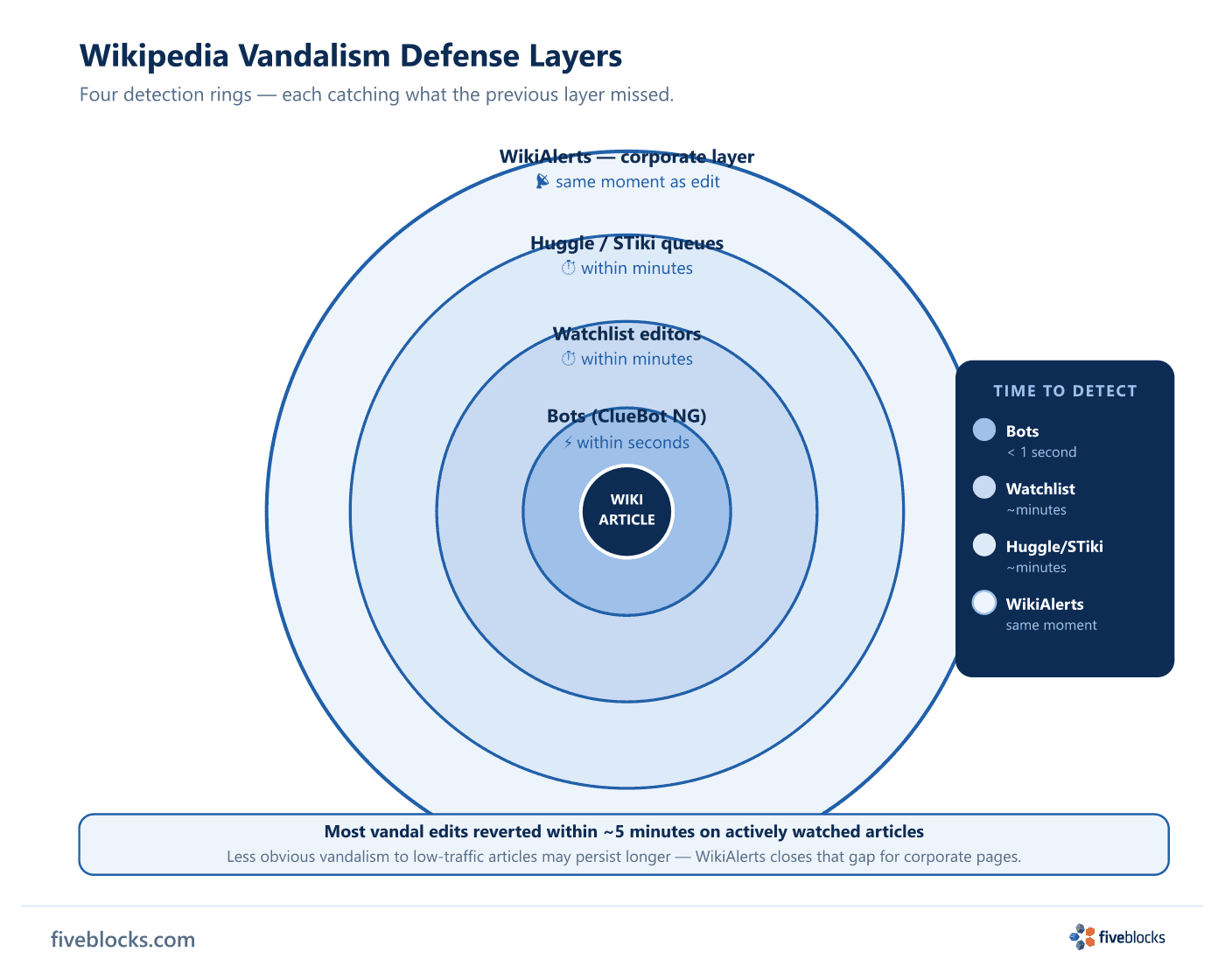
- Bots, within seconds
- ClueBot NG and similar anti-vandalism bots scan the live edit stream and revert obvious patterns automatically. The ClueBot NG documentation states that non-reverted edits are usually processed in under a second. Bots handle the clearest, highest-volume vandalism before most human editors notice it.
- Watchlist subscribers, within minutes
- Any registered Wikipedia editor can add an article to their watchlist, and every later edit to that article appears in their watchlist feed in real time. On high-profile pages such as Fortune 500 companies, prominent executives, and contested topics, dozens or hundreds of editors watch the page and can revert within minutes.
- Huggle and STiki queues, within minutes
- Huggle and STiki give experienced volunteer editors a continuously refreshed queue of recent changes to review. STiki assigns each edit to one reviewer at a time so no effort is duplicated. These tools extend human review to edits that bots missed and that don’t land on any individual editor’s watchlist.
- WikiAlerts, the corporate layer, same moment
- WikiAlerts is a fourth layer for the client communications team. The moment a watched article is edited, WikiAlerts emails the subscribed team a diff view showing what changed, which editor made the change, and a one-click revert option for clear vandalism. This notification arrives before AI engines and search crawlers cache the changed version.
How quickly does vandalism get reverted?
Criticism of Wikipedia reports that most vandal edits are reverted within about five minutes. Less obvious vandalism, or vandalism to a little-viewed article, can stay up longer. So active monitoring and a clear response workflow matter most for lower-traffic articles, which the bot and watchlist layers cover less densely.
Last reviewed: 19/05/2026
