What is Wikipedia monitoring and why does it matter?
Wikipedia monitoring tracks every edit to an article in real time, sorts each change by type (routine, vandalism, NPOV violation, or policy issue), and routes the response: revert, Talk-page challenge, or pass. Because Wikipedia content feeds search results, Knowledge Panels, and AI engines, an undetected error or hostile edit can spread into a brand's wider reputation footprint.
Wikipedia is a live document. Articles are edited continuously, and for any high-profile corporate or executive article those edits come from a mix of legitimate community contributors, well-intentioned readers, the occasional vandal, and at times competitors or hostile parties. Monitoring is what keeps that activity visible and actionable.
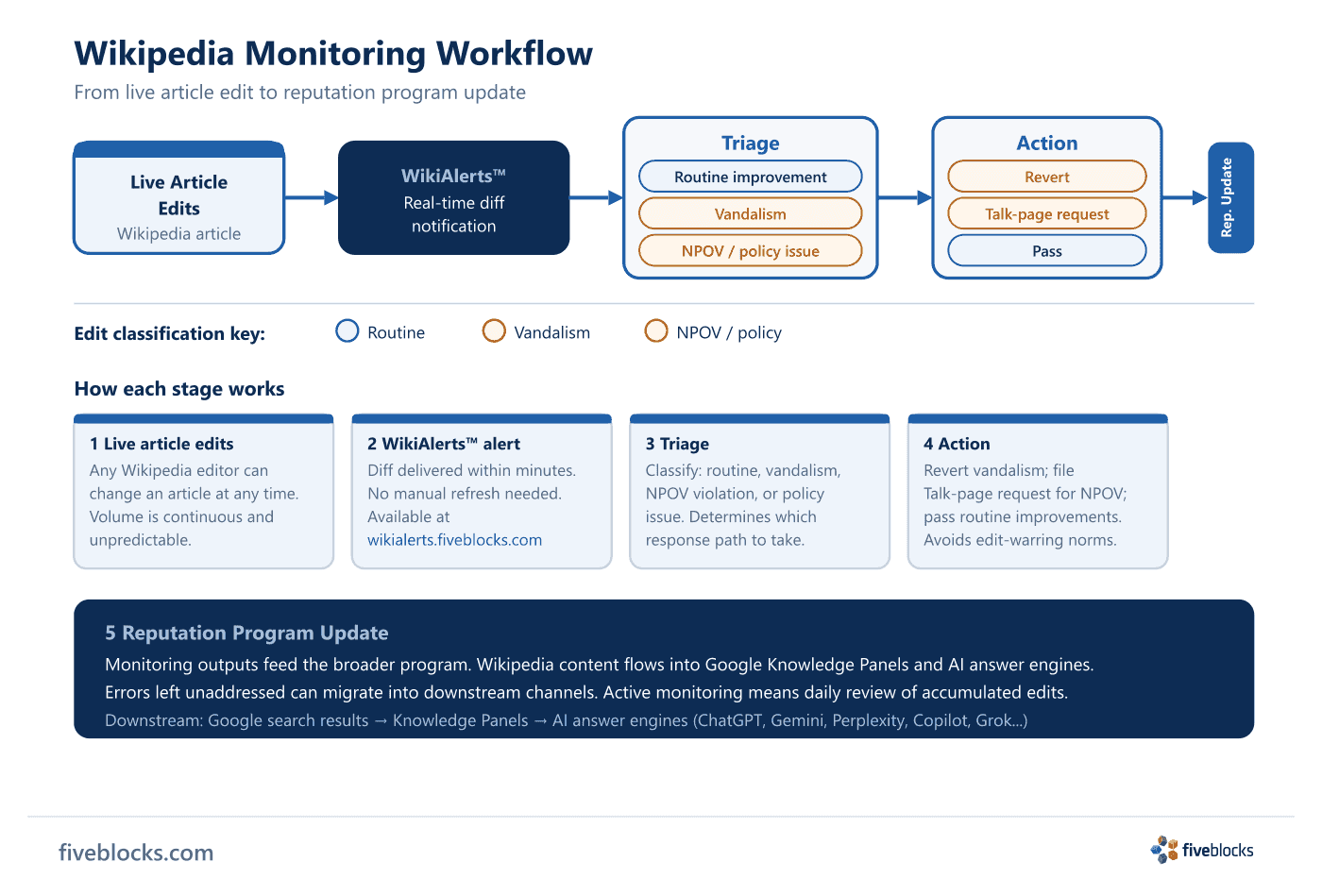
Step 1: Real-time alerting
The starting point is an instant notification whenever an article changes. Five Blocks uses WikiAlerts™ (at wikialerts.fiveblocks.com) to flag edits with diffs within minutes of being made, so no one has to keep refreshing the article and no change slips past. Within Wikipedia itself, editors who have an article on their watchlist also see new edits in real time, and anti-vandalism bots such as ClueBot NG detect and revert obvious vandalism within seconds.
Step 2: Triage
Each incoming edit falls into one of four categories:
- Routine improvement: minor wording, formatting, or citation updates that need no action.
- Factual update needed: a change that is well-intentioned but inaccurate, calling for a sourced correction or a Talk-page discussion.
- Vandalism: deliberately harmful or defamatory content to be reverted, usually within minutes by community patrollers or within seconds by anti-vandalism bots.
- NPOV or policy issue: content that is biased, promotional, or against Wikipedia guidelines, to be challenged through the Talk page rather than reversed directly.
Step 3: Response
The triage category sets the action:
- Revert clear vandalism promptly, staying within Wikipedia community norms to avoid edit-warring.
- File a Talk-page request for edits that raise NPOV concerns, sourcing disputes, or policy questions, so the community can reach consensus.
- Pass legitimate improvements that are accurate and well-sourced.
Step 4: Downstream reputation update
Monitoring feeds the wider reputation program. Wikipedia article content is a major input to Google search results, Knowledge Panels, and AI answer engines. The article is a live asset, not a fixed one: an error that gets introduced and left alone can migrate into those downstream channels and become much harder to correct later. On ongoing engagements, active monitoring usually means a daily review of the edits that have accumulated.
Last reviewed: 19/05/2026
