Can you create a Wikipedia page for yourself or your company?
No. Self-creation by the subject or its representatives violates Wikipedia's conflict-of-interest policy. The correct path is the disclosed COI process: a paid editor discloses the relationship and submits proposed content through the article's Talk page or Articles for Creation for independent community review.
Creating your own Wikipedia article, or having an employee or vendor create it without disclosure, is a common and costly mistake. Wikipedia’s conflict-of-interest policy strongly discourages editors with a financial or personal interest in a subject from creating or editing articles about that subject directly.
What happens when the subject creates its own article
Articles created this way get flagged, scrubbed of promotional language, nominated for deletion, or in some cases blocked from re-creation. The community also tags the article with public maintenance notices that other editors and readers can see for months or years afterward. The outcome is often an article that is worse than no article at all.
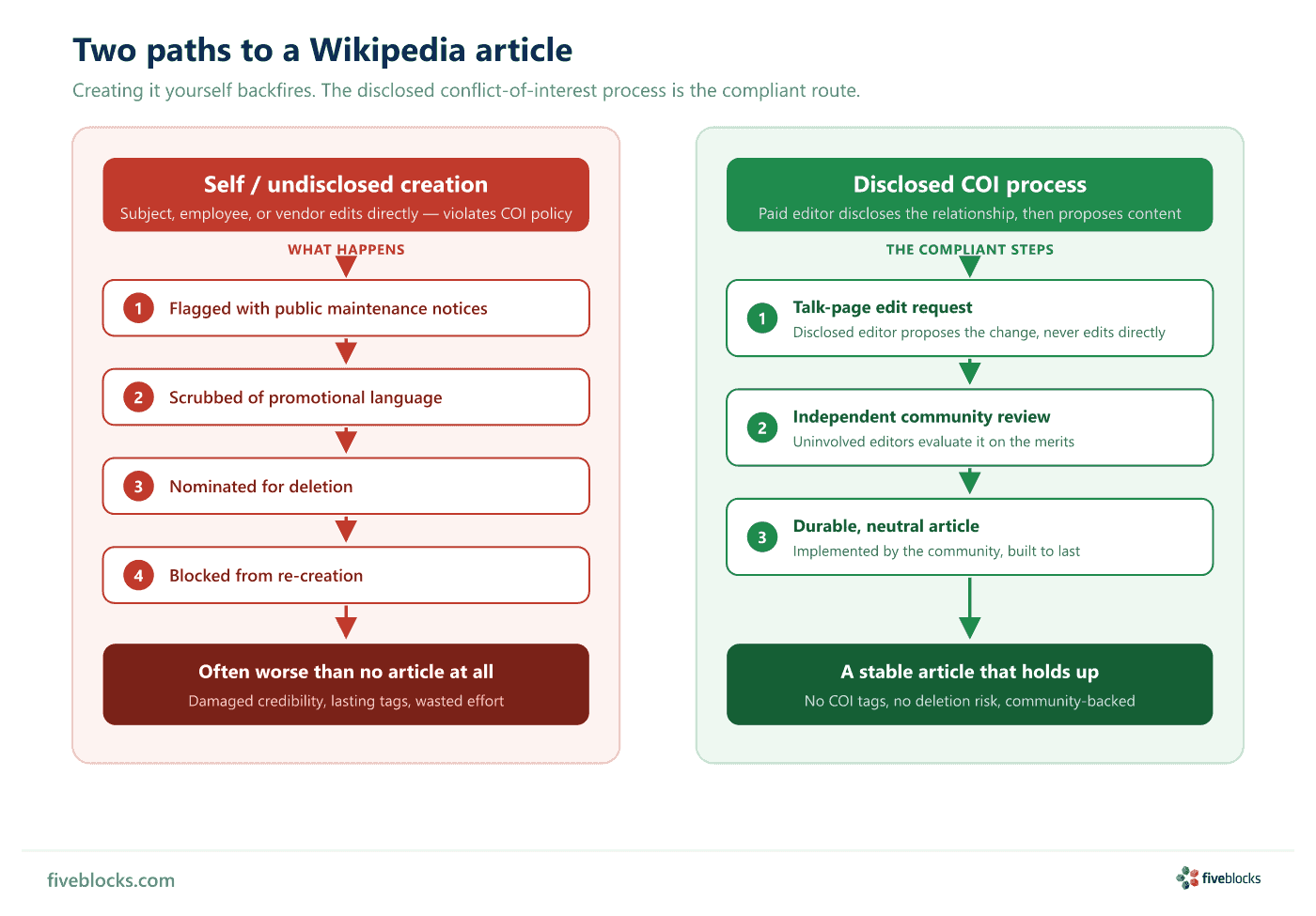
The correct path: disclosed paid editing
The compliant route is disclosed paid editing under Wikipedia’s terms of use. In practice that means:
- A paid editor or representative discloses the relationship, naming the employer, the client, and any other relevant affiliation, on their user page and on the article’s Talk page.
- Proposed content is submitted for independent review, either through the Articles for Creation process for a new article or via Talk-page edit requests for changes to an existing one.
- Uninvolved community editors evaluate the proposal on its merits and decide whether and how to implement it. The interested editor does not make the change directly.
Five Blocks does this work for clients through the disclosed process, which is how the resulting edits withstand community scrutiny.
Last reviewed: 19/05/2026
