How does disclosed COI editing work on Wikipedia?
An editor publicly discloses the paid or affiliated relationship on their Wikipedia user page, then posts a Talk-page edit request that names the proposed wording, the existing wording it would replace, and the reliable secondary sources supporting it; independent community editors review the request and implement, modify, or decline it. The conflicted editor does not make the change directly.
Disclosed conflict-of-interest (COI) editing follows a structured, three-step process: the editor discloses the relationship, proposes the change on the article’s Talk page with sources, and lets independent community editors decide. The conflicted editor never implements the change themselves.
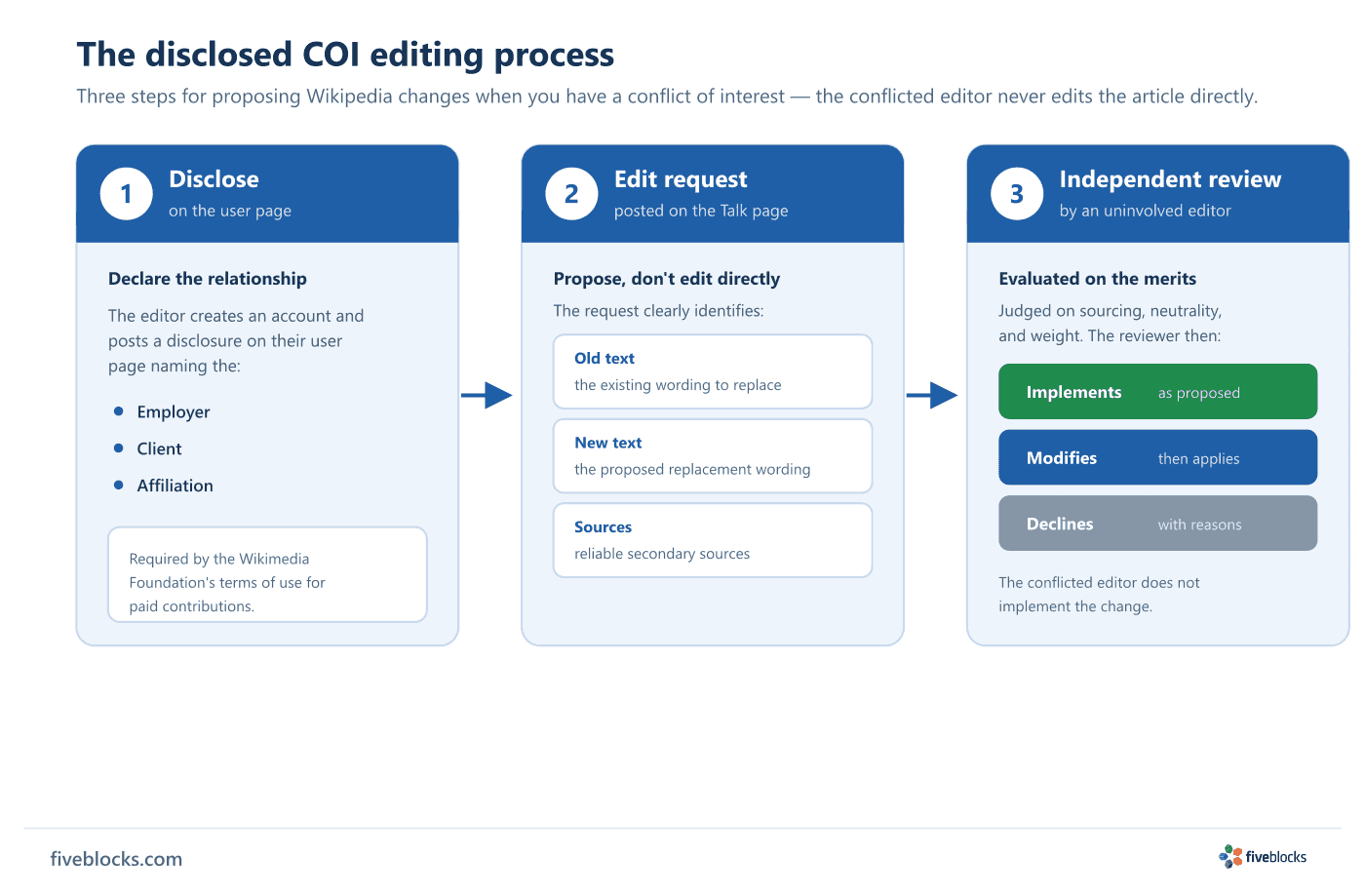
The three steps of disclosed COI editing
- Disclose on the user page. The editor creates a Wikipedia account and posts a disclosure on their user page naming the employer, the client, and any affiliation, in compliance with the Wikimedia Foundation’s terms of use.
- Post a Talk-page edit request. Rather than editing the article directly, the editor proposes the change on the article’s Talk page, clearly identifying the proposed wording, the existing wording it would replace, and the reliable secondary sources that support the change.
- Independent editors review and decide. Uninvolved community editors evaluate the proposal on its merits, sourcing, neutrality, and weight, and then implement it, modify it, or decline it. The editor with the conflict of interest does not implement the change.
Handled this way, the process is transparent and the article changes are made by uninvolved editors with no stake in the outcome, so the result withstands later review. Direct edits, undisclosed accounts, or an argumentative tone produce fragile work that often backfires on the client.
Last reviewed: 19/05/2026
