How do you handle a sudden spike in negative reviews?
Find the trigger first - a spike usually traces back to one cause - then split the work three ways: respond professionally to the substantive complaints, report reviews that violate platform policy, and bring in authentic positive reviews to rebalance the recent set.
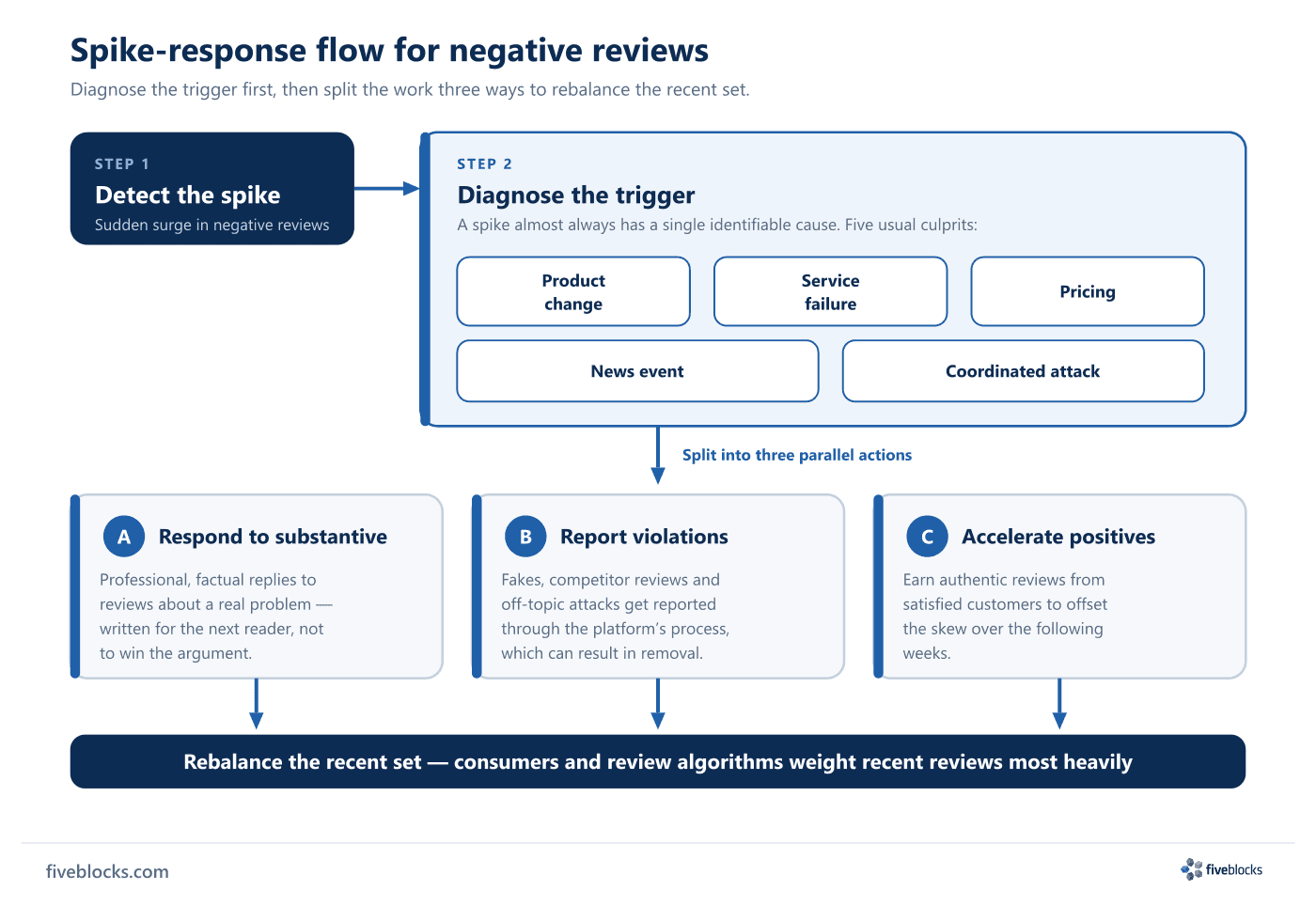
A sudden spike in negative reviews usually traces back to one cause, so the first move is diagnosis, not response. What triggered it determines the reaction, because a product change, a service failure, a pricing decision, a news event, and a coordinated attack each need a different one. Once you know what set the spike off, the work splits into three tracks that run at the same time.
Step 1: Diagnose the trigger
Before responding to anything, identify what caused the surge. Each of the common causes points to a different response:
- A product or service change, a release, a policy shift, or an outage that changed the customer experience.
- A service failure, a fulfillment, billing, or support breakdown that hit many customers at once.
- A pricing decision, a price increase or plan change that provoked a wave of reaction.
- A news event, coverage or a public incident driving people to the review profile.
- A coordinated attack, an organized or competitor-driven push of inauthentic reviews.
Step 2: Split the work three ways
With the trigger clear, the response divides into three tracks that run in parallel:
- Respond to the substantive complaints. Reviews that reflect a real problem get professional, factual responses that address the underlying issue. These are real customers, and the reply is read by future ones, so write it for the next reader, not to win the argument.
- Report the policy violations. Reviews that break platform policy, fakes, competitor reviews, off-topic attacks, go through the platform’s reporting process rather than a public argument. Major platforms provide a route to report content that violates their rules, which can result in removal.
- Bring in authentic positive reviews. A spike skews the recent review set, so earning genuine reviews from satisfied customers rebalances the picture over the following weeks.
Why rebalancing the recent set matters
Both consumers and review-ranking algorithms weight the most recent set of reviews most heavily, which is what a spike distorts. That is why the third track matters: authentic reviews from satisfied customers shift the recent set back toward a representative picture, and a steady flow of new reviews also signals an active, currently-operating business.
At Five Blocks we monitor the spike across platforms and watch whether the AI engines have started repeating the negative theme with AIQ, since AI engines fold recurring themes across review platforms into confident summaries like ‘customers report’ or ‘common complaints include.’ The goal is to keep a temporary event from becoming the model’s standing description of the business.
Last reviewed: 20/05/2026
