How should SaaS companies think about reputation management?
SaaS reputation is decided on category review platforms and in comparison prompts. Standing on G2, Capterra, and TrustRadius comes first, because those platforms rank for category searches and feed buyer shortlists; G2's own 2026 research found that 45% of B2B software buyers say citations from software review sites are the most confidence-inspiring signal in an AI-generated response. The comparison stage, where buyers ask ChatGPT or Perplexity 'X versus Y', is where shortlists get cut, and AIQ™ monitoring shows how the engines render those head-to-head verdicts.
SaaS buyers research in a predictable order: category review platforms, then comparison prompts, then references. The reputation work maps onto that order. Each stage needs different content and different monitoring, and the AI layer has made the comparison stage matter far more than it used to.
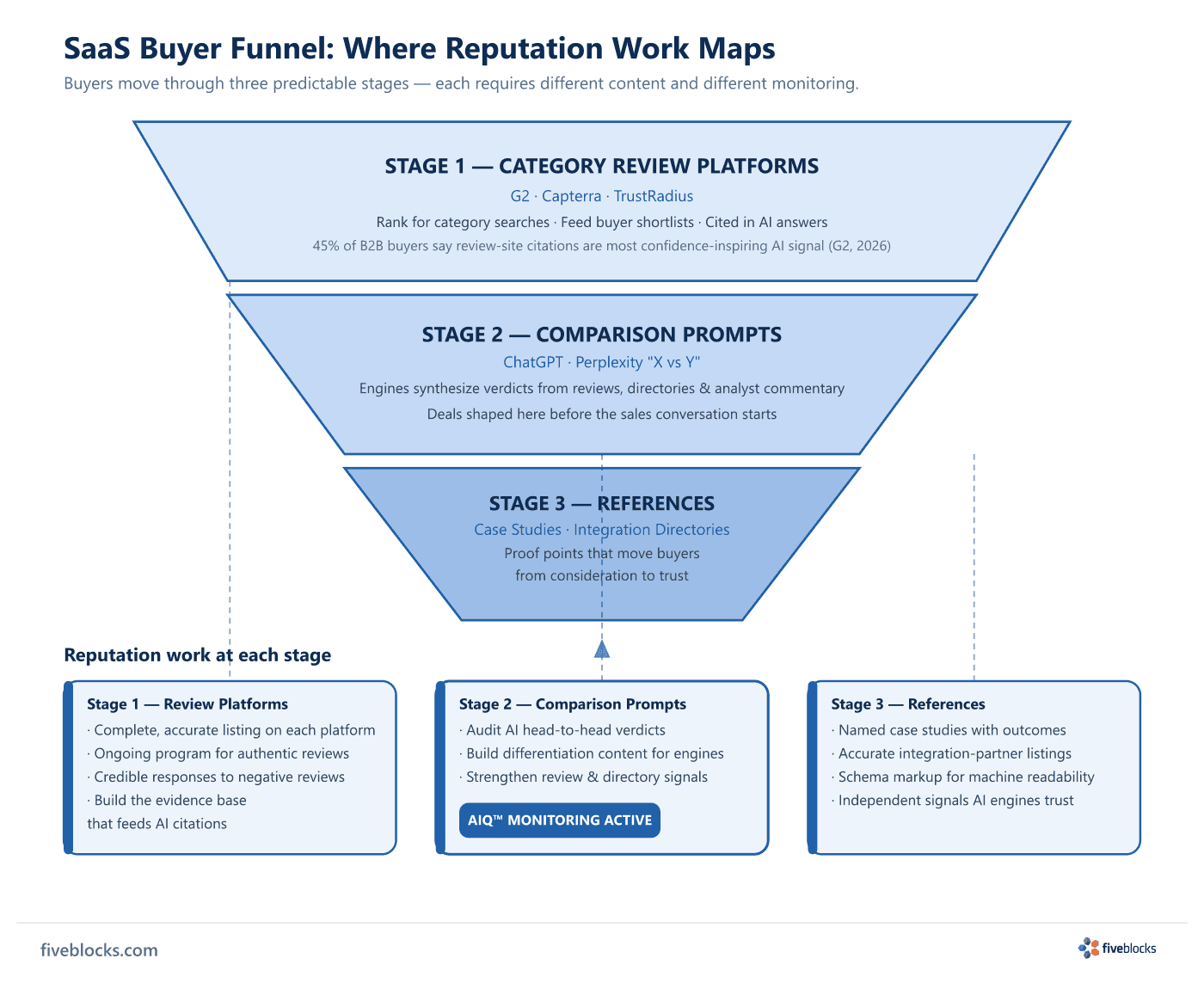
Stage 1: Category review platforms
Standing on G2, Capterra, and TrustRadius comes first. These platforms rank prominently for category searches. A prospect looking for ‘CRM software’ or ‘project management software’ often lands on G2 or Capterra before ever reaching a vendor’s own domain. They feed buyer shortlists and AI engine answers alike: analysis of AI-generated responses across software queries shows G2 is cited more frequently than most other software-focused sources. G2’s 2026 research found that nearly half of B2B software buyers (45%) say citations from software review sites are the most confidence-inspiring signal in an AI-generated response.
- Build and maintain a complete, accurate listing on each platform
- Run an ongoing program to earn authentic, current reviews from satisfied customers. The body of evidence should reflect the product today, not a past low point
- Respond credibly to legitimate negative reviews; suppression and astroturfing both backfire
Stage 2: Comparison prompts
Comparison is the stage the AI engines have reshaped. Buyers now ask ChatGPT or Perplexity ‘X versus Y’ and treat the synthesized verdict as their starting point. A SaaS company can get characterized against a competitor with no input of its own: the engines draw on review platforms, integration directories, analyst commentary, and whatever authoritative content exists. We monitor those comparison prompts with AIQ™, because that is where shortlists get cut and where a negative framing, accurate or not, reaches buyers before the first sales conversation.
- Audit how the AI engines currently render head-to-head comparisons involving your product
- Build authoritative content that supplies the differentiation points you want the engines to cite
- Strengthen the review signals and integration-partner directory presence that feed the comparison answer
Stage 3: References and case studies
Customer case studies and integration-partner directory listings supply the proof that moves a buyer from consideration to trust. AI engines also treat these as independent, credible sources. A structured case study attributed to a named customer carries more weight in a synthesized answer than a vendor’s own claims about itself.
- Publish structured, named case studies tied to specific use cases and outcomes
- Ensure integration-partner directory listings are accurate and complete
- Use schema markup where applicable to make case study content machine-readable
Last reviewed: 20/05/2026
