What is the difference between a keyword and an entity in search?
A keyword is a search query like 'reputation management'; an entity is a recognized thing like 'Five Blocks' the firm. SEO targets keyword ranking, while reputation work increasingly targets entity recognition, because AI engines and Knowledge Panels operate on entities, not strings.
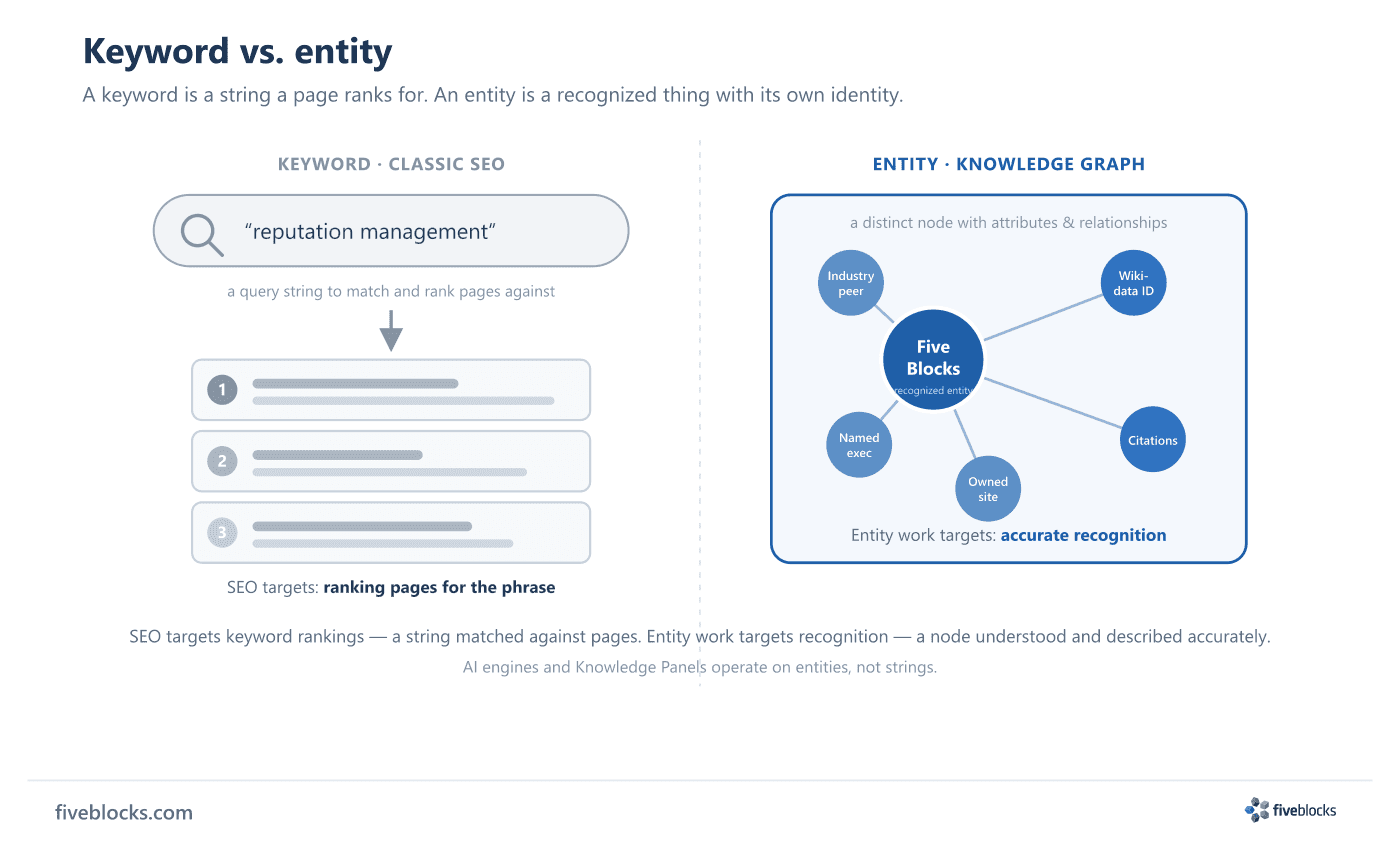
The difference between a keyword and an entity separates classic SEO from modern reputation work. A keyword is a query string, such as “reputation management firm” or “best hedge fund,” that a page tries to rank for. An entity is a recognized thing with its own identity in Google’s Knowledge Graph and the AI engines: Five Blocks the firm, a named executive, a specific product.
Keyword vs. entity
| Keyword | Entity | |
|---|---|---|
| What it is | A query string a page targets, e.g. “reputation management firm” | A recognized thing with its own identity, e.g. Five Blocks the firm |
| How systems treat it | A string of characters to match and rank pages against | A distinct node with its own attributes and relationships |
| What the work targets | Ranking specific pages for specific phrases (classic SEO) | Recognition as a distinct identity that is described accurately (entity work) |
| Built from | On-page content, links, technical signals | Wikipedia, Wikidata, owned properties, and authoritative citations |
Why the shift matters
AI engines and Knowledge Panels operate on entities, not strings. When someone asks ChatGPT about a company, the model reasons about an entity it has assembled from Wikipedia, Wikidata, owned properties, and authoritative citations, then renders what it knows.
A reputation program that only chases keyword rankings leaves the entity layer unmanaged, and that is the layer that now decides how a brand or person is understood and summarized.
Last reviewed: 20/05/2026
