How does Google’s Knowledge Graph work?
The Knowledge Graph is Google's structured database of entities - people, places, organizations, and things - and the relationships between them. Trusted sources feed it, and it drives Knowledge Panels, AI Overviews, and most entity-driven search features.
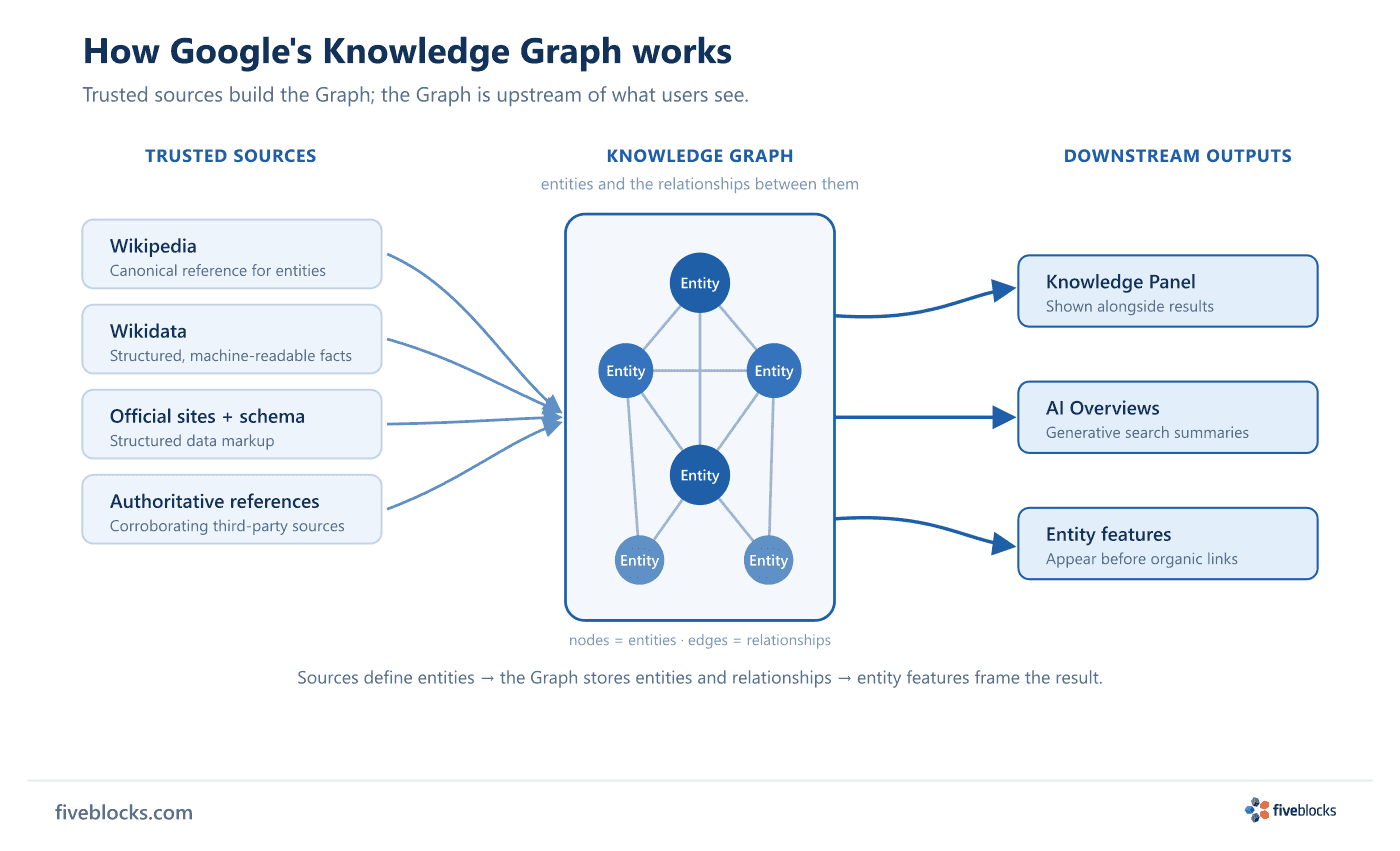
Google’s Knowledge Graph is a database of distinct entities and the relationships between them, rather than a list of pages. When Google is confident about an entity – who a person is, what a company does, how they connect to other entities – it uses the Graph to frame the result before the user reads a single link.
What feeds the graph
The Knowledge Graph is built from sources Google trusts to define entities:
- Wikipedia – the standard reference for most notable entities.
- Wikidata – the structured, machine-readable entity database that links facts across languages.
- Official websites with schema markup – structured data that tells Google what an organization or person is and how they relate to other entities.
- Authoritative third-party references – established sources Google uses to corroborate entity facts.
What the graph powers
Once Google is confident about an entity, the Graph becomes the basis for the entity features that frame a search result:
- the Knowledge Panel shown alongside results,
- AI Overviews and other generative summaries, and
- the other entity features that appear before the organic links.
Why this matters for reputation
The Graph sits upstream of much of what people see. Influencing what it believes about an entity means improving those underlying sources – the entity layer of a reputation program. We track how an entity renders across Google with IMPACT, because the Knowledge Graph’s read on a client now shapes the rest of the result.
Last reviewed: 20/05/2026
