What is the typical communication cadence with a reputation management firm?
The standard cadence is weekly written updates, biweekly-to-monthly calls, detailed monthly reports tied to outcomes, ad hoc alerts during active situations, and quarterly strategy reviews, all anchored by a single named account lead. Frequency tracks intensity: a steady-state program runs lighter, an active crisis runs daily.
Communication with a reputation firm should be regular and predictable, so the client never has to chase an update. A workable standard has five layers, each on a different clock.
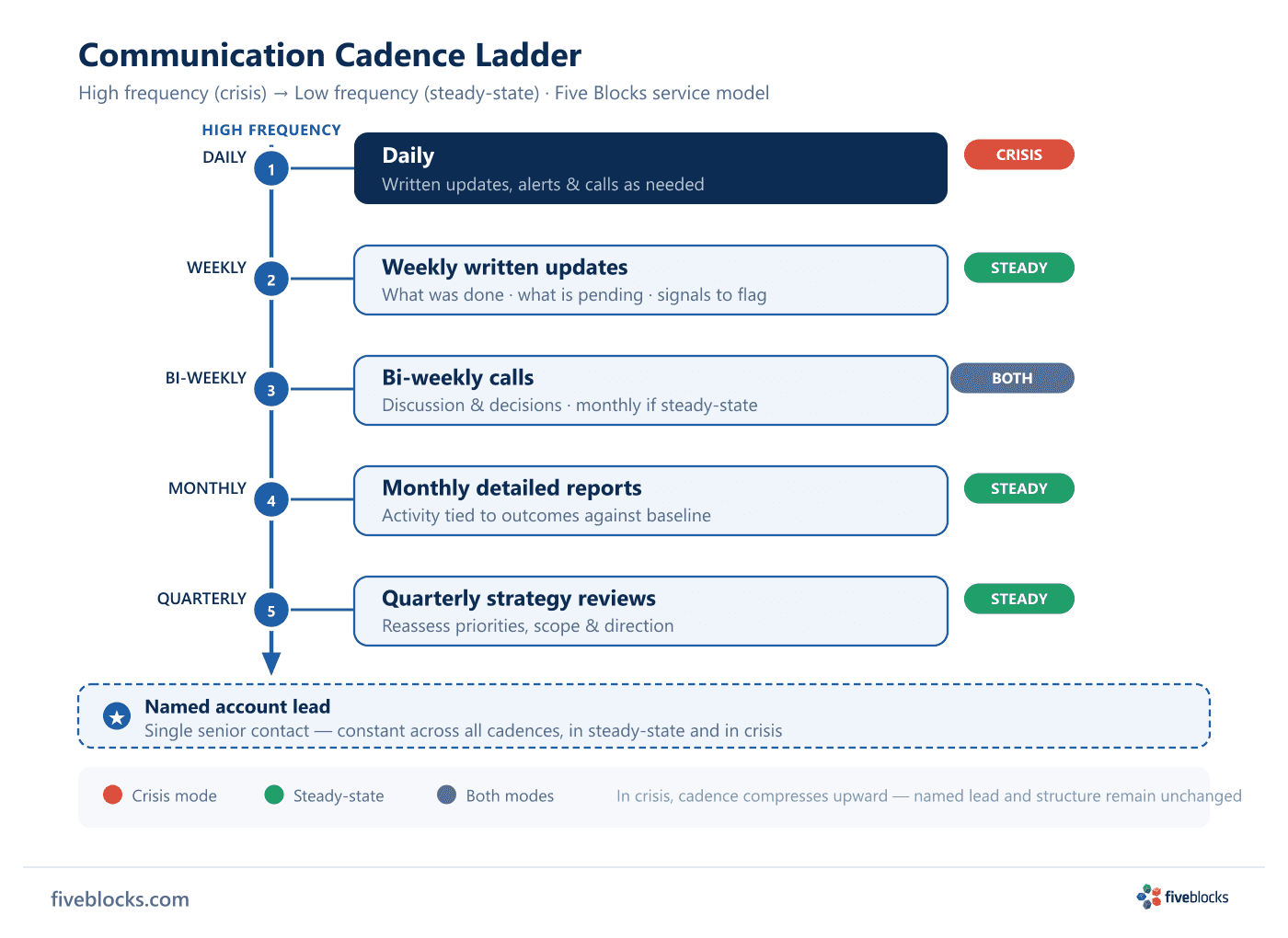
- Weekly written updates
- A short written summary keeps the work visible between meetings. The client sees what was done, what is pending, and anything worth flagging, without needing a call.
- Biweekly-to-monthly calls
- Scheduled calls for discussion and decisions, scaled to the intensity of the engagement. A steady-state program may need a call only monthly; an active or complex engagement warrants one every two weeks.
- Detailed monthly reports
- A full report that ties activity to outcomes against the baseline: how the branded result set, the AI narrative, and entity signals moved over the month, and what the data says about direction. This is the primary accountability document.
- Ad hoc alerts during active situations
- A developing issue cannot wait for the monthly cycle. When something material breaks (a new negative result, a Wikipedia change, a shift in the AI narrative), the client hears about it immediately, with context and a recommended response.
- Quarterly strategy reviews
- A step back from day-to-day execution to reassess priorities and direction. The quarterly review asks whether the program is achieving what it was built to achieve, and adjusts scope, focus, and resources accordingly.
Named account lead, constant across all cadences
Every layer runs through one named senior contact who knows the engagement and its history. A rotating cast of account handlers breaks the continuity that makes communication useful. That person owns the program and answers for its results.
Intensity flex: steady-state vs. crisis mode
The cadence above is a steady-state standard. In an active crisis the rhythm compresses: written updates go daily, calls can happen every day, and alerts run continuously. The structure holds, with the same named lead, the same reports, and the same escalation path, and only the frequency changes, running as high as the situation demands. A firm that goes quiet between invoices no matter what is happening to the client is a poor fit.
Last reviewed: 20/05/2026
