How long does it take to see results from reputation management?
Meaningful movement typically appears in 3-6 months, durable and defensible results in 6-12 months, and contested SERPs - those with a strong negative article from a major outlet or an active adversary - can run 12-24 months or longer. The pace is set by how fast Google re-crawls, re-ranks, and propagates new entity signals, not by the client's calendar.
Reputation programs run on Google’s timeline, not the client’s. The engine takes weeks to crawl and re-evaluate authority signals, months to settle changes into stable rankings, and longer still for new entity signals to propagate through the Knowledge Graph and into the AI engines that read from it. That is why results arrive in stages rather than overnight.
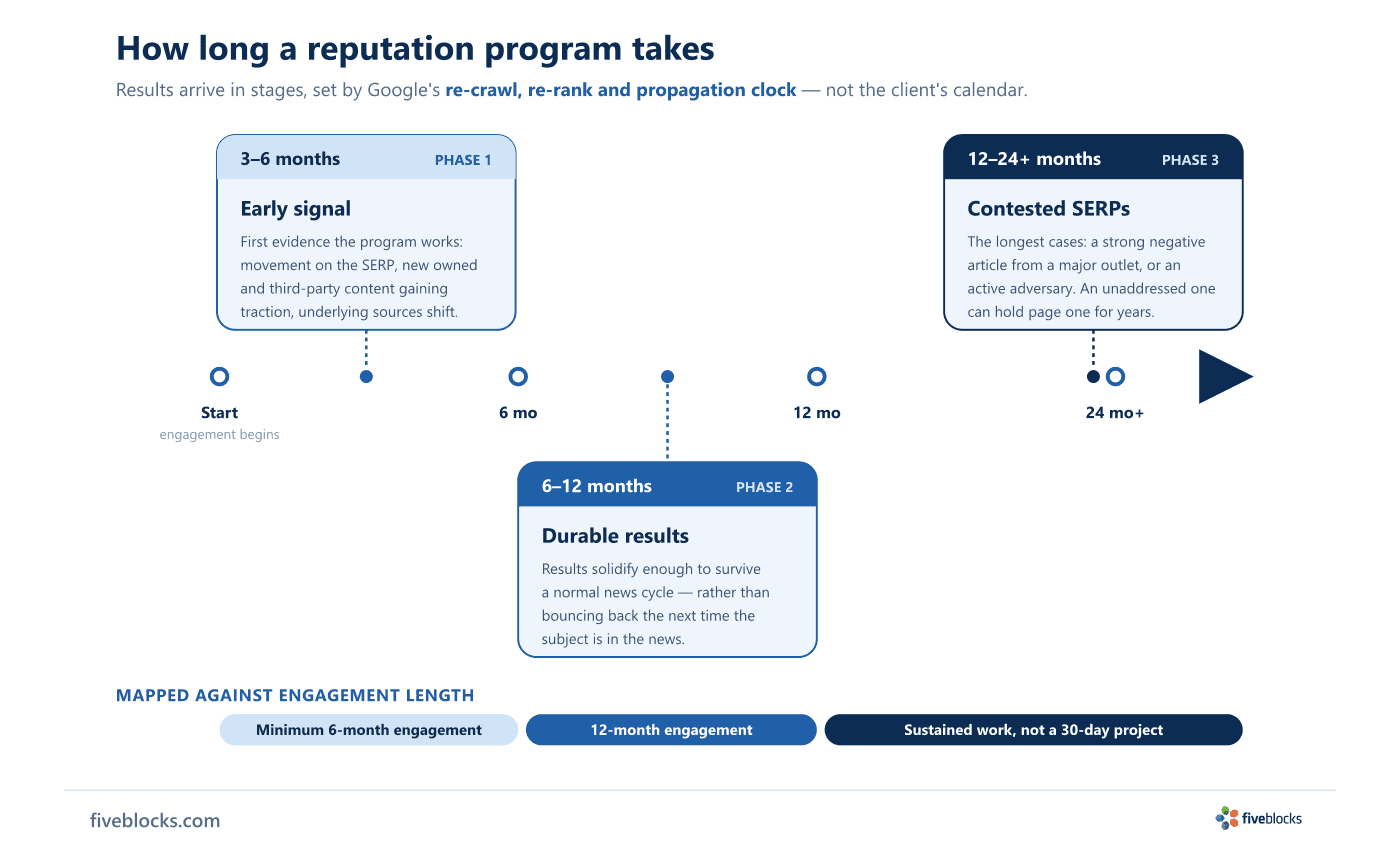
What to expect, and when
The honest range, mapped against engagement length, breaks into three phases:
- 3-6 months, early signal. The first evidence that the program is working: movement on the SERP, new owned and third-party content gaining traction, and the underlying sources beginning to shift.
- 6-12 months, durable results. Results hold well enough to survive a normal news cycle instead of bouncing back the next time the subject is in the news.
- 12-24+ months, contested SERPs. The longest cases: a strong negative article from a major outlet, or an active adversary publishing counter-content. An unaddressed major-outlet negative article can hold a top-page position for years, so displacing one durably takes sustained work.
Why the timeline is structural
The pace comes from how the engines work, not from how hard anyone pushes. Google has to re-crawl and re-evaluate pages before rankings settle. Entity signals are a connected web of references that feed the Knowledge Panel and Knowledge Graph, and those are weighted by the AI engines when they summarize a subject. Every step in that chain adds delay, which is why durable change is measured in months, not days.
Why faster claims usually don’t apply to you
Claims of near-instant results usually come from small, easy SERPs that never needed much work, not from the difficult, contested engagements clients actually hire reputation firms to handle. The same timeline is why we structure work as minimum 6-month and 12-month engagements rather than 30-day projects: the pace of the work has to match the pace at which the engines change.
Last reviewed: 19/05/2026
