How do you handle outdated positive content that no longer represents the company?
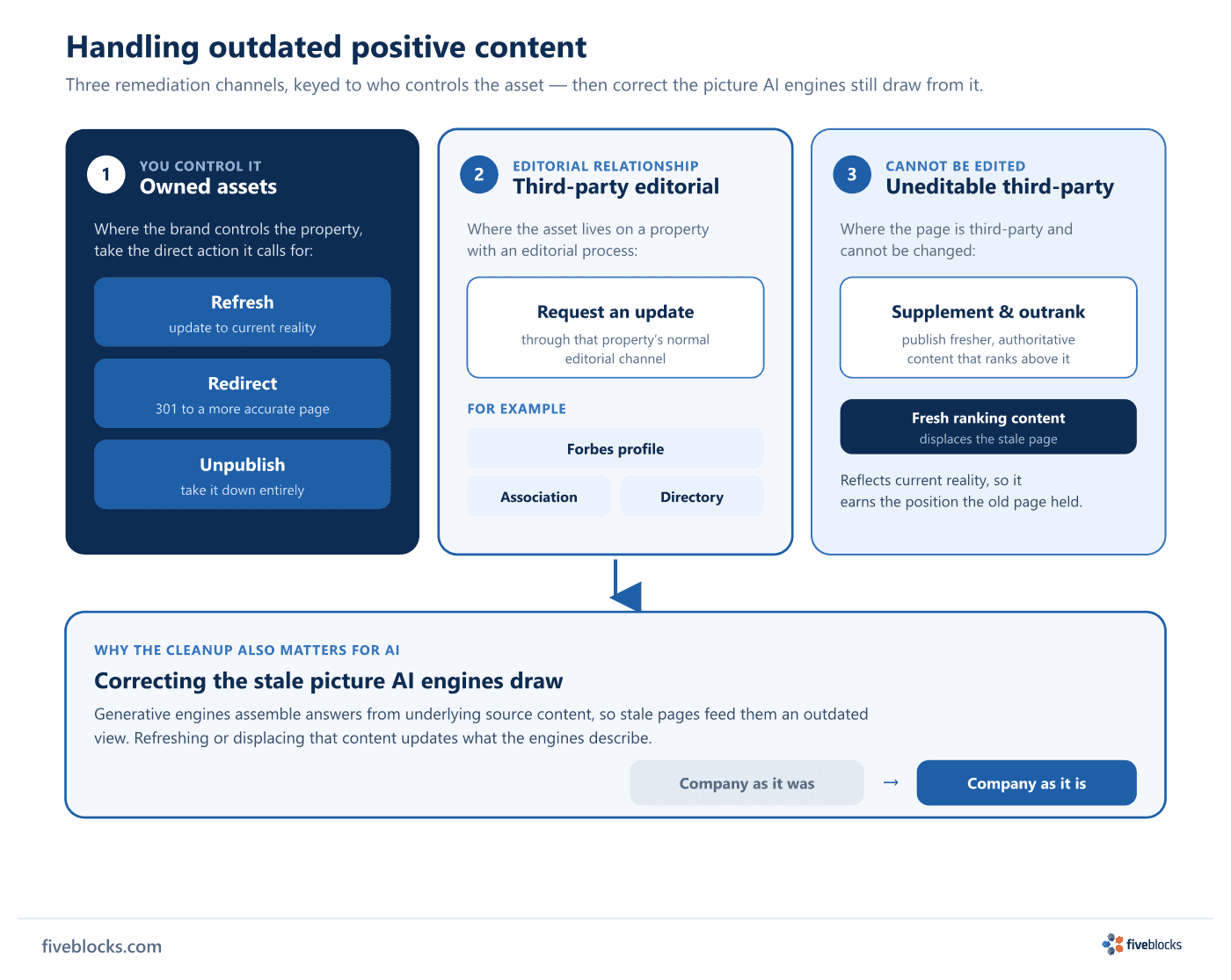
Outdated positive content is handled through three channels: refresh, redirect, or unpublish the asset where the brand owns it; request an update where it sits on a third-party property with an editorial process; and publish fresher content to rank above it where the source cannot be edited. The cleanup matters because stale content also feeds AI engines, which then describe the company as it was rather than as it is.
Outdated positive content is handled through three channels keyed to who controls the asset: refresh or unpublish what the brand owns, request updates where an editorial relationship exists, and publish fresher content to outrank what cannot be edited. It is a quieter problem than negative content, but it builds up over the years and blurs the picture. A leadership page still lists an executive who left in 2019. An annual report ranks high but reflects a strategy the company has abandoned. A press release promotes a discontinued product line. An old award crowds out more recent recognition.
The three remediation channels
- Owned assets: refresh, redirect, or unpublish. Where the brand controls the property, update the page to reflect current reality, 301-redirect it to a more accurate page, or take it down, depending on the case.
- Third-party editorial properties: request an update. Where the asset lives on a property you have an editorial relationship with (a Forbes profile, an association page, an industry directory), request the change through that property’s normal editorial channel.
- Uneditable third-party assets: supplement and outrank. Where the asset is third-party and cannot be edited, build fresh, authoritative content that reflects the current reality and ranks above the stale page.
Why the cleanup matters for AI
Outdated content does not only sit in search results. It also feeds the AI engines. Generative engines build their answers from underlying source content rather than from anything editable in the model itself, and they can return outdated information when the sources or the training data they rely on are stale. Left in place, an old leadership page or a discontinued-product release can lead an engine to describe the company as it was rather than as it is. Refreshing or displacing this content is part of keeping the AI narrative current.
Last reviewed: 19/05/2026
