How do you handle outdated statistics or data on a Wikipedia page?
File a Talk-page edit request that pairs the current figure with its new citation, and community editors review and implement it once the sourcing supports the change. The figure and the citation have to move together - updating the number while leaving the old reference attached gets reverted on verifiability grounds.
Outdated statistics are among the easier Wikipedia maintenance items because the sourcing is usually straightforward: a current authoritative figure exists, and the fix is procedural. The rule is that the new number and its new citation move together – the most common failure is updating the figure while leaving the old reference attached.
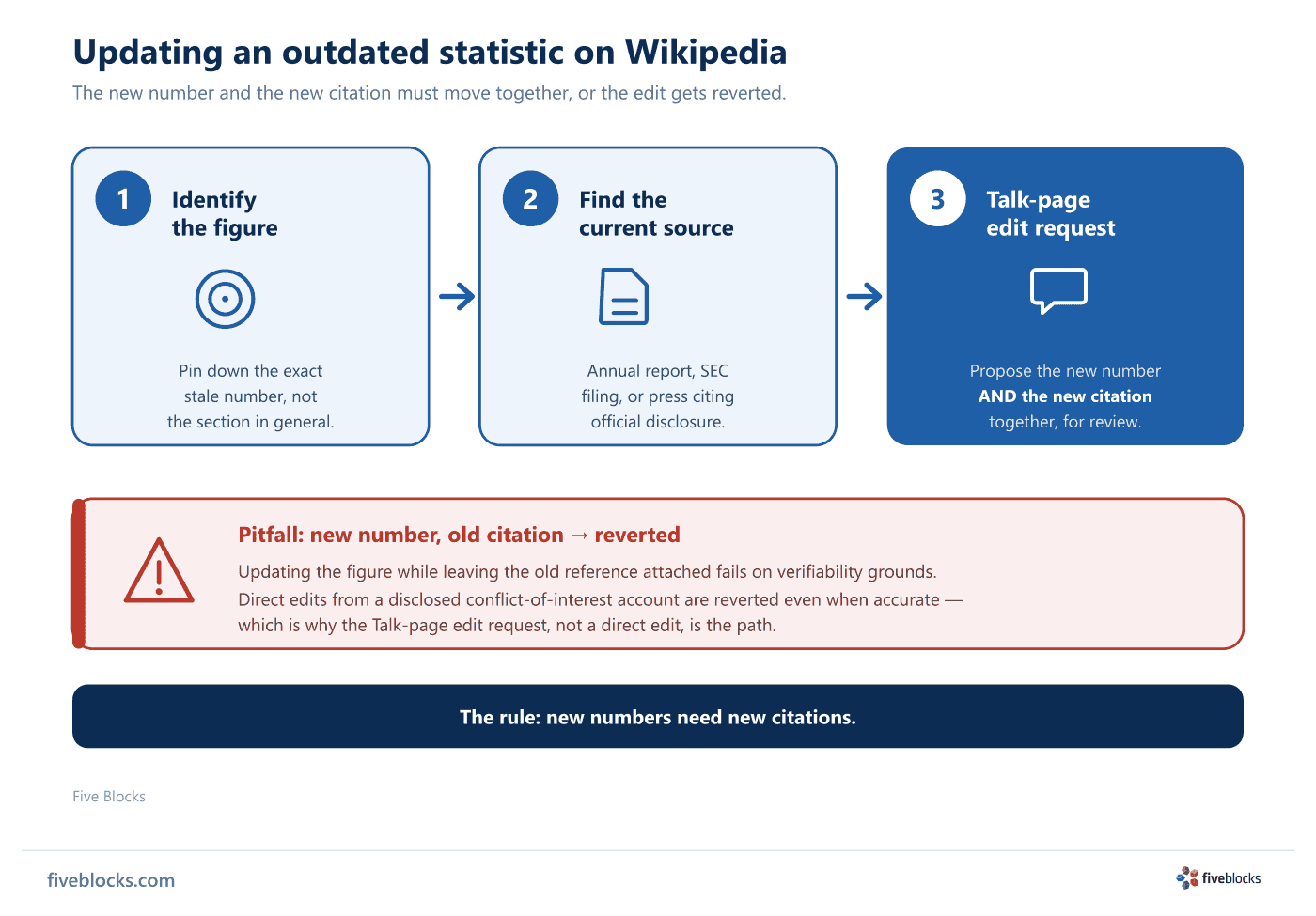
The figure-update workflow
- Identify the specific outdated figure. Pin down exactly what is stale – employee count, revenue, market share, geographic footprint – rather than the section in general.
- Find the current authoritative source. Annual reports, SEC filings, or mainstream press citing the company’s official disclosures. Public companies in particular have a built-in set of authoritative sources through SEC filings, analyst coverage, and routine financial press.
- File a Talk-page edit request. Propose the updated text and the new citation together, so community editors can verify and implement. These updates usually land without friction because they are policy-compliant and source-supported.
The pitfall: new number, old citation
The mistake that shows up in older article histories is editors updating a statistic without changing the citation. That leaves the old reference attached to the new figure, and it gets reverted on verifiability grounds. The rule is simple: new numbers need new citations. Direct edits from a disclosed conflict-of-interest account are also reverted even when the correction is accurate, which is why the Talk-page edit request – not a direct edit – is the path.
Last reviewed: 19/05/2026
