How do you correct inaccurate information on a Wikipedia page?
Correct inaccurate Wikipedia content through a Talk-page edit request that identifies the exact wrong text, proposes precise replacement wording, and cites reliable secondary sources. Direct edits from a COI account get reverted even when the underlying correction is factually right.
Correcting an inaccuracy on a Wikipedia article follows a specific three-part format. When the request is properly structured and backed by reliable sources, editors usually implement it, because volunteer editors want accurate articles.
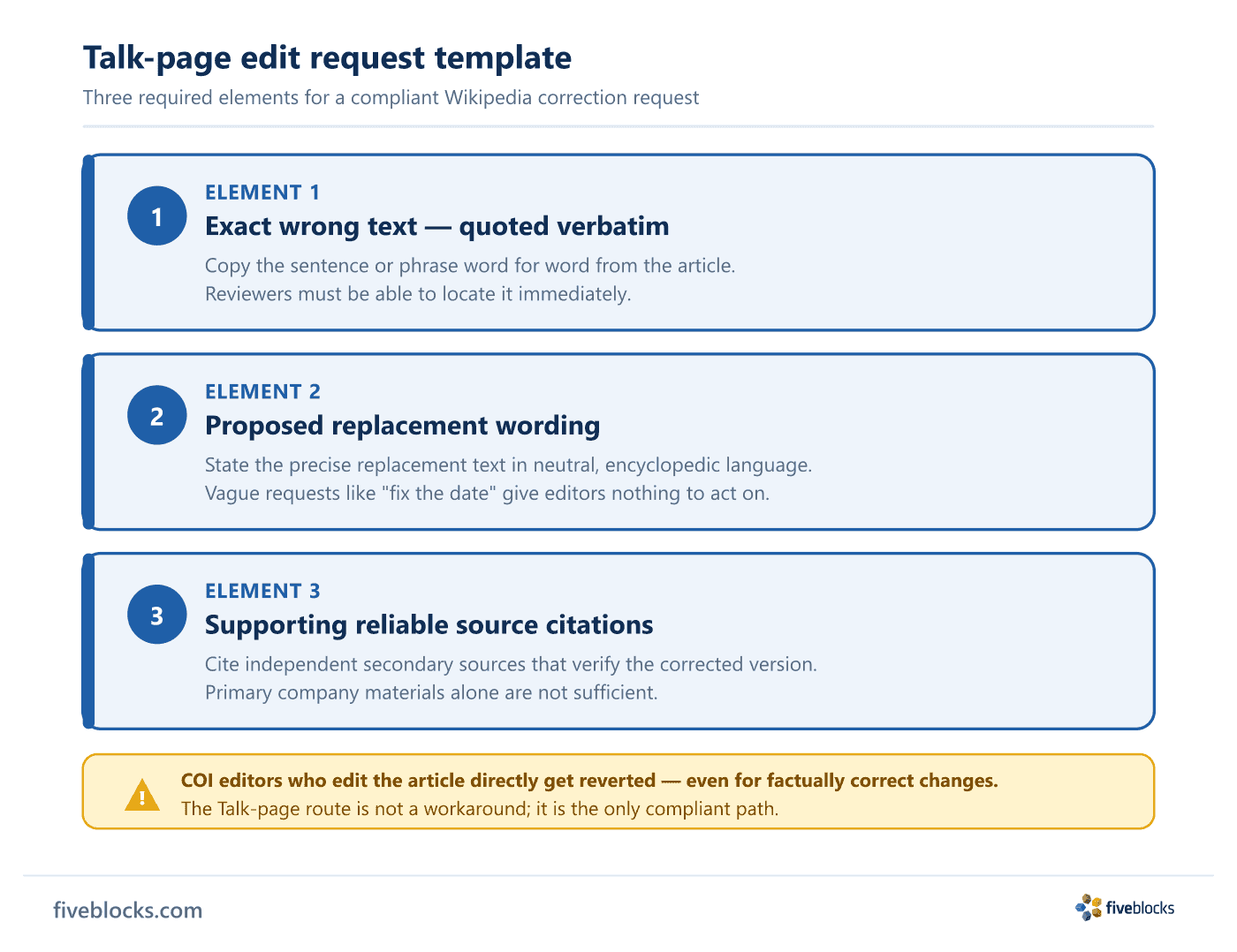
The three required elements of a Talk-page edit request
- The wrong text. Quote the exact passage from the article as it currently reads, word for word. Do not paraphrase; copy the sentence or phrase so reviewers can find it immediately.
- The proposed replacement. State the exact wording that should go in its place. A vague request such as “fix the date” gives the reviewing editor nothing to act on. Use neutral, encyclopedic language.
- Supporting reliable sources. Provide citations from independent secondary sources that verify the corrected version. Primary company materials alone are not enough.
What to expect after filing
- An uninvolved community editor reads the request, checks the sources, and either makes the change or asks follow-up questions.
- Factual corrections with clear reliable-source backing are usually acted on quickly.
- Corrections that involve framing or NPOV (neutral point of view) judgments can take a longer conversation, but the same three-part format still applies.
Why direct edits do not work
A COI editor who edits the article directly, even to make a factually accurate correction, will have the edit reverted and the account flagged. Wikipedia policy requires editors with a conflict of interest to propose changes on the Talk page for peer review by independent editors, rather than make them unilaterally. The Talk-page route is the only compliant path.
Last reviewed: 19/05/2026
