How do you handle negative autocomplete suggestions in Google?
There are three ways to handle a negative autocomplete suggestion. Report it if it violates Google's published autocomplete policies. If the completion reflects an inaccurate or outdated frame, shift query patterns over time with authoritative content. If it reflects a real, current concern, fix the underlying issue. Autocomplete follows the broader narrative rather than driving it.
Autocomplete is generated from aggregate searcher behavior, with policy filters on top. A negative completion is a reputation problem because it frames the search before the user hits enter and sends more traffic to the bad query, which reinforces the pattern. What you do about it depends on which of three situations the suggestion falls into.
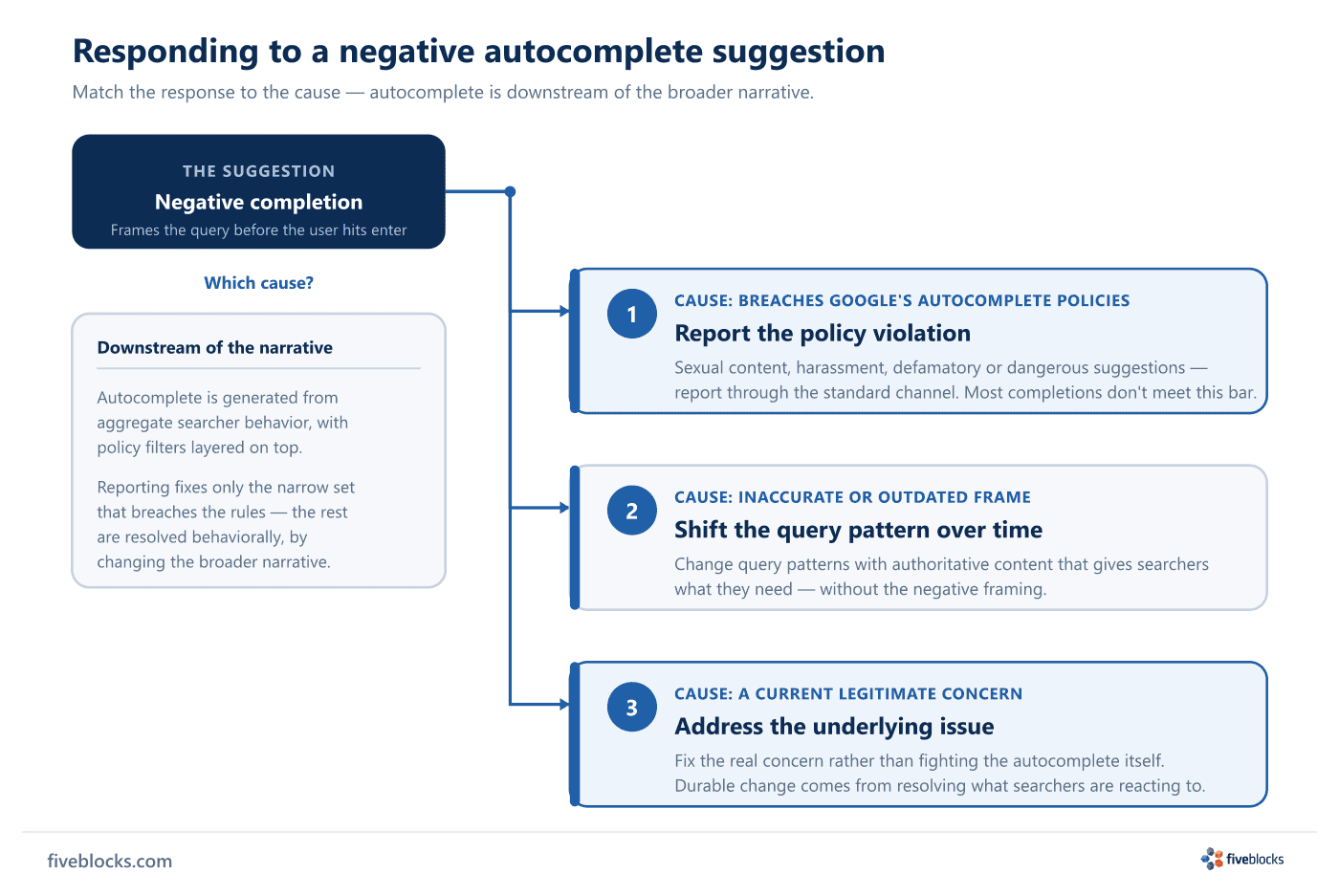
Match the response to the cause
- Report a policy violation. If the suggestion clearly violates Google’s published autocomplete policies, sexual content, harassment, certain defamatory or dangerous suggestions, report it through the standard channel. Most negative completions do not meet that bar.
- Shift the query pattern. If the suggestion reflects volume on an inaccurate or outdated frame, change the query patterns over time with authoritative content that gives searchers what they actually need without the negative framing.
- Address the underlying concern. If the suggestion reflects a real, current concern, fix the underlying issue instead of fighting the autocomplete.
Why the order matters
Reporting works only on the narrow set of completions that break Google’s rules; the rest are resolved through behavior. Autocomplete follows the broader narrative, so lasting change comes from shifting what searchers look for and resolving the real concern, not from contesting the prediction on its own.
Last reviewed: 19/05/2026
