How do you handle a negative search result from a high-authority website?
A negative result from a high-authority site is worked on several fronts at once: an accurate factual response, a correction request where the article contains documented errors, sustained competing content of comparable authority, and AI-narrative monitoring through AIQ. Removal is rare, so the aim is to rebalance the picture over a period of months.
High-authority negative coverage is harder to move than low-authority coverage, because search and AI engines weight the source heavily and removal is rarely an option. So you work it on several fronts at once rather than looking for a single fix.
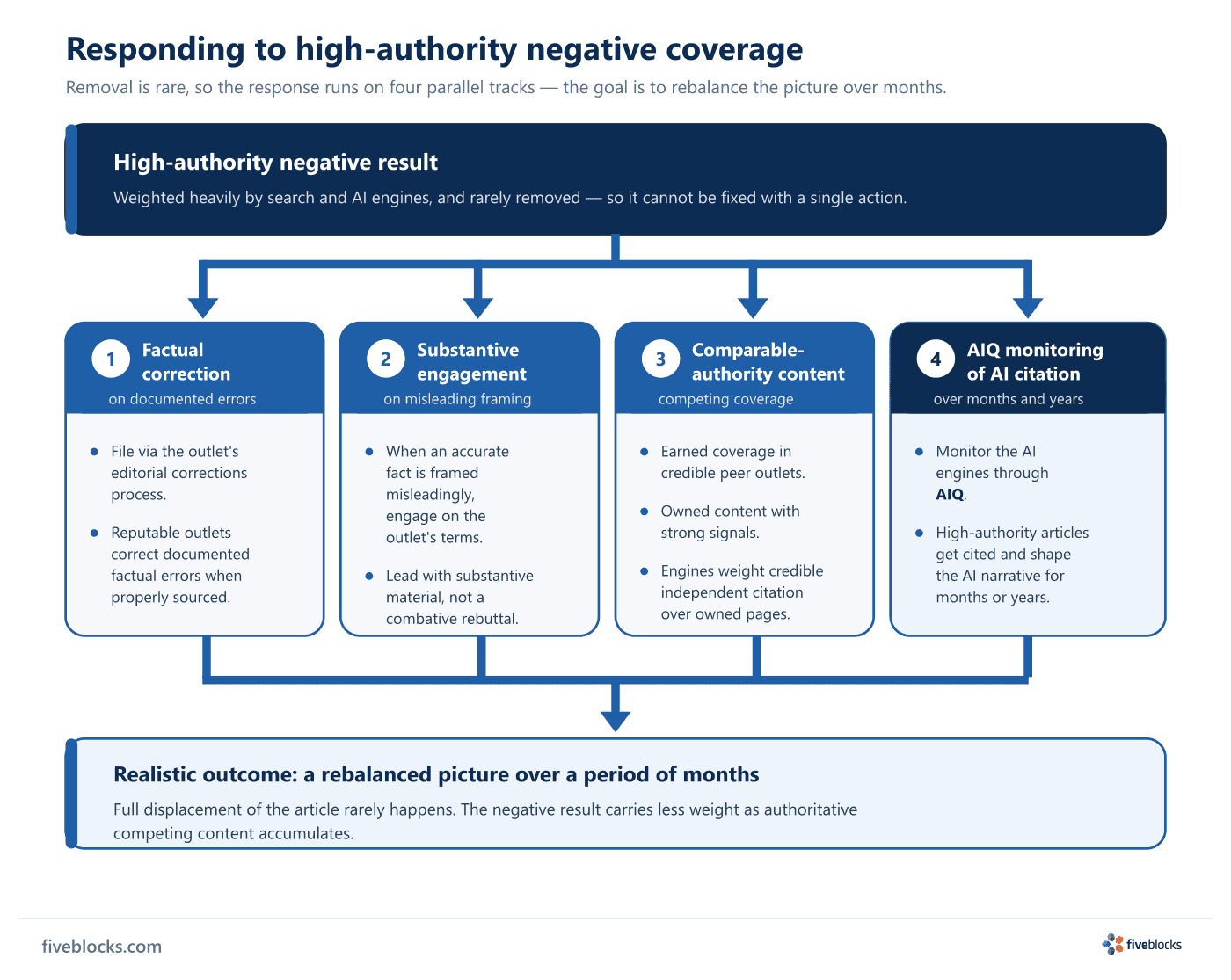
The parallel-track response
- Factual correction on documented errors. If the article contains factual errors, file a correction request through the outlet’s editorial process. Most reputable outlets publish corrections policies and will correct documented factual errors when they are properly sourced.
- Substantive engagement on framing. If the article frames an accurate fact misleadingly, engage on the outlet’s terms with substantive material rather than a combative rebuttal.
- Competing content of comparable authority. Build competing content of comparable or greater authority: earned coverage in credible peer outlets, owned content with strong signals, and third-party verification of the underlying facts. Engines weight citation by credible independent outlets more heavily than additional owned pages.
- AIQ monitoring of AI citation. Monitor the AI engines through AIQ, because high-authority articles get cited by the engines and can shape the AI narrative for months or years.
What to expect
The article itself rarely gets fully displaced. What you can realistically expect is a rebalanced picture over a period of months, with the negative result carrying less weight as competing content of real authority accumulates.
Last reviewed: 19/05/2026
