How should an executive manage their social media presence for reputation?
Every executive needs the same defensive baseline: verified accounts on the platforms their stakeholders use, consistent branding, professional content aligned with their positioning, monitoring for impersonation, and written policies for sensitive topics. How much active visibility and crisis-readiness gets layered on top depends on the executive's role and stakeholders.
Executive social-media management has three bands: defensive infrastructure, active visibility, and crisis-readiness. Which band fits depends on the executive’s role and stakeholders. The bands stack – active visibility assumes a defensive foundation is already in place, and crisis-readiness sits on top of both.
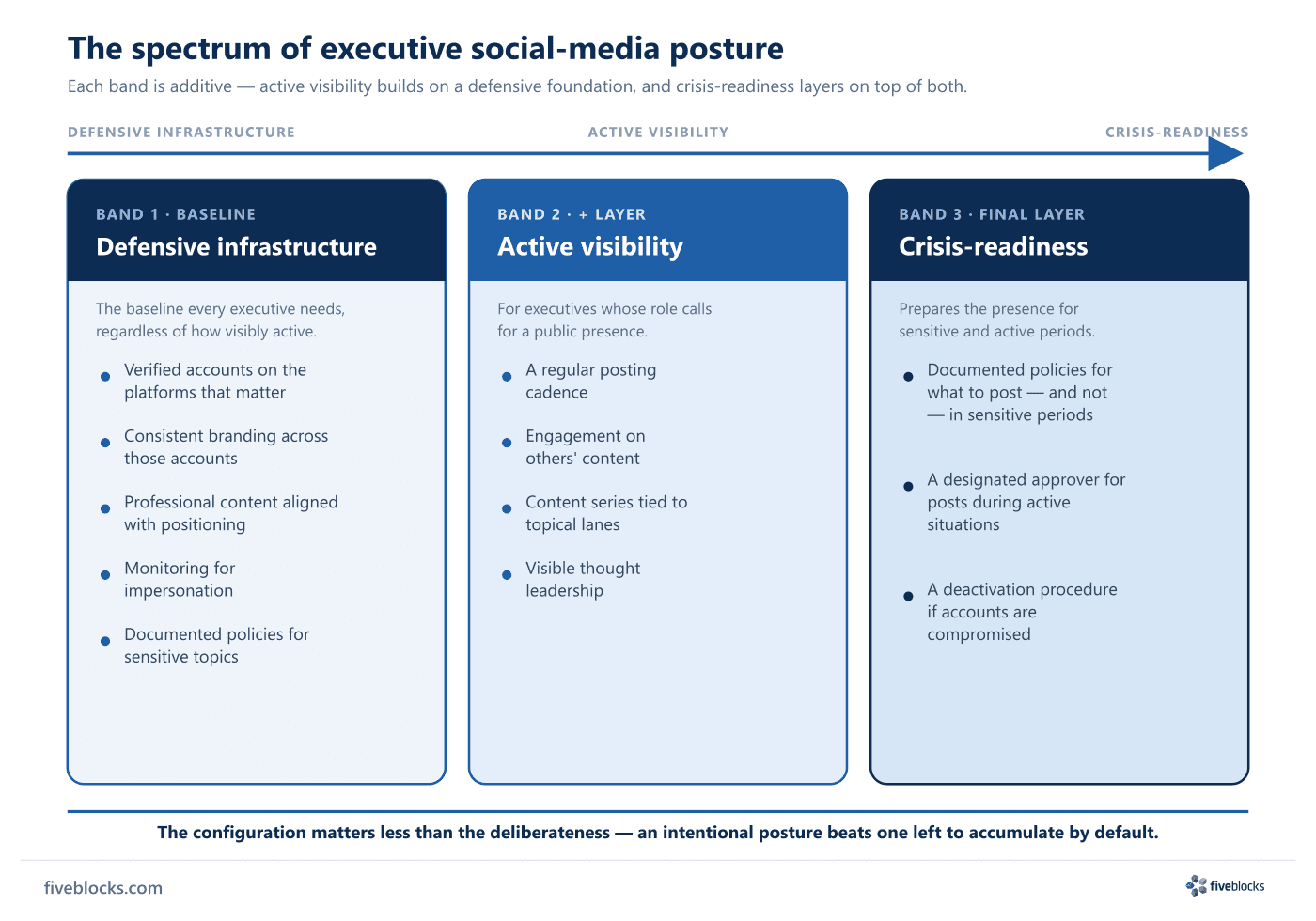
The three bands of executive social-media posture
- Defensive infrastructure
- The baseline every executive needs, however visible they choose to be:
- Verified accounts on the platforms the executive’s stakeholders actually use
- Consistent branding across those accounts
- Professional content aligned with the executive’s positioning
- Monitoring for impersonation
- Written policies for sensitive topics
- Active visibility
- Added on top of the baseline when the role calls for a public presence:
- A regular posting cadence
- Engagement on other people’s content
- Content series tied to the executive’s topical lanes
- Visible thought leadership
- Crisis-readiness
- The top layer, which prepares the accounts for sensitive periods and active situations:
- Documented policies for what the executive will and will not post during sensitive periods
- A designated approver for posts during active situations
- A deactivation procedure if accounts are compromised
Which configuration an executive lands on matters less than choosing it deliberately. Executives who decide their social-media posture on purpose get better reputation outcomes than those who let one accumulate by default.
Last reviewed: 19/05/2026
