What is the difference between crisis communications and crisis reputation management?
Crisis communications shapes what is said to stakeholders and the press; crisis reputation management shapes the durable digital record those efforts leave behind - the SERP, the AI narrative, and the Wikipedia article. The two are complementary and work best when coordinated from the first call.
Crisis communications and crisis reputation management are two complementary functions, and they should run in parallel from the first call of a crisis. Communications governs what an organization says – the statement, the press strategy, the executive interviews, the stakeholder calls. Reputation management governs the durable digital record those efforts leave behind – what stakeholders actually find when they go and look, on Google, in the AI engines, and in the Wikipedia article.
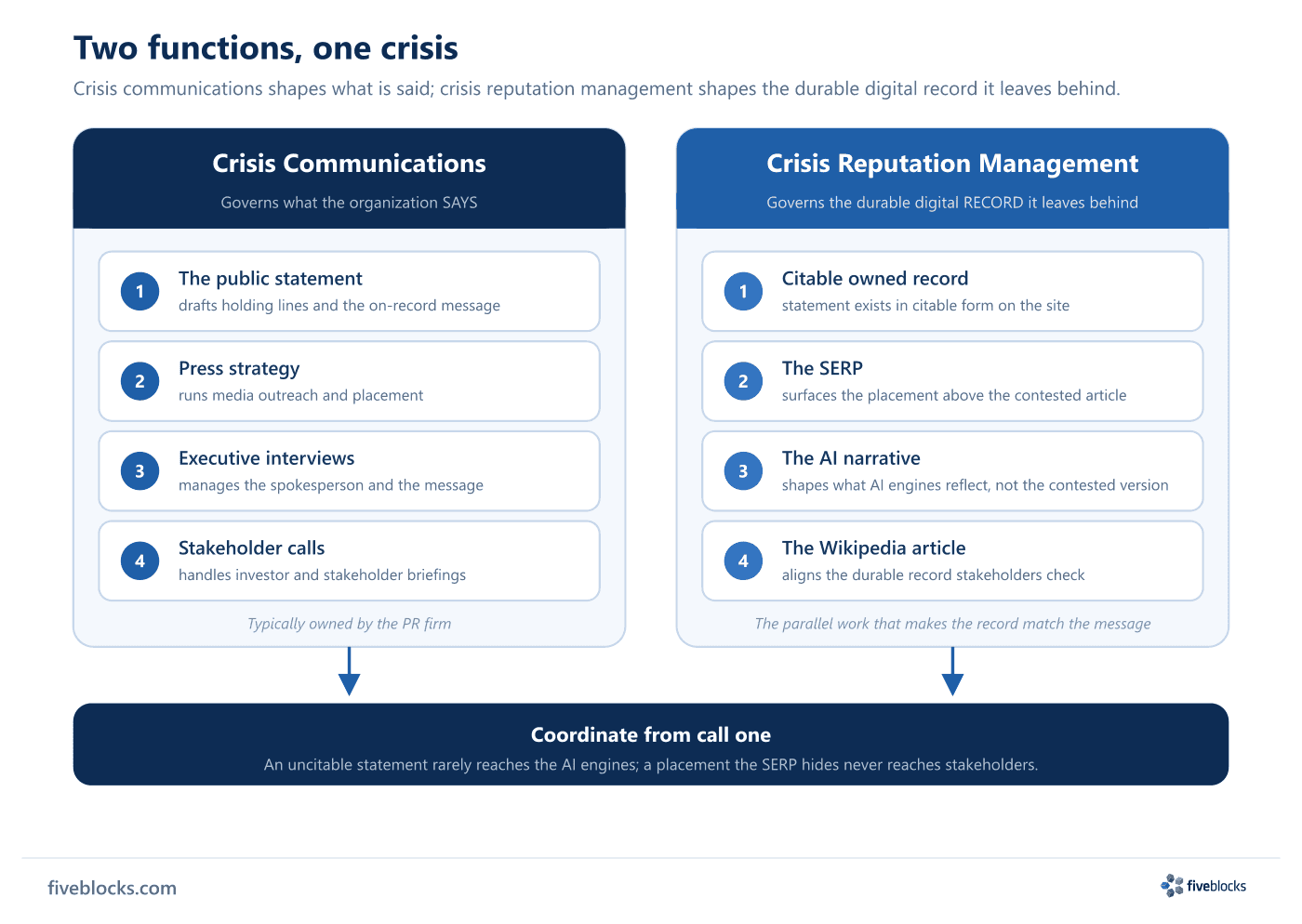
Two functions, one crisis
| Crisis communications | Crisis reputation management |
|---|---|
| Drafts the public statement and holding lines | Makes sure the statement also exists in citable form on the corporate site, where AI engines can find it |
| Runs the press strategy and media outreach | Works the search-results page (SERP) so the placement is seen above the contested article |
| Manages executive interviews and the message | Shapes the AI narrative so engines reflect that message, not the contested version |
| Handles stakeholder and investor calls | Aligns the Wikipedia article and the durable owned record stakeholders check |
Why they have to be coordinated
The two functions reinforce each other only when they move together:
- A statement that does not also exist in citable form on the corporate site rarely makes it into the AI engines.
- A press placement that the SERP does not show above the contested article never reaches the people the comms team was trying to reach.
PR firms usually own crisis communications. The parallel work – making the durable digital record on the SERP, in the AI narrative, and in the Wikipedia article match the message – is crisis reputation management. Run separately, they pull apart. Run together, from call one, they tell the same story everywhere stakeholders look.
Last reviewed: 19/05/2026
