
For years, the first question about a media placement was simple: will the right people read it? Now there is a second question: can AI read it? More and more stakeholders meet a company through an AI answer before they ever click a link, and those answers are built from the sources each engine is allowed to use.
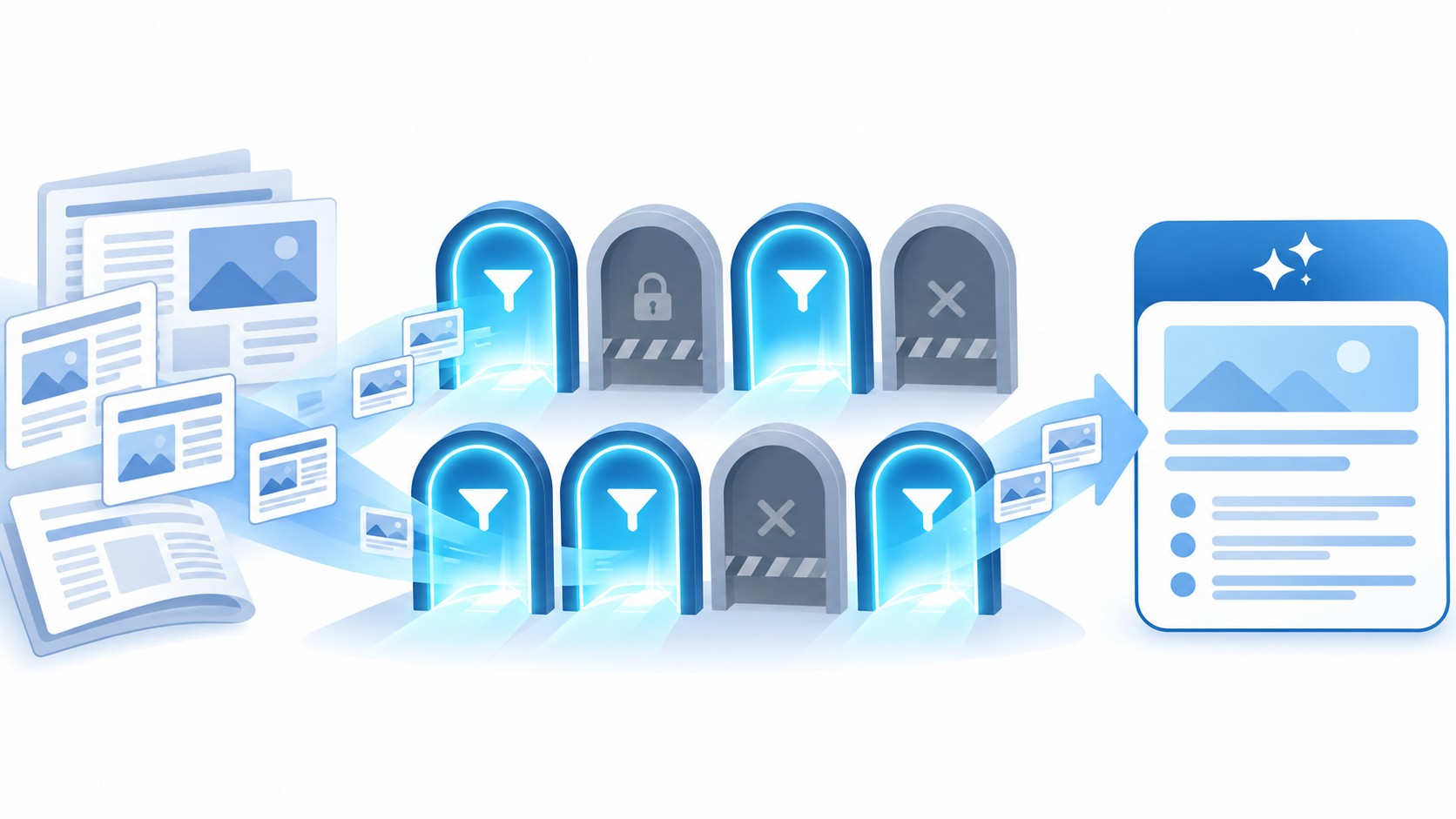
To see what that means for earned media, we read the robots.txt files and page tags of 44 major news outlets, then checked what eight AI engines cited in 14,392 answers about the Fortune 100 and their CEOs (October 24 to 26, 2026). The short version: where a story runs now helps decide which AI engines can repeat it.
Many top outlets block some AI engines
Most big publishers now tell at least some AI crawlers to stay out. Here is how many of the 44 outlets block each engine.
| AI engine | Outlets that block it (of 44) |
|---|---|
| Gemini app | 25 |
| Perplexity | 25 |
| Claude | 18 |
| Copilot (noarchive tag) | 14 |
| ChatGPT search | 12 |
| Grok | 4 |
| Google AI Overviews | 0 |
| Google AI Mode | 0 |
Some of the most prestigious names in business news, including The New York Times, The Wall Street Journal, Barron’s, MarketWatch, The Economist and NPR, leave only three of the eight engines unblocked. No outlet blocks Google’s AI Overviews or AI Mode, because those run on Google Search itself.
Some engines obey the blocks, others mostly don’t
A robots.txt file is a request, not a lock. So we compared how often each engine cited the outlets that block it with how often we would expect if the block had no effect (four news questions, three days).
| AI engine | Expected citations if the block did nothing | Citations we saw |
|---|---|---|
| Gemini app | 348 | 0 |
| ChatGPT | 338 | 28 |
| Copilot | 133 | 29 |
| Claude | 306 | 99 |
| Perplexity | 172 | 124 |
| Grok | 228 | 312 |
The Gemini app, ChatGPT and Copilot largely honor the blocks. Perplexity cited its blockers at close to the normal rate, and Grok cited them more often than expected, mostly through Reuters.
The sharpest contrast is inside Google. The Gemini app cited none of the 25 outlets that block it. Google’s AI Mode cited those same outlets in 69% of news answers. Same company, same stories, two very different results.
For a comms team, a story in an outlet that blocks an engine is a billboard on a road that engine never drives. It may still be a great billboard. It just won’t be seen by that engine.
What this means for how you prioritize outlets
Think of earned media as deposits into a credit score for trust. AI engines are now among the lenders checking that score, and each one can see a different set of deposits. That changes the planning, not the goal.
- Keep pitching the top tier. A front-page story still moves reporters, analysts, boards and Google’s AI Mode and AI Overviews, which no outlet blocks. Just don’t count it as AI coverage across the board.
- Add engine access to your media list. Next to reach and audience, note which engines each outlet blocks. It takes a few minutes per outlet and it changes how you read your results.
- Spread the story across open outlets too. If the message has to reach the Gemini app, ChatGPT or Copilot, make sure it also lands in outlets those engines can read.
- Match the engine to the audience. Copilot sits inside Microsoft 365, so it is often where employees and corporate stakeholders ask questions at work. AI Mode and AI Overviews sit on top of Google Search, where most of the public starts. Decide which engines matter for the people you need to reach, then check which outlets those engines can read.
- Measure over weeks, not days. News answers change fast. Only 30% to 60% of the links in a news answer came back the next day, depending on the engine. One check tells you little.
Press releases count again
In AI news answers, the press release is a real source. All four press release wires we checked are open to every AI engine. On news questions about the Fortune 100, Business Wire was cited in 201 answers, more than Forbes (186) or CBS News (185).
Keep that in proportion. Each wire still shows up in under 4% of news answers per engine. Business Wire’s best showing was 3.4% of Perplexity’s news answers, and PR Newswire’s was 2.9% on ChatGPT. But a release is one of the few things you fully control that every engine can read. So write it to be quoted: the facts first, real numbers, dates, and plain words.
Know the sources you never pitched
Stock and investing sites, such as MarketBeat, appeared in 40% to 60% of news answers on every engine. MarketBeat was the Gemini app’s single top source, in 21% of its news answers. Most PR teams never pitch these sites, and many never read what they say. If your company is public, you should.
Publisher deals matter too, but less than you might think. ChatGPT cited the 12 outlets with OpenAI content deals in 44% of its news answers, against 23% for other open outlets. Google’s AI Mode showed almost no gap (14.9% vs 14.0%). A deal tilts one engine. It does not guarantee anything.
News is only half the picture
Earned media drives AI answers to news questions. It does much less for the basic question, “Tell me about this company.” There, the engines lean on the company’s own website and Wikipedia. ChatGPT cited the company’s own site in 99% of those answers.
Owned facts do real work when they are published in a form AI can cite. In our study of what AI says about United Airlines, Delta’s “Corporate Stats and Facts” page was cited in 66% of AI answers about Delta, while United’s corporate fact sheet was cited in 4% of answers about United. 53% of answers about Delta mentioned its reliability, against 9% for United, even though United had a record operational year. And although United flew the most seat miles of any airline in 2025, Google’s three AI engines called American the world’s largest airline in 42 of 93 answers and United in 4 of 92. A claim with no measure behind it rarely gets repeated.
Silence has a cost too. In our study of how AI describes data centers, data center companies’ own websites appeared in none of 476 AI answers about community concerns, and 83% of answers about data centers and their neighbors were one-sided criticism. When a company publishes nothing on a hard question, AI answers it with other people’s words. Our Fortune 100 study found the same reliance on owned content at scale: 82% of “tell me about” answers cited the company’s own website.
So an earned media plan for the AI era has three parts:
- Earned: coverage in outlets the engines you care about can read.
- Owned: a website with current, plainly written facts, and a robots.txt file that does not shut out AI search bots by mistake.
- Wikipedia: an accurate, current article, improved only through Wikipedia’s disclosed process.
None of this replaces good stories and good relationships with reporters. It just means the scorecard has changed. A placement is worth what people read, plus what the AI engines they use can see.
How Five Blocks can help
Five Blocks tracks what eight AI engines say about a company and which sources they cite, every day, through our AIQ platform. We use that data to show PR and communications teams which engines can see their coverage, which sources are shaping their answers, and where owned content, press releases and Wikipedia can close the gaps.
The full study, with every chart and our method, is here: Which News Sites Can AI Read, and Which Does It Cite?