We have 40 negative Trustpilot reviews and 8 positive ones. Is this a death sentence?
A 40-to-8 negative Trustpilot ratio is recoverable, but it takes months. It reverses only if you fix the operational problem driving the complaints first, then keep generating authentic reviews and respond to the negatives factually and toward resolution.
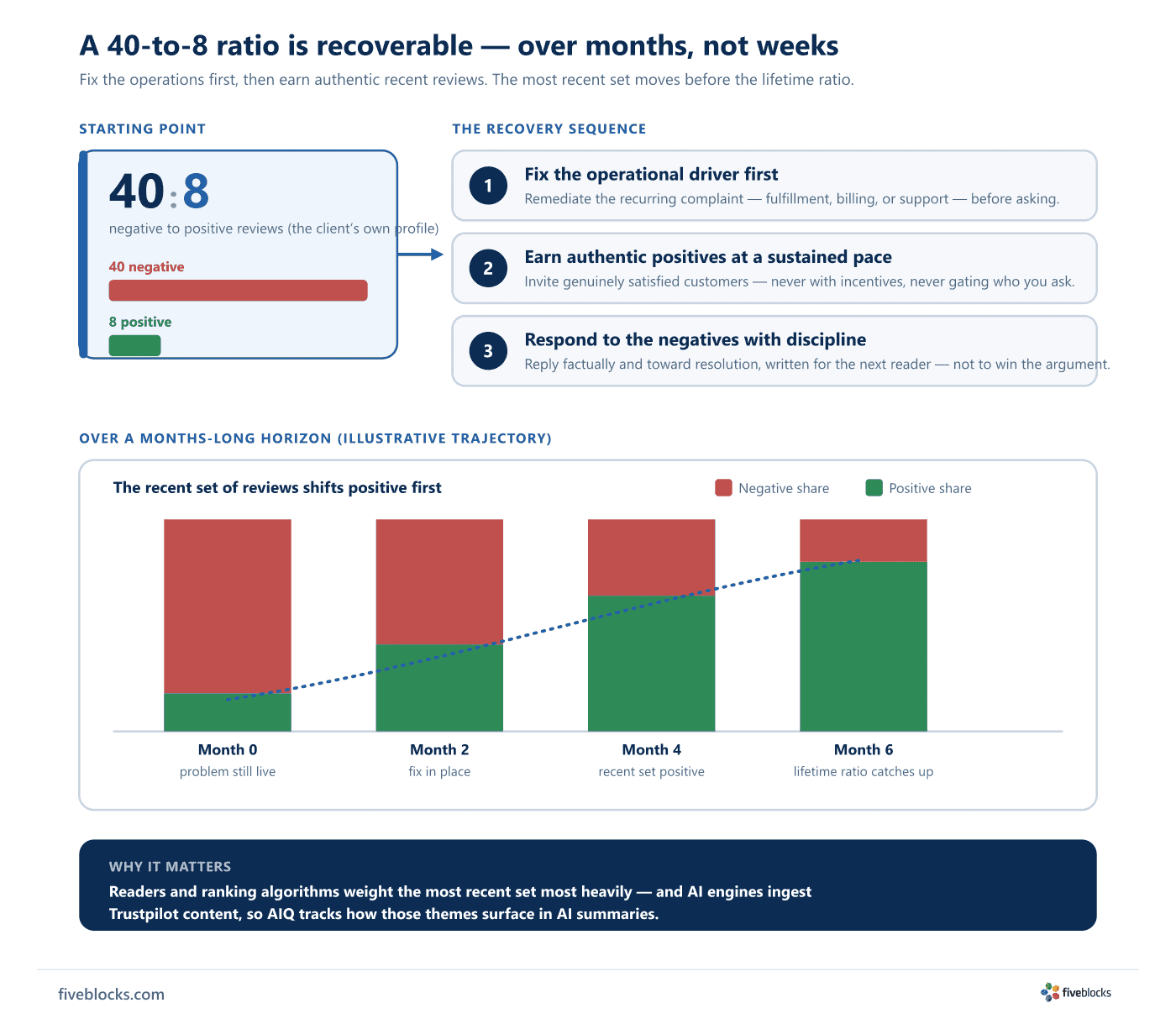
A Trustpilot profile that runs 40 negative to 8 positive is recoverable, but expect months rather than weeks, and the work has to start with the operations behind the reviews. A ratio that lopsided almost always reflects a real, recurring problem in fulfillment, billing, or support, and pushing for more reviews on top of an unfixed issue just generates more negatives.
The recovery sequence
- Fix the operational driver first. Identify the recurring complaint theme and fix it. No review program survives an ongoing experience problem.
- Earn authentic positive reviews at a sustained pace. Run a continuous program that invites genuinely satisfied customers to review, without incentives, and without soliciting only the customers you expect to be happy.
- Respond to the existing negatives with discipline. Reply factually and toward resolution, written for the next reader rather than to win the argument with the original reviewer.
Why it takes months
Readers and review-ranking algorithms both weight the most recent set of reviews most heavily, so the fastest-moving lever is the recent set, not the lifetime ratio. A sustained flow of authentic, recent positives changes what a shopper and the ranking see first, and only over a longer horizon does it move the overall 40-to-8 number. The ratio recovers at the speed the company can both fix the underlying problem and earn new reviews honestly. We track this across the platform and in the AI engine summaries with AIQ, because AI engines ingest Trustpilot content and paraphrase its themes when they summarize a brand.
Last reviewed: 20/05/2026
