What is review sentiment analysis and how does it inform strategy?
Review sentiment analysis classifies reviews along two axes - sentiment and theme - to see past the star average to the actual drivers (a product defect, a service problem, a single underperforming location, a pricing complaint). It informs strategy because the themes point operations toward the fixes that move ratings, while the sentiment trend points the response program toward where attention is most needed.
Review sentiment analysis turns a pile of individual reviews into a diagnosis. By classifying reviews along two axes, sentiment and theme, you can see past the star average to the actual drivers. That distinction produces two different outputs, not one.
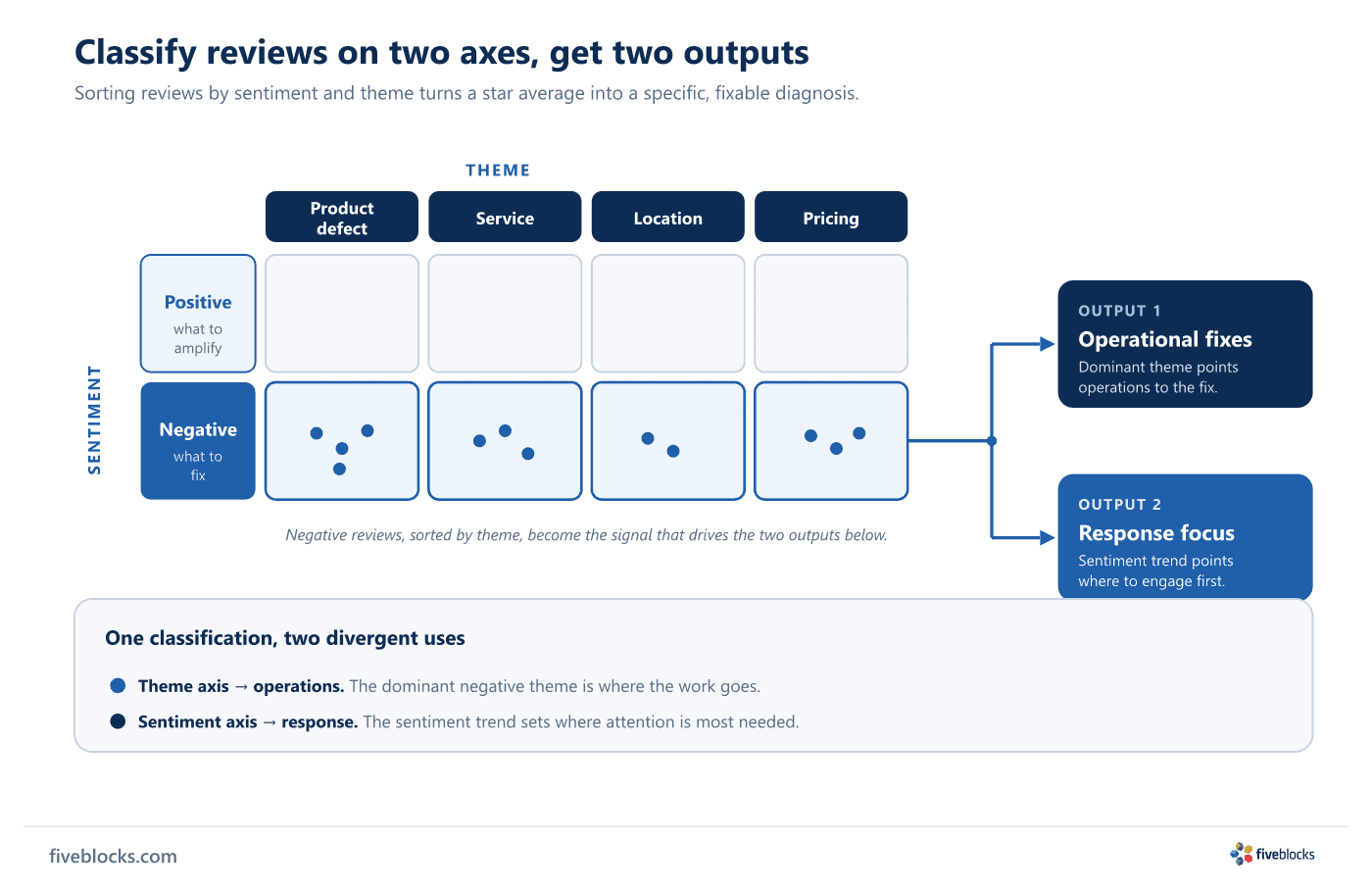
The two axes
Sentiment tells you whether a review is positive or negative. Theme tells you what it is about. Sorting the negative reviews by theme is what separates a vague low rating from a specific, fixable problem:
- Product defect, the product itself is failing customers.
- Service, a service-response or support problem.
- Location, a single underperforming branch or site dragging the average.
- Pricing, complaints about cost or value rather than the product or service.
The two outputs
- Operational fixes
- The themes point operations toward the fixes that will move the underlying ratings, since no response strategy survives a real, recurring problem. If one theme dominates the negatives, that is where the work goes.
- Response focus
- The sentiment trend points the response program toward where attention is most needed: which clusters of reviews to engage, and how quickly.
Why it feeds the AI layer
The recurring themes a sentiment pass reveals are the same ones AI engines extract and paraphrase, so knowing your dominant negative theme tells you what a model is likely saying about you. We track that correspondence with AIQ, because the goal is to fix the issue before it hardens into the engines’ standing summary of the business.
Last reviewed: 20/05/2026
