My name returns a mugshot site as the #3 result. How is that even legal and what can be done?
You can address it through three parallel routes: legitimate takedown (many mugshot sites have removal policies, often tied to dismissal or expungement of the case), state-law pressure (several US states regulate mugshot pay-for-removal and require removal for people never convicted), and content displacement (building authoritative, accurate results that push the page off the visible set). Removal is sometimes possible; displacement almost always is.
A mugshot site ranking for your name feels lawless, and the legality is genuinely contested, but you can address the result through a combination of routes rather than a single fix. The reliable approach is to run three tracks at once, because each one can move the page even if the others stall.
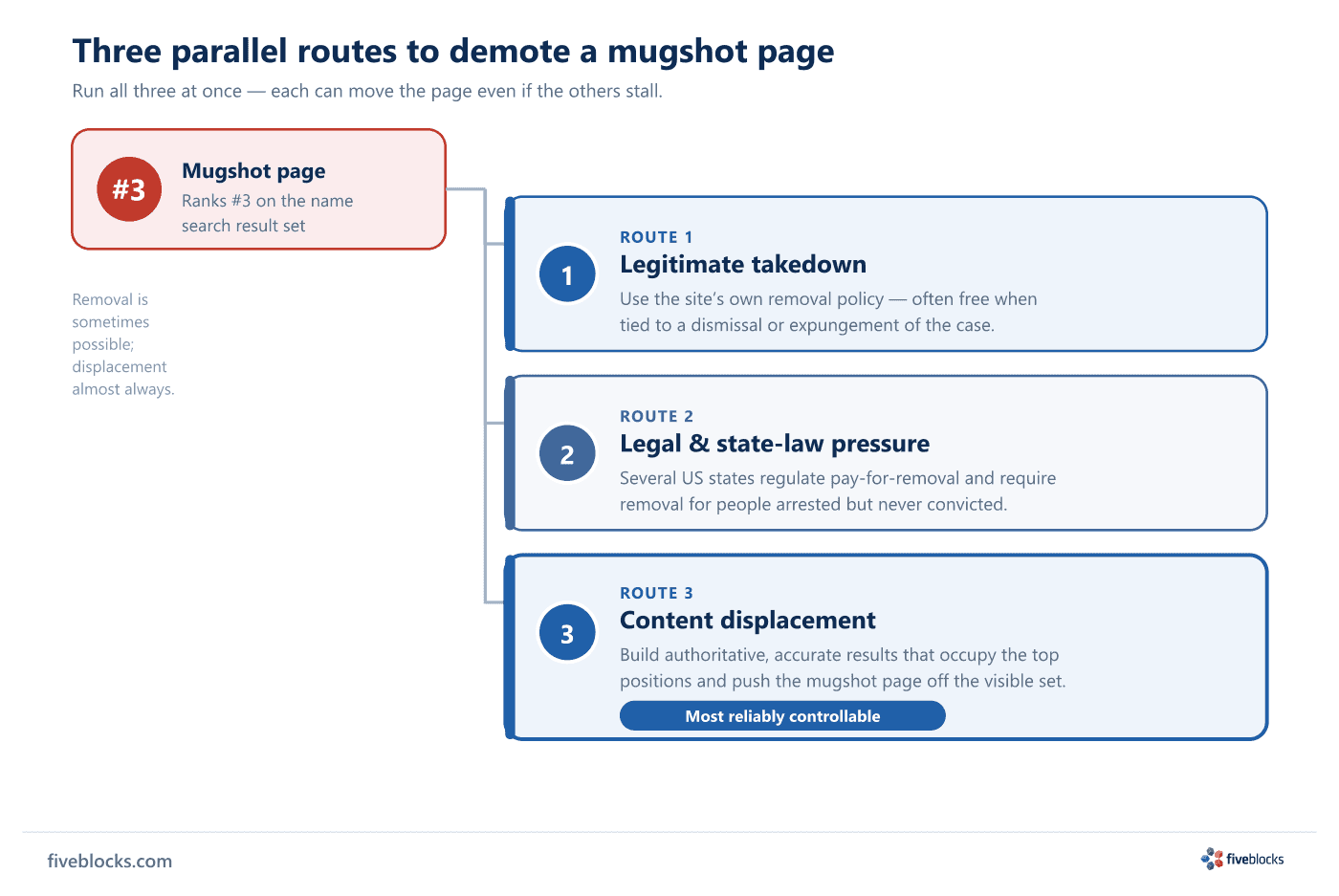
1. Legitimate takedown
Many mugshot sites have their own removal policies. Some remove a record free of charge when you can show the case was dismissed or you were found not guilty; others ask for supporting documents such as an expungement order or a court record showing the charges were dropped. A documented request sent to the site, supported where relevant by a request to refresh or delist the cached page in search, can succeed.
2. Legal and state-law pressure
More states now regulate the mugshot publishing industry. Several US states have passed laws restricting the pay-for-removal model and creating takedown obligations: Illinois, for example, made it an unlawful business practice to solicit or accept payment for removing criminal-record photos and information. Many of these laws require operators to remove records for people who were arrested but never convicted. Where a state statute applies, it turns an optional removal request into a legal one.
3. Content displacement, the most reliably controllable
Displacement means building and strengthening authoritative, accurate content about you so that legitimate results take the positions the mugshot page currently holds, pushing it off the visible result set over time. Google assembles a name-search page from sources it considers authoritative: Wikipedia, LinkedIn, news articles, employer bios, conference and podcast profiles. So the work is to make those entity signals strong and consistent. This is the track you control most directly, but it is gradual: a single owned page rarely outranks an established result, and high-authority pages are harder to move than thin ones.
The honest framing
Removal is sometimes possible and displacement almost always is, and the two run in parallel rather than as alternatives. We track the result set with IMPACT™ to see whether the mugshot page is actually losing ground.
Last reviewed: 20/05/2026
