How do tenant reviews affect commercial real estate reputation?
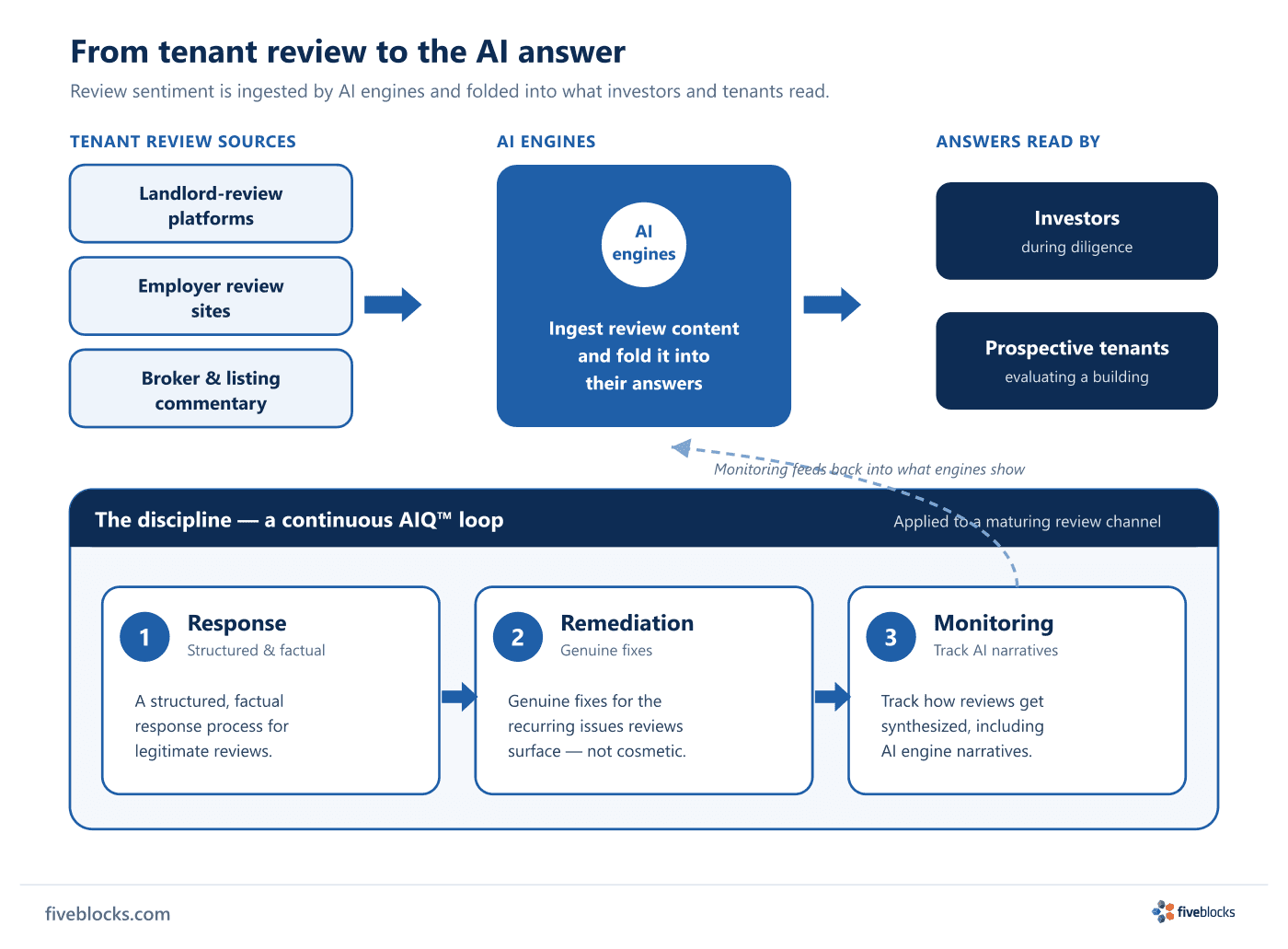
Tenant sentiment reaches commercial real estate reputation through specialized landlord-review platforms, employer sites, and broker and listing commentary. AI engines pull that review content into the answers they give about a landlord or building, so the work is a structured response process, real fixes for the recurring issues, and monitoring of how that content gets synthesized.
Tenant reviews are now a real input to commercial real estate reputation, because the channels that carry them have matured. Specialized platforms capture landlord and building reviews, employer sites carry the experience of working for property companies, and broker and listing platforms accumulate commentary that did not exist a decade ago.
Why tenant sentiment now travels
What changed is that AI engines ingest this review content and fold it into the answers they give about a landlord or building. Tenant sentiment can show up in a summary an investor or prospective tenant reads on the same engines counterparties already consult during diligence. Review sentiment that once stayed on a single platform now moves into those answers.
The discipline
The work is standard reputation practice applied to a maturing channel:
- Response strategy: a structured, factual response process for legitimate reviews.
- Remediation: real fixes for the recurring issues the reviews expose, not cosmetic replies.
- Monitoring: tracking how that review content gets synthesized, including the AI engine narratives, with AIQ, so a landlord knows what an investor or tenant is reading before it shapes a decision.
Last reviewed: 20/05/2026
