How do search results affect real estate investment decisions?
Tenants, partners, and investors all search before they commit, and what they find shapes leasing, financing, and approvals. Transactions in this sector are large and slow, so accurate signals reduce friction at each decision point.
Real estate decisions have gates: someone has to commit capital or sign a long lease. Before they do, they search. What they find either smooths the path or adds friction, delay, and renegotiation. Transactions here are large and slow, so even modest reputational friction at the diligence stage carries real cost.
Where search enters the decision
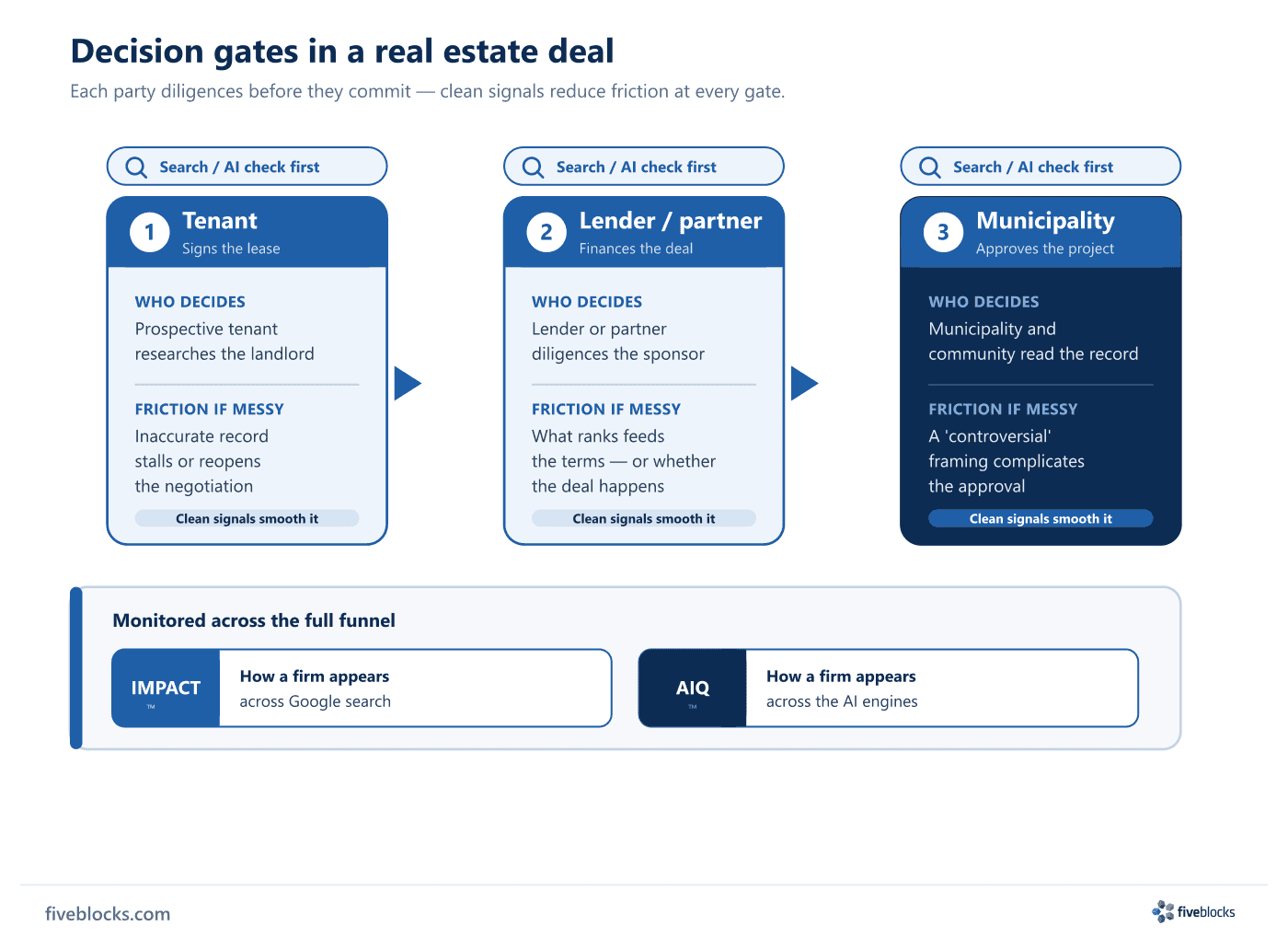
- Tenant signs the lease. A prospective tenant researches the landlord before committing to a long lease, and an unflattering or inaccurate public record can stall the negotiation or reopen it.
- Lender or partner finances the deal. A lender or partner diligences the sponsor before financing, so what ranks for the firm and its principals feeds into the terms, and sometimes into whether the deal happens at all.
- Municipality and community approve the project. A municipality and the surrounding community read the public record before approving a project, and a ‘controversial’ framing can complicate approval.
The signals that matter
At each gate, the outcome turns on which accurate signals rank: clean entity data, authoritative coverage of the firm’s track record, and the AI engine summary a counterparty now reads first. Allocators and counterparties prompt AI engines about a firm before formal diligence begins, so the first impression forms before the first meeting.
How we monitor it
We monitor how a real estate firm appears across Google with IMPACT™ and across the AI engines with AIQ, so a firm can see where reputational friction is forming at a decision point before it costs a tenant, a financing, or an approval.
Last reviewed: 20/05/2026
