How should real estate funds manage investor-facing reputation?
Run a real estate fund's reputation like a fund manager's, not a developer's: credentialed, schema-marked principal bios first, then fund-level entity signals (a Knowledge Panel, and Wikipedia where the firm is notable), investor-facing thought leadership, and monitoring of what AI engines tell allocators during diligence. The assets are the proof, not the pitch.
A real estate fund raises capital from allocators, so its reputation work looks more like a fund manager’s than a developer’s, with the assets as supporting evidence rather than the headline. LPs back people before strategies. The team’s reputation does the persuading and the portfolio backs it up.
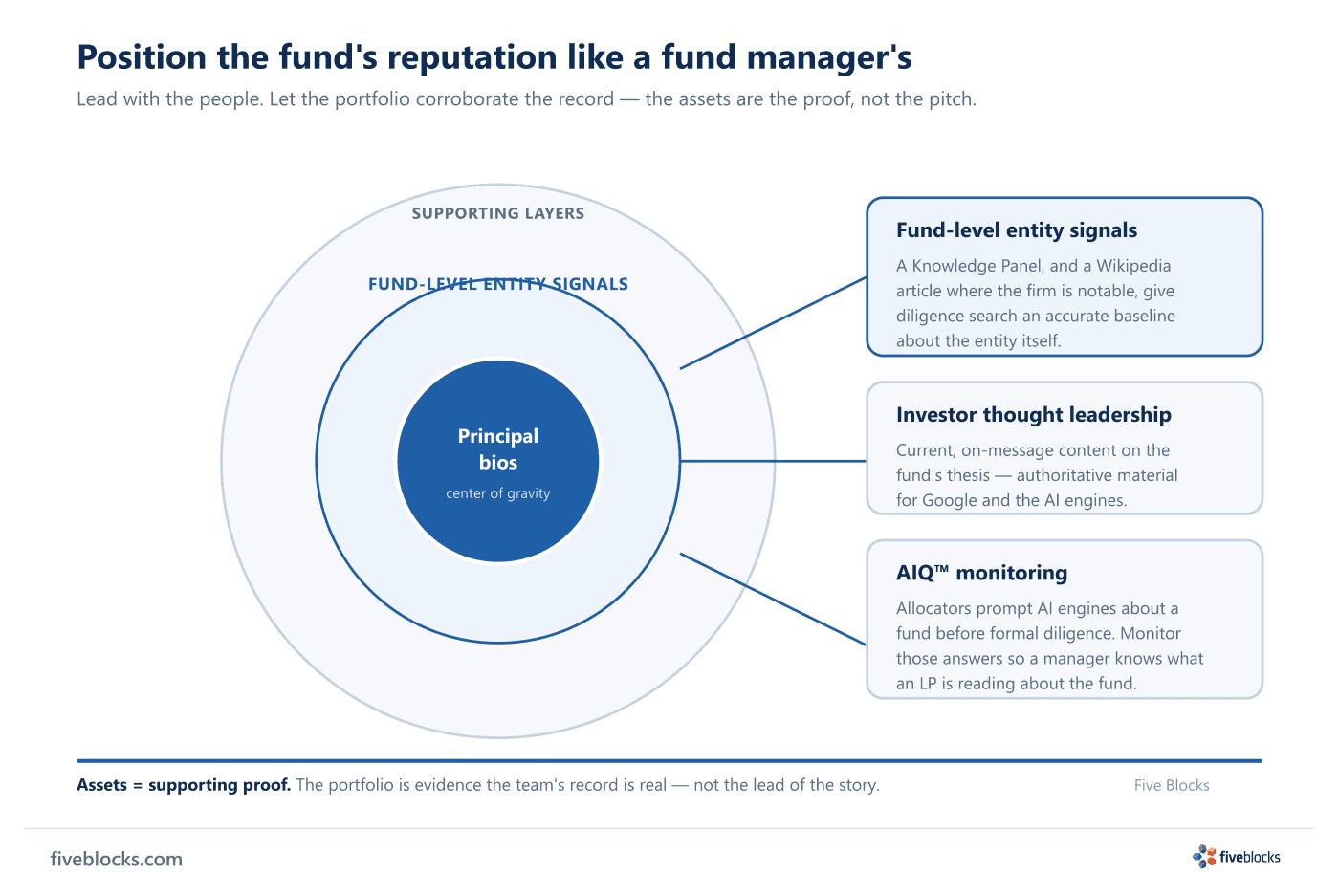
Where to focus the program
- Principal bios at the center. Credentialed, schema-marked bios that establish each principal’s investing and operating record. That is the center of gravity, because allocators diligence the team first.
- Fund-level entity signals. A Knowledge Panel, and a Wikipedia article where the firm is genuinely notable, give the diligence search an accurate baseline about the entity itself.
- Investor-facing thought leadership. Current, on-message material on the fund’s thesis and markets, so Google and the AI engines have authoritative content to draw on.
- AIQ monitoring of LP diligence. Allocators prompt AI engines about prospective investments before formal diligence begins. We track those answers, so a manager knows what an LP is reading about the fund and the team.
Assets are the proof, not the pitch
The portfolio matters, but in a fundraising context it is evidence that the team’s record is real rather than the lead of the story. Keep the persuasion on the principals and let the assets corroborate it.
Last reviewed: 20/05/2026
