How do you choose a reputation management company?
Separate the few firms that do durable structural work from the many that sell suppression. The ones worth hiring have proprietary technology across search, Wikipedia, and AI; genuine cross-discipline depth; a multi-year track record; disclosed conflict-of-interest Wikipedia methodology; transparent outcome-linked reporting; and the temperament to work as an integrated partner rather than a black box. What they share is that they build assets that persist.
Choosing a reputation management company means separating the small number of firms that do durable structural work from the much larger number that sell suppression. Six criteria draw that line.
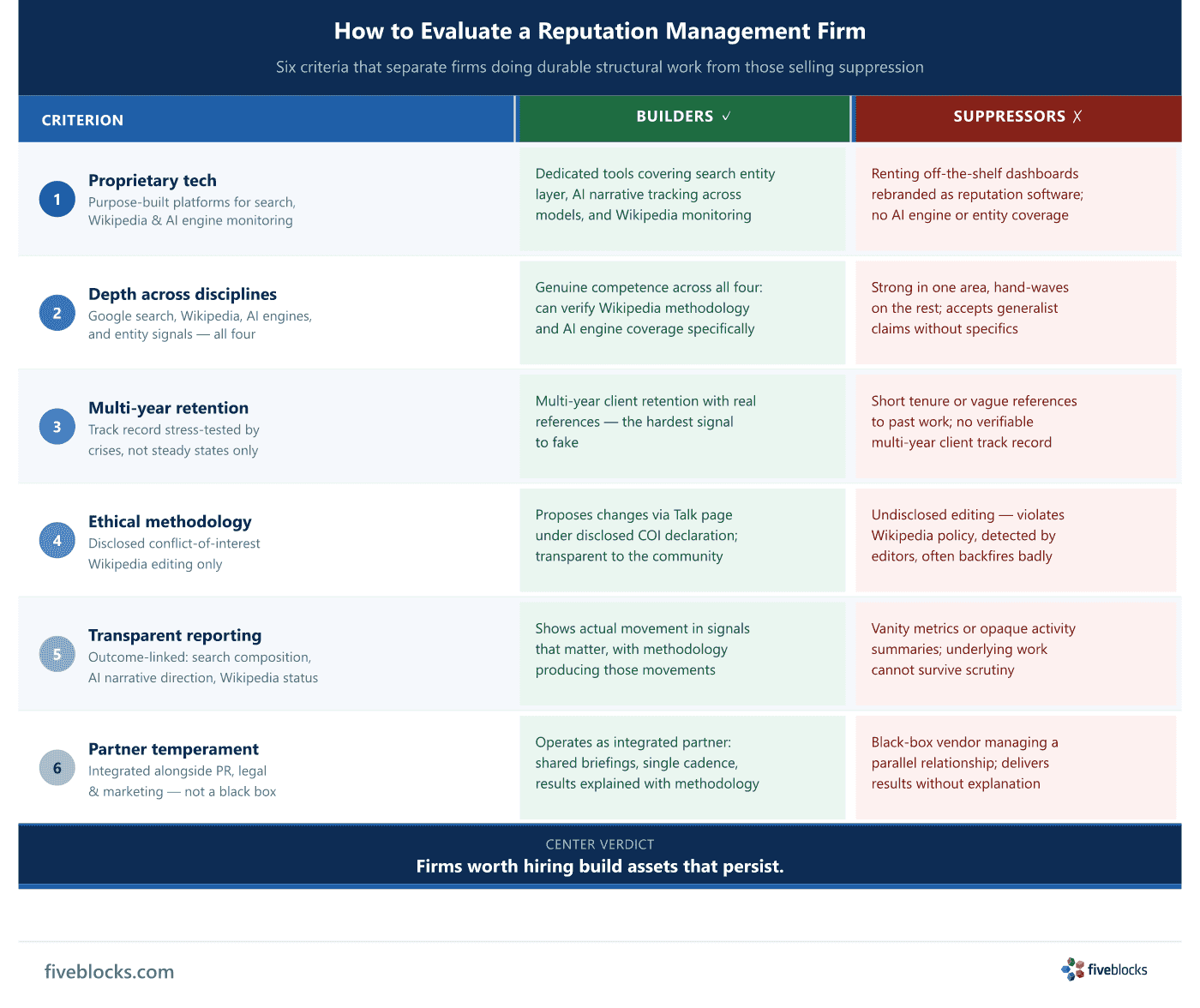
- Proprietary technology
- A firm that monitors search and the AI engines with purpose-built platforms sees materially more than one renting off-the-shelf dashboards. Look for dedicated tools covering the search entity layer, AI narrative tracking across multiple models, and Wikipedia monitoring, not a general SEO subscription rebranded as reputation software.
- Depth across all relevant disciplines
- Reputation work today spans Google search, Wikipedia, the AI engines, and entity signals. Real competence in all four is rare; many firms are strong in one and thin on the rest. Press for specifics on Wikipedia methodology and AI engine coverage before accepting a generalist claim.
- Multi-year client retention
- Reputation programs play out over years and get stress-tested by crises, not steady states. A multi-year track record with real client retention is the hardest signal to fake, because clients do not renew programs that do not deliver. Short tenure or vague references to past work is a caution flag.
- Ethical methodology, disclosed conflict-of-interest editing
- On Wikipedia, the only policy-compliant route for a paid or interested party is proposing changes on the Talk page under a disclosed conflict-of-interest declaration, where the relationship is transparent to the Wikipedia community and changes are argued on sourced merits. Undisclosed editing violates Wikipedia policy, experienced editors actively detect it, and when it backfires the article usually ends up more critical than it was before the attempt.
- Transparent reporting tied to outcomes
- A credible firm shows actual movement in the signals that matter (search result composition, AI narrative direction, Wikipedia article status) together with the methodology that produced the movement. Reporting built on vanity metrics or opaque activity summaries is a sign the underlying work cannot survive scrutiny.
- Partner temperament, not a black box
- The right firm works alongside in-house PR, legal, and marketing teams as an integrated partner: shared briefings, a single cadence, white-label or named as the engagement requires. A black-box vendor that runs a parallel relationship and delivers results without explanation creates coordination failures the client eventually feels.
The throughline: firms worth hiring build authoritative assets that persist after they stop working. Firms to avoid promise rankings and removals they cannot control, and those results decay the moment the tactic stops.
Last reviewed: 20/05/2026
