How do you manage search results for a company rebrand?
Managing search results through a rebrand follows an ordered technical sequence: 301-redirect every legacy domain and URL to its new location, update Wikidata and then the Wikipedia article to the new name, correct the Google Knowledge Panel through verified entity correction, refresh authoritative directory listings, and publish canonical owned content that links the old and new names via alternateName.
A rebrand is technically demanding reputation work, because the entity itself is changing while the engines still hold years of accumulated signals pointing to the old name. The fix is an ordered sequence that updates the underlying sources the engines read from, not the search results alone.
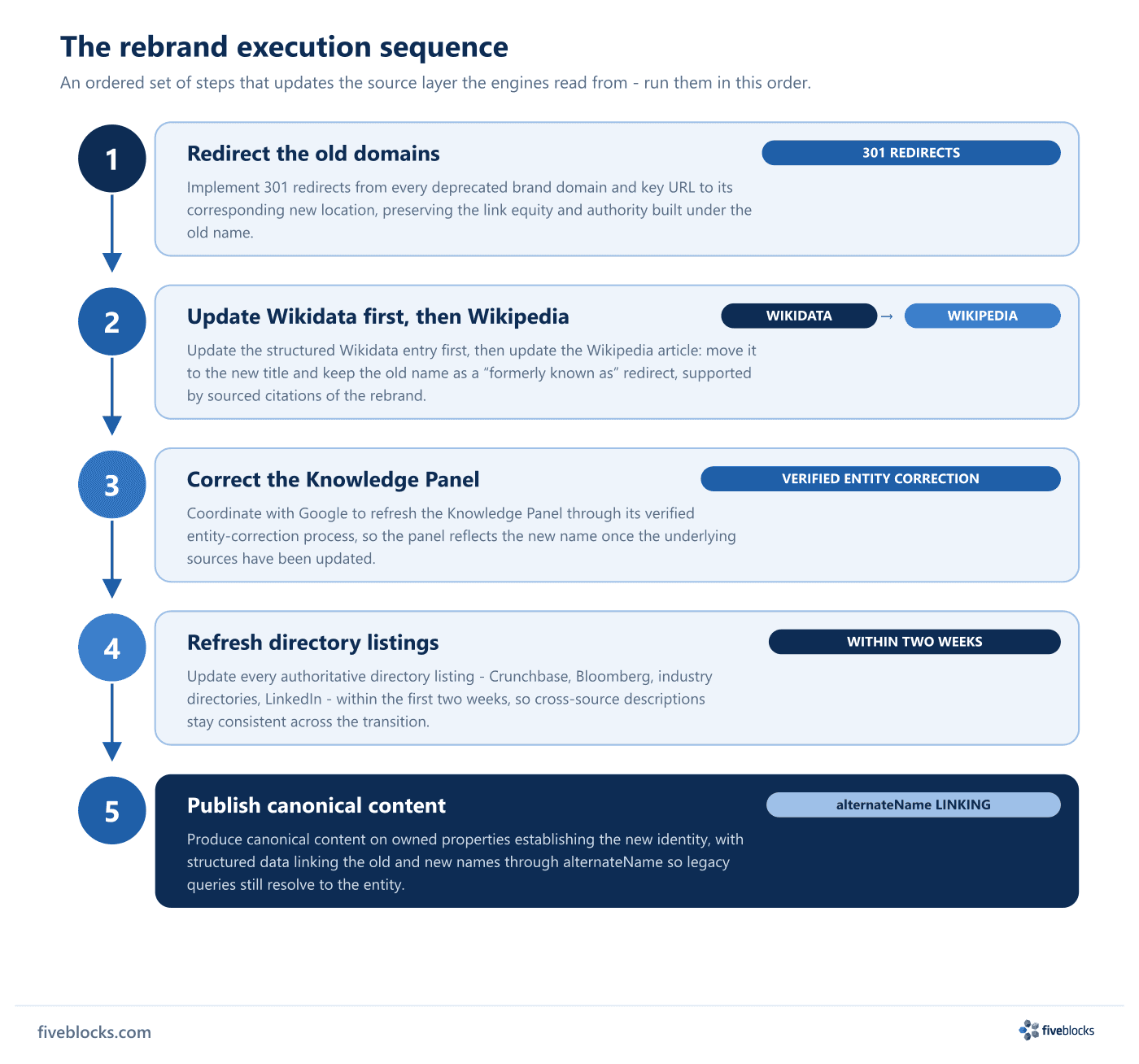
The rebrand sequence, step by step
- Redirect the old domains. Implement 301 redirects from every deprecated brand domain and key URL to the corresponding new location, preserving the link equity and authority built up under the old name.
- Update Wikidata, then Wikipedia. Update the structured Wikidata entry, then update the Wikipedia article through Talk-page edit requests with sourced citations of the rebrand, moving the article to the new title and keeping the old name as a “formerly known as” redirect.
- Correct the Knowledge Panel. Coordinate with Google to refresh the Knowledge Panel through its verified entity-correction process, so the panel reflects the new name once the underlying sources are updated.
- Refresh directory listings. Update every authoritative directory listing, including Crunchbase, Bloomberg, industry directories, and LinkedIn, early in the transition so cross-source descriptions stay consistent.
- Publish canonical content. Produce canonical content on owned properties that establishes the new identity, with structured data linking the old and new names through
alternateNameso legacy queries still resolve to the entity.
Tracking the full transition through IMPACT catches any signal that fails to update, so it can be fixed before it sets into how the engines describe the brand.
Last reviewed: 19/05/2026
