How do AI models decide what to say about my organization?
An AI engine builds its answer by finding the sources relevant to your prompt, judging which ones to trust, favoring the most authoritative, and writing a response from them. The way the prompt is worded sets which side of your organization the engine focuses on, but the sources determine what it actually has to say.
When a user asks an AI engine about your organization, the engine does not retrieve a stored opinion. It assembles an answer on the spot by running through a consistent sequence, drawing on the sources it has access to and judging which ones to trust.
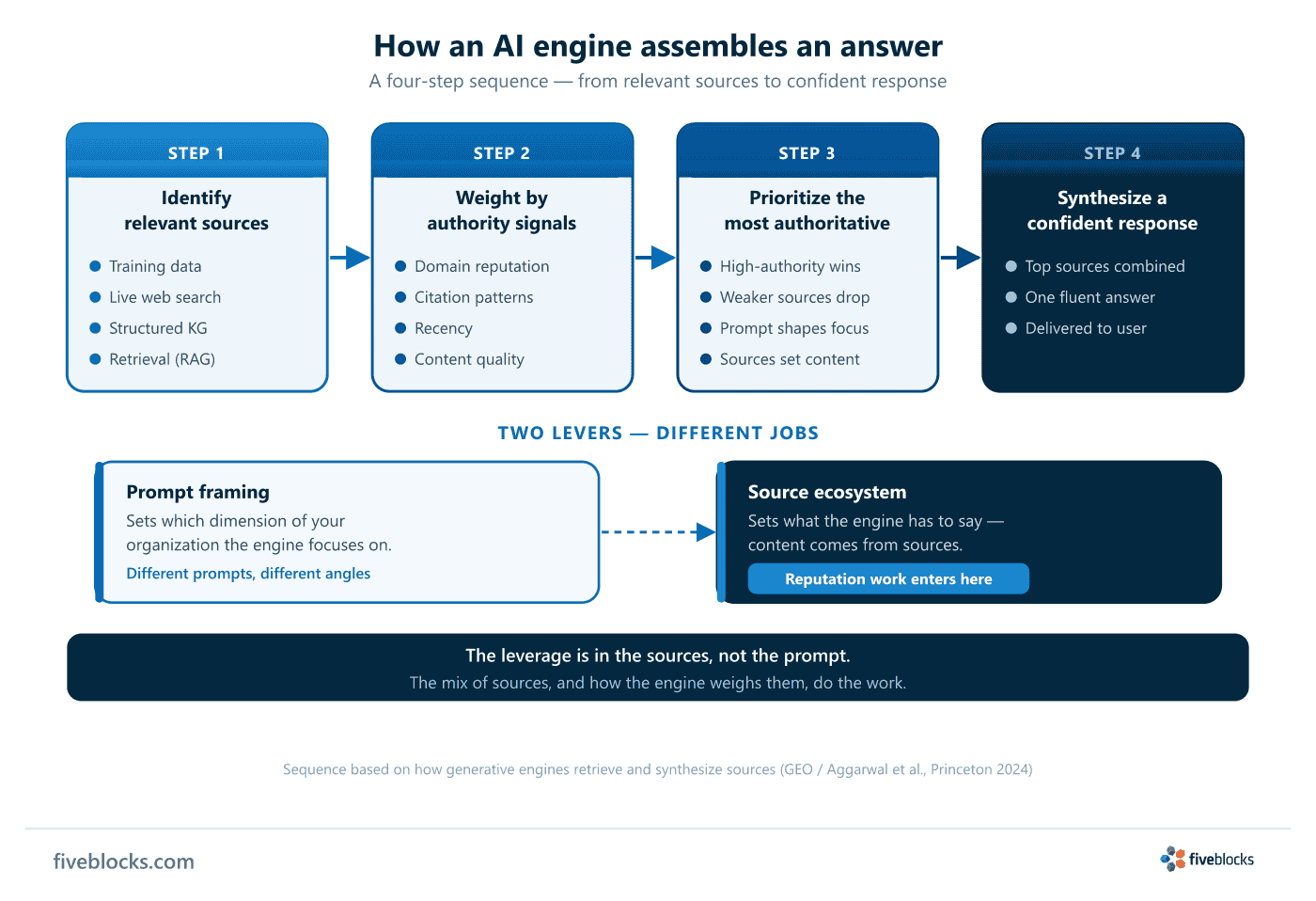
How the engine builds an answer
- Find the relevant sources. The engine gathers what is relevant to the prompt from its training data, live web searches, and structured databases.
- Judge which to trust. It weighs each candidate source by signals such as how reputable the site is, who cites it, how recent it is, and how well it is put together.
- Favor the most authoritative. The sources that look most authoritative for that specific question win out over weaker ones.
- Write the response. The engine pulls the favored sources together into a single confident answer.
How you ask vs. what the sources say
Two levers do different jobs here, and separating them shows where the leverage is:
- How the prompt is worded shapes which side of your organization the engine focuses on. This is why two different prompts about the same company can produce two different answers.
- The sources determine what the engine has to say in the first place. The content comes from the sources, not from the wording of the question.
For a reputation program, that means the leverage is in the sources, not the wording of the prompt. The mix of sources, and how the engine weighs them, decide the answer.
Last reviewed: 19/05/2026
