How do AI chatbots handle requests for recommendations that include your competitors?
When an AI engine names a competitor in a recommendation, the question is not whether to object but where the competitor is winning the sources the engines rely on. The response runs on two tracks: strengthen your own entity signals and authoritative coverage, and diagnose whether the competitor's recommendation is genuinely earned or just a stale or structural source the engine keeps reusing.
When the engines name competitors in recommendation prompts, the diagnostic question is not whether to be offended but where the competitor is winning the sources the engines rely on. AIQ shows which sources the engines cite for the recommendation: a particular comparison article, a specific Wikipedia paragraph, an industry directory, a Reddit thread, a published “best of” roundup. From there the response runs on two tracks: work on your own side, and diagnose the source pattern driving the competitor’s win.
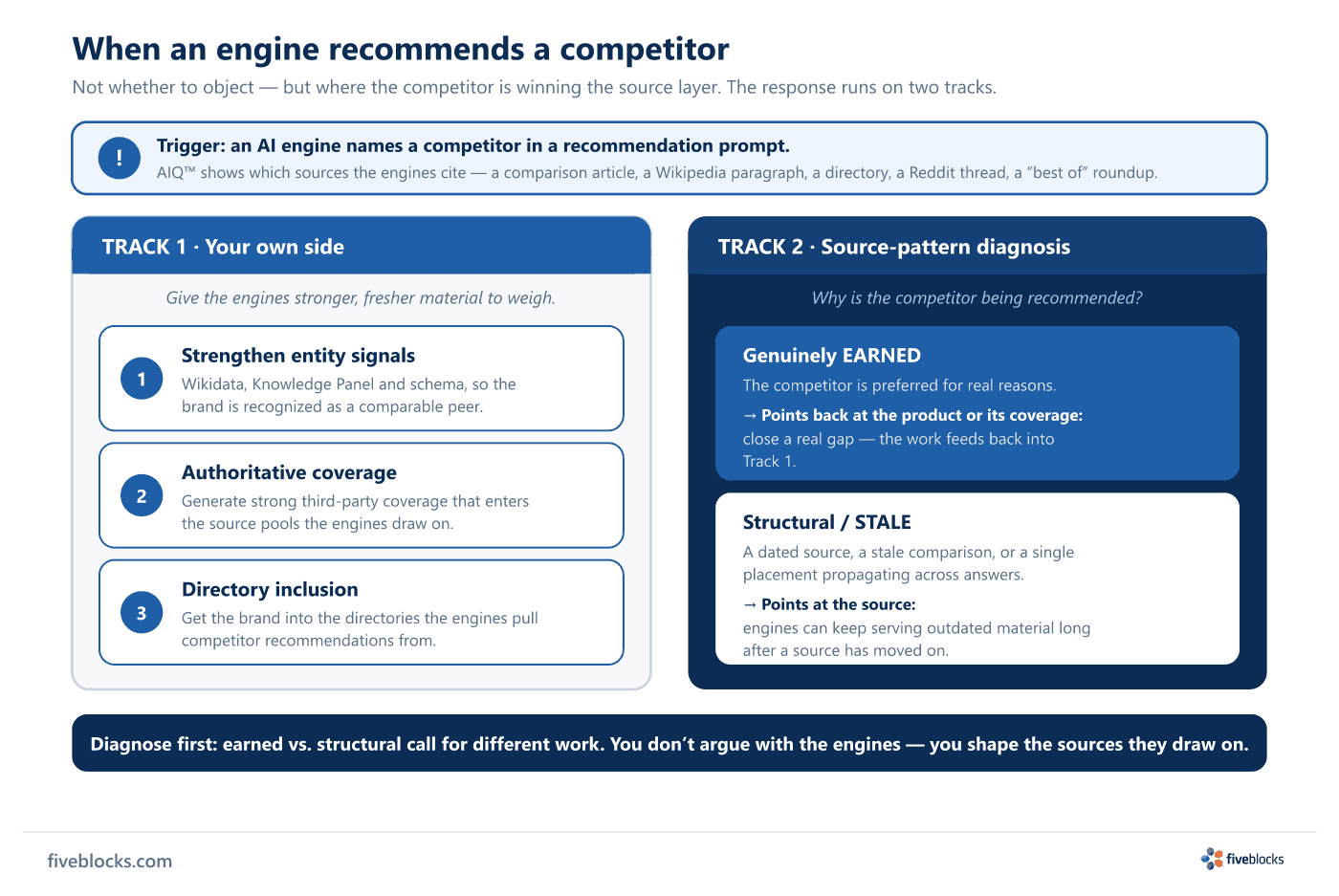
The two tracks of the response
| Track | Goal | What it involves |
|---|---|---|
| Your own side | Give the engines stronger, fresher material to weigh for your brand | Strengthen entity signals (Wikidata, Knowledge Panel, schema) so the brand is recognized as a comparable peer; generate authoritative third-party coverage; get the brand into the directories the engines pull competitor recommendations from. |
| Source-pattern side | Understand why the competitor is being recommended | Determine whether the recommendation source is genuinely earned (the competitor is preferred for real reasons the brand needs to address) or structural (a dated source, a stale comparison, or a single placement that is propagating across answers). |
Why the diagnosis comes first
The two cases call for different work. An earned recommendation points back at the product or its coverage: the brand has to close a real gap. A structural one points at the source: a comparison the engine is leaning on is out of date, or a competitor has won a single placement that keeps surfacing. Engines weight sources by authority and recency and can keep serving outdated material long after a source has moved on, so naming the pattern before acting is what keeps the response targeted.
What the work is not
- It is not arguing with the engines about their recommendations. You can’t edit what an engine says, and it doesn’t remember being corrected; it rebuilds each answer from the sources it trusts, so you move it by changing those sources.
- It is not a single fix. The work differs case by case, but the diagnosis-then-response structure stays consistent.
Last reviewed: 19/05/2026
