Why does Wikipedia matter for corporate reputation?
Wikipedia matters for corporate reputation because of where the article sits upstream of everything else: it typically ranks at the top of Google for branded searches, feeds the Knowledge Panel, and carries heavy weight with every major AI engine. An inaccuracy on the page spreads to all of those channels at once.
Wikipedia matters for corporate reputation because of where the article sits upstream of everything else. A single article is more than one page. It is a source that feeds Google, the Knowledge Panel, and the AI engines people now use to research a company or executive.
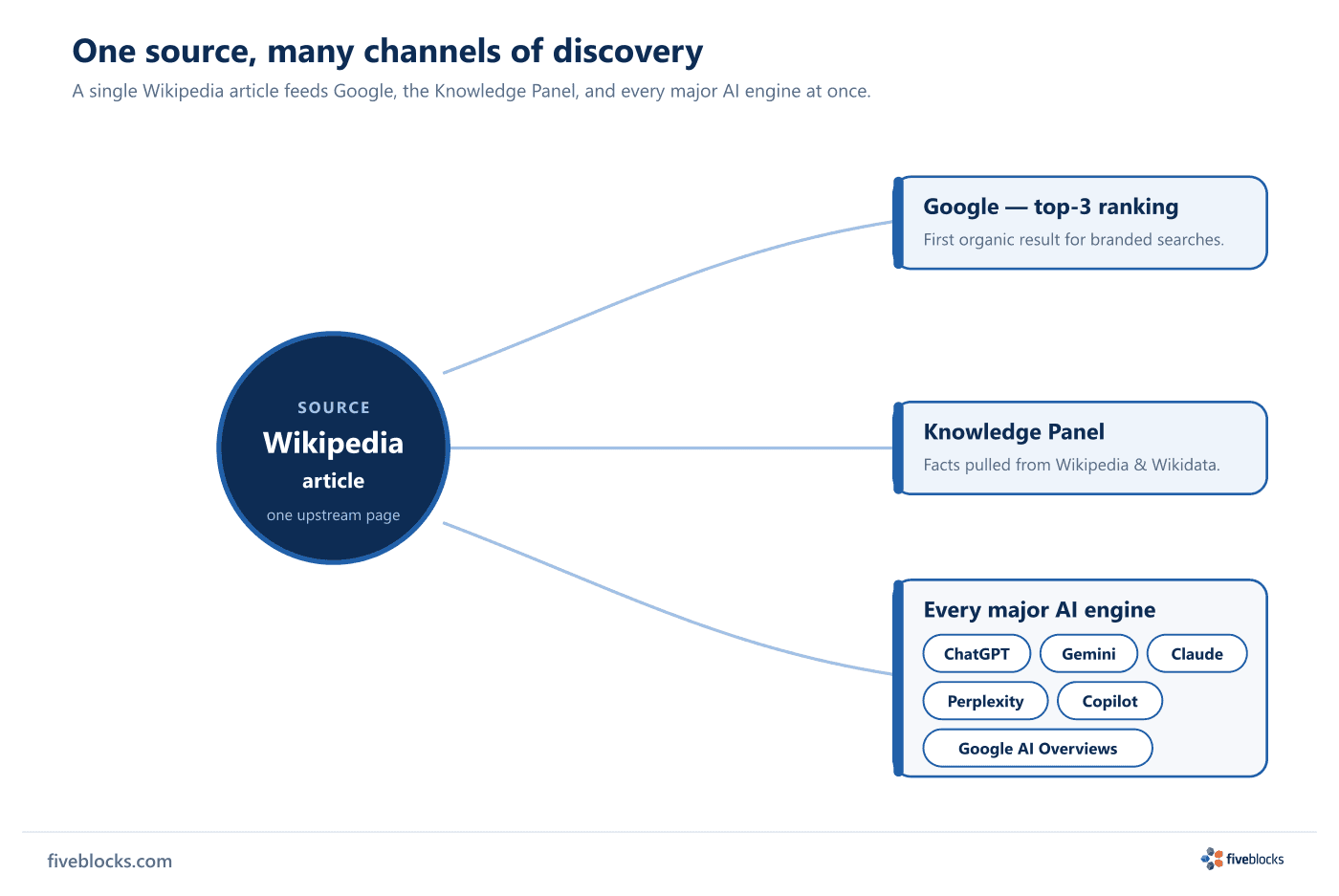
One source, many channels of discovery
For most branded searches, the company name, the CEO’s name, a senior executive’s name, the Wikipedia article tends to rank in the top three Google results. From there it spreads outward:
- Google search results, the article is usually one of the first organic results a searcher clicks for a branded query.
- The Knowledge Panel, Google pulls the description and facts shown beside the results directly from Wikipedia and Wikidata.
- Every major AI engine: ChatGPT, Gemini, Perplexity, Copilot, Claude, and Google AI Overviews lean heavily on Wikipedia in both training and retrieval, so the article often becomes the default summary an engine produces about the subject.
Why that distribution raises the stakes
Because the article feeds so many channels, an inaccurate, incomplete, or negatively framed Wikipedia entry does not stay on Wikipedia. It shows up in the search results, in the Knowledge Panel, in AI answers, and in the diligence research of journalists, investors, and counterparties who consult any of those sources. Fixing Wikipedia is one of the few moves in reputation work that corrects all of those channels at once.
Last reviewed: 19/05/2026
