What sources do you need before creating a Wikipedia page?
Wikipedia requires multiple substantial, independent sources before an article will survive review. The practical minimum is three to five in-depth pieces from reputable outlets that cover the subject directly rather than mention it in passing. Quality counts as much as quantity: sources have to be secondary, editorially independent, and free of promotional content. Press releases, sponsored coverage, and a company's own materials do not count.
Before Wikipedia will keep an article, editors have to be able to point to a body of sourcing that clears the General Notability Guideline: significant coverage in reliable sources that are independent of the subject. An article that meets that standard is likely to survive community review and Articles for Deletion.
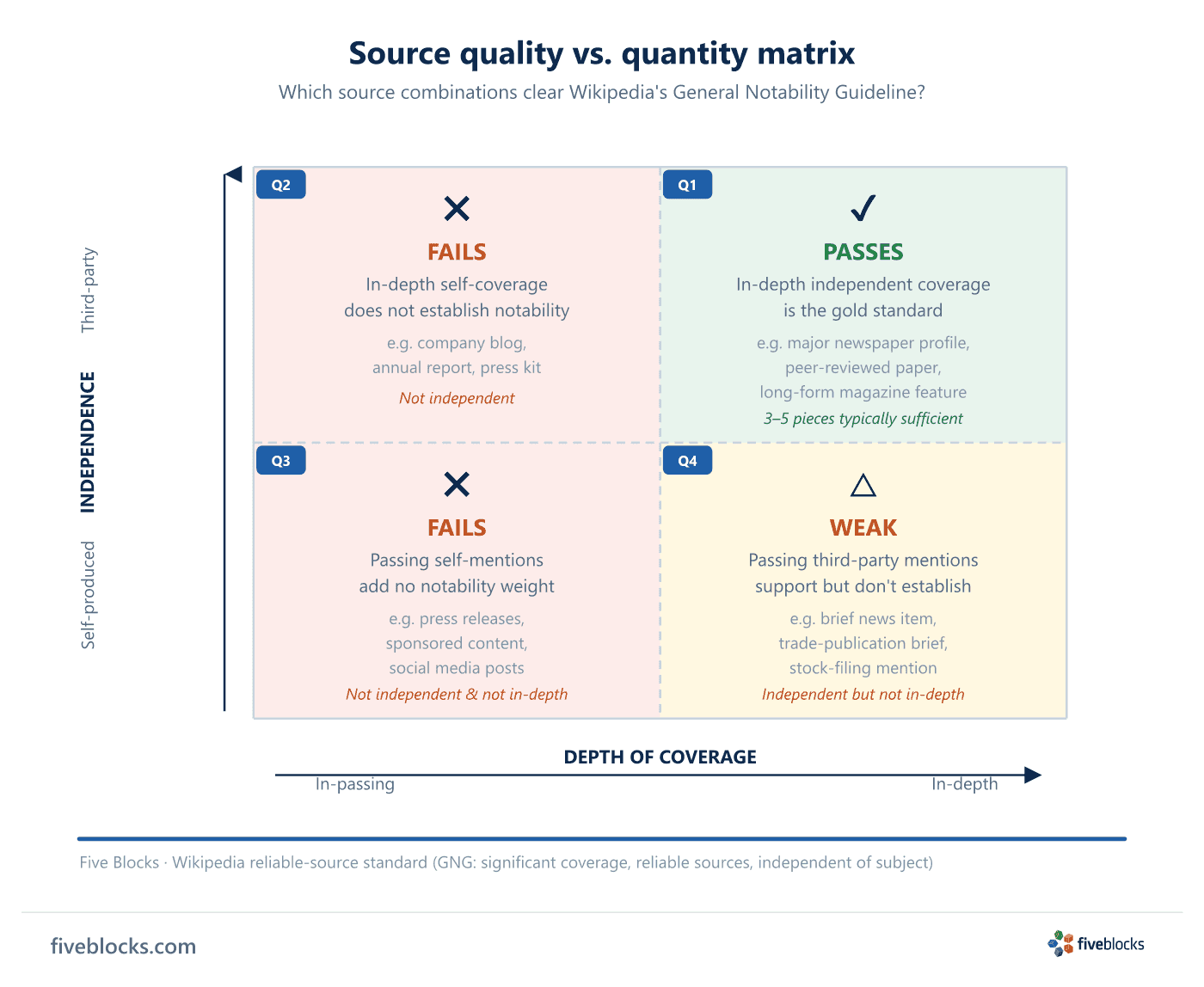
How many sources are enough?
- Practical minimum: three to five substantial pieces. Each piece has to cover the subject directly and in depth, not mention it inside a story about something else.
- Complex or controversial subjects need more, often ten or more substantial pieces, because the article draws closer scrutiny and the sources have to support the full range of content it will contain.
- Quality beats quantity. A single in-depth profile in a major national outlet carries more weight than five trade-publication briefs.
What makes a source count?
- Independent
- Written by journalists or authors with no financial, employment, or editorial relationship to the subject. Sources produced by the subject, or written mainly from the subject’s own materials, are not independent.
- Secondary
- The author has analyzed, synthesized, or reported on the subject from their own research or observation, rather than reprinting a press release or quoting an official statement verbatim.
- Reliable
- Published by an outlet with editorial oversight and a record of fact-checking: major newspapers, peer-reviewed journals, established magazines, and reputable online news publications. Self-published blogs, personal social-media posts, and unedited forums do not qualify.
- In-depth
- Coverage substantive enough to support encyclopedic content, not a passing mention in a list, a brief company-announcement item, or a stock-market filing note.
What does not count?
- Press releases and wire-service syndications of company announcements
- Sponsored content, native advertising, and paid placements
- The company’s own website, blog, or marketing materials
- Social media posts and self-published content
- Sources that quote the subject without independently reporting on it
For organizations and companies, Wikipedia applies an even stricter bar (WP:NCORP), specifically to prevent gaming by marketing and PR professionals. We catalog the existing sourcing record against this standard during the readiness assessment.
Last reviewed: 19/05/2026
