Why do investors Google fund managers before allocating capital?
Because what a search returns is now deal-relevant. Track record, regulatory history, controversy, and team quality surface before the first meeting, and the AI engines frame the manager in a synthesized paragraph the investor reads before opening the deck.
Allocators search before they take a call because the results are deal-relevant intelligence they can get for free. Track record claims, regulatory history, prior-fund controversies, and the quality of the team all show up in branded search, and now in the AI engine answer the investor reads first.
What changed is the format
Investors have always looked. What differs is what comes back.
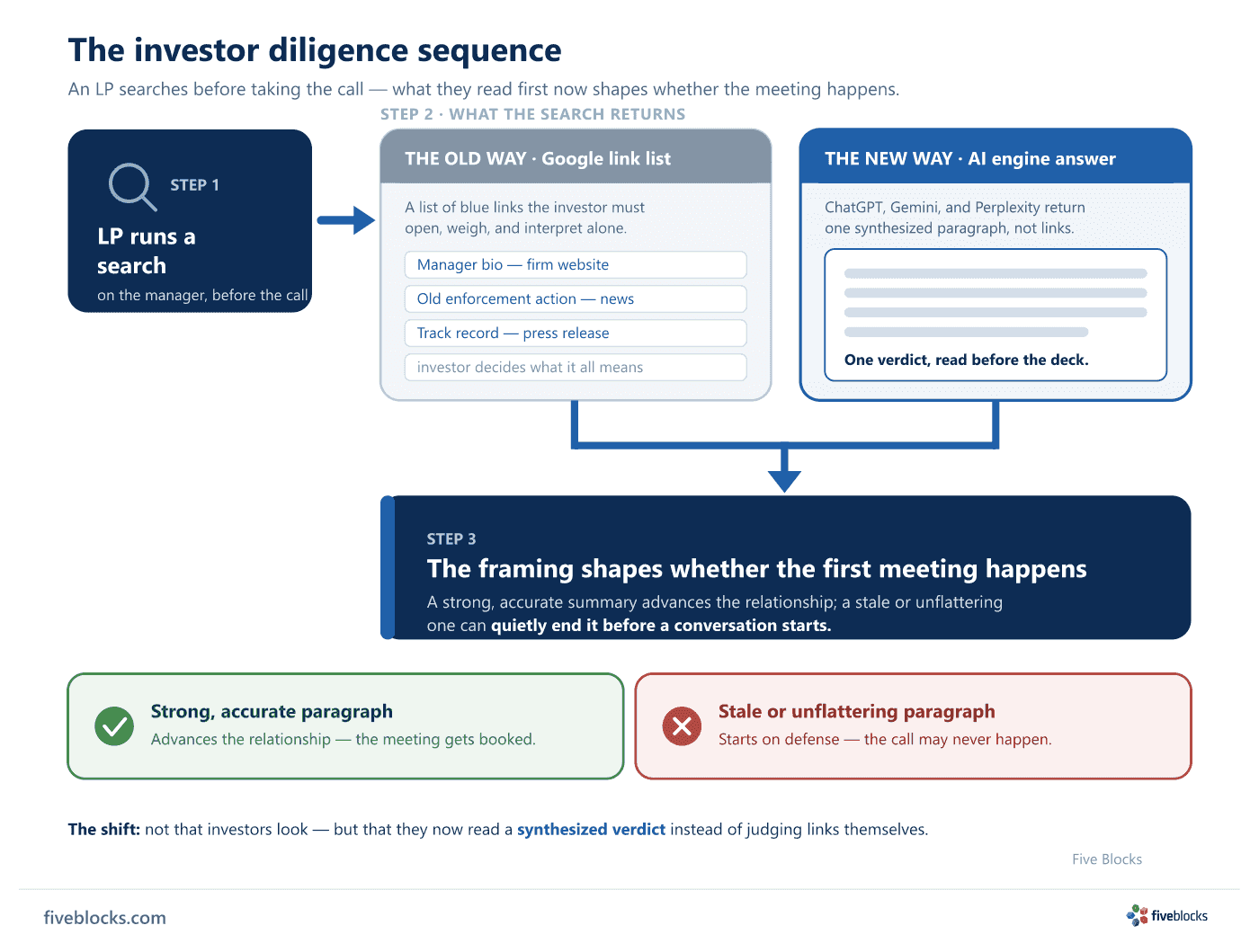
- The old way: Google returned a list of links the investor had to open and judge.
- The new way: ChatGPT, Gemini, and Perplexity return one synthesized paragraph that frames the manager before the deck is opened.
The engine assembles that paragraph from whatever sources it can find. The manager cannot write it, only shape the inputs. If it leads with an old enforcement action or a thin, dated bio, the first meeting starts on defense.
Why it shapes whether the meeting happens
A synthesized verdict carries more weight with an LP than a page of links they have to interpret themselves. An accurate summary moves the relationship forward; a stale or unflattering one can end the process before a conversation starts.
We track those answers across the AI engines with AIQ, so a manager knows what an LP is reading, and we build the entity and source signals that determine what the engines say.
Last reviewed: 20/05/2026
